gamesbriefs
Newest

All briefs

467 briefs · 4633 min · 289–384 on page 4 of 5
8:50

Mortal Kombat 3

Midway · 1995

Mortal Kombat 3 (1995) is Midway's arcade fighting game that shifts focus from tournament narrative to Shao Kahn’s Earthrealm invasion. It introduces the Run button, chain combos, Animalities, and stage-breaking uppercuts — all governed by a shared Run meter and fixed sequences. Its design prioritises spectacle and accessibility over responsiveness or depth.

10:42

Mortal Kombat (2011 video game)

NetherRealm Studios · 2011

Mortal Kombat (2011) is a 2.5D fighting game developed by NetherRealm Studios and published by Warner Bros. Interactive Entertainment for PlayStation 3 and Xbox 360 in April 2011. It is the ninth installment in the Mortal Kombat series. The game runs at 60 fps on a strict two-dimensional plane, with 3D-rendered characters. Four controller buttons map to specific limbs. A three-tiered super meter charges through performing special moves, being blocked, or being hit — enabling enhanced specials (level one), combo interrupts (level two), and X-ray moves (level three), which show internal bone and organ damage. Extra modes include a multi-character story mode, Fatality training, Challenge Tower, tag team fighting, and online play.

9:13

Mortal Kombat II

Midway · 1993

Mortal Kombat II is a 1993 arcade fighting game by Midway. It improves on the original with faster pacing, refined movement options, and expanded finishers. It removes bonus games in favour of a win-counter. Finishing moves are disabled against or by boss or secret characters.

8:15

Mother 3

Nintendo · 2006

Mother 3 is a Nintendo-published multiplayer RPG. It uses top-down party exploration, rhythm-activated turn-based combat, XP-driven permanent stat growth, equipment-based attribute boosts, hot-spring healing, and frog-mediated saving. Dragon Power serves as late-game battle-earned currency. It offers a tightly authored, environmentally embedded RPG loop—but its most distinctive mechanics arrive late and remain narrowly scoped.

10:55

NBA 2K23

2K Sports · 2022

NBA 2K23 is a historically segmented basketball simulation. It divides the NBA into four playable eras — 1983–84, 1991–92, 2002–03, and 2022–23 — each with distinct arenas, logos, jerseys, rosters, draft classes, broadcast packages, and modifiable rules.

9:52

Need for Speed: Carbon

Black Box · 2006

Need for Speed: Carbon (2006, Black Box) is a rhythm-driven street racer built on repetition, territory, and tight mechanical loops — not simulation or story.

7:43

NFL Street

EA Sports · 2004

NFL Street is a rule-simplified, style-driven take on American football that swaps realism for rhythm. It runs on the core loop of perform → earn style → trigger Gamebreaker → dominate drive. Its strength is immediacy and attitude. Its limit is repetition — there is no evolution beyond the next taunt or touchdown.

10:10

No Man's Sky

Hello Games · 2016

No Man's Sky is a lean, deterministic simulation of scale — not story, not society, not persistence. It asks you to verify reality, not inhabit it.

10:28

Outer Wilds

Mobius Digital · 2019

Outer Wilds is a tightly wound clockwork of time, memory, and celestial mechanics. It gives you nothing but questions—and insists you answer them in order.

8:39

Pac-Man

Namco · 1980

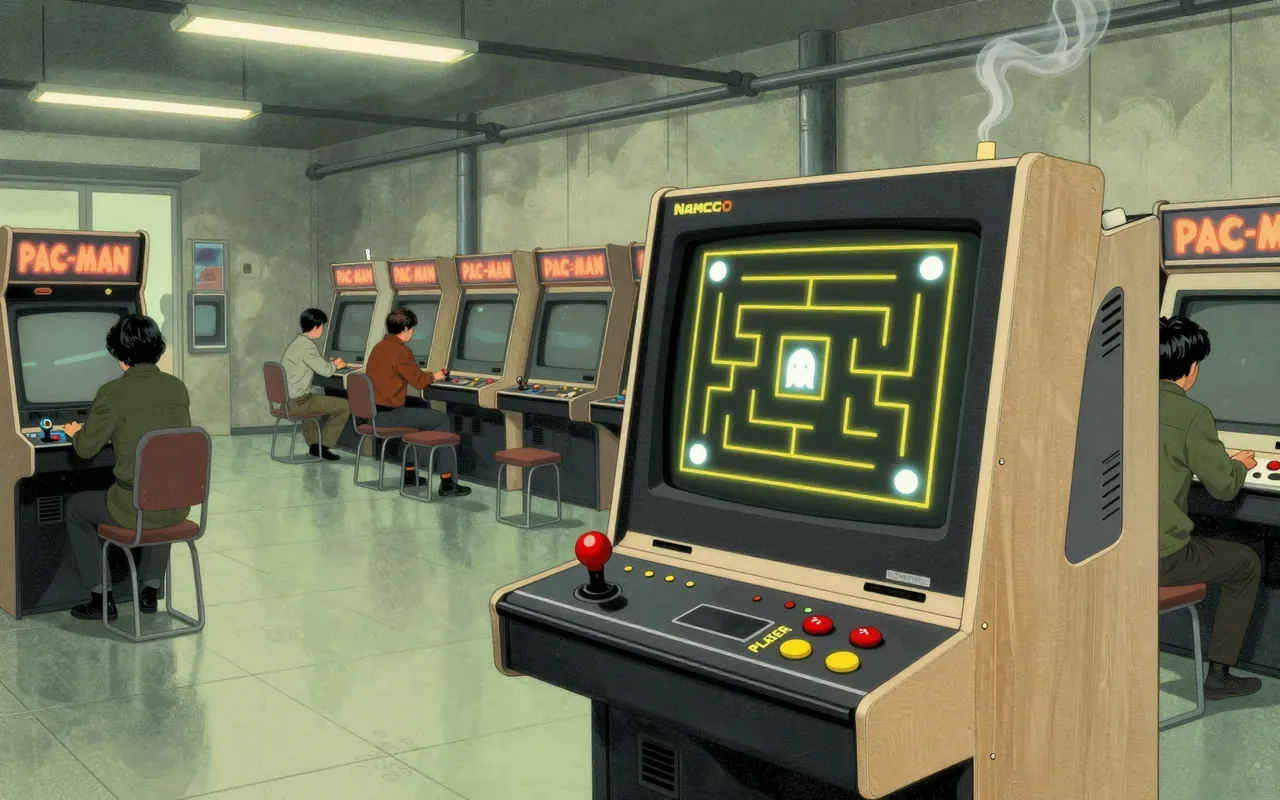
Pac-Man is a foundational arcade game released by Namco in Japan in 1980 (test-marketed 22 May, wide release July) and North America in November 1980. Its design centres on eating dots in a fixed maze while evading four ghosts—Blinky, Pinky, Inky, and Clyde—each governed by a distinct AI rule. Power pellets temporarily reverse ghost behaviour and enable Pac-Man to consume them. Completion of each level requires clearing all dots; contact with a ghost costs a life. The game ends when all lives are lost.

11:08

Path of Exile

Grinding Gear Games · 2013

Path of Exile is a systemic ARPG that trades narrative continuity for procedural depth, instanced purity, and build-driven replayability.

9:45

Payday 2

Overkill Software · 2013

Payday 2 is a cooperative heist shooter released in 2013 by Overkill Software, developed with funding from Starbreeze Studios after their 2012 acquisition, and led in design by David Goldfarb.

12:03

Persona 3

Atlus · 2006

Persona 3 is a PlayStation 2 RPG released by Atlus in 2006. It combines traditional RPG mechanics with simulation elements. The game follows the protagonist, who balances their daily life of going to school and building relationships with others with fighting the monstrous Shadows during the Dark Hour. Each day is divided into daytime and evening segments. Except for scripted events, such as plot progression or special events, the player is free to choose how each day is spent, with most activities causing time to pass. The types of activities and characters that can be interacted with vary depending on the day of the week and time of day. Additionally, some activities are limited by the protagonist's three attributes; Academics, Charm, and Courage, which can be built by performing various activities or making certain correct choices. During the evening, players can choose to visit Tartarus, the game's main dungeon, where they can build their party's experience and gain new items. On the day of the full moon, players will participate in a boss battle to progress the story.

11:10

Persona 4

Atlus · 2008

Persona 4 is a PlayStation 2 RPG by Atlus, set in the fictional Japanese countryside town of Inaba in 2011. It divides gameplay between daily life in Inaba and dungeon exploration in the surreal TV World, accessed through televisions. Players manage segmented days—'After School/Daytime' and 'Evening'—with most actions consuming one segment. Evening options vanish after visiting the TV World. Five attributes (Understanding, Diligence, Courage, Knowledge, Expression) gate activities and dialogue, growing through specific real-world actions. Social Links with characters map to the Major Arcana and enhance combat and Persona fusion. Fog appears after consecutive rainy days; failing to rescue a captive before fog triggers a permanent game over requiring reload or rewind. Developed by P-Studio—established in 2006—and directed by Katsura Hashino, it was published and localised for North America by Atlus USA.

9:45

Persona 5

Atlus · 2016

Persona 5 is a Japanese role-playing game developed by P-Studio and published by Atlus in 2016. It simulates one academic year in Tokyo through a rigid day-night cycle, blending social relationship-building (Confidants) with dungeon-crawling in two distinct Metaverse realms: narrative Palaces and procedural Mementos.

9:07

Plants vs. Zombies 2

PopCap Games · 2013

Plants vs. Zombies 2 tightens the original’s loop into a five-row, sun-gated, one-mistake-per-lane test—but adds time travel without mechanical consequence, and free-to-play friction without structural reinvention.

10:59

Pong

Atari · 1972

Pong is not simple — it is surgically constrained.

10:27

Prince of Persia: The Sands of Time

Ubisoft Montreal · 2003

Prince of Persia: The Sands of Time (2003) is a foundational third-person action-adventure by Ubisoft Montreal that reimagined the franchise’s 2D roots as a 3D parkour-and-time-rewind system. Built around acrobatic traversal, trap navigation, and sand-infected enemy combat, it uses the Dagger of Time to rewind mistakes and freeze or kill foes — turning time into a limited, tactical resource. Farah provides AI archery assistance that doubles as environmental hazard. Health is restored at water sources; magic fountains expand maximum health. The dynamic third-person camera shifts contextually, denying manual control. Released in 2003, it was a critical and financial success — over 14 million copies sold by 2014 — and launched a trilogy.

10:44

Puyo Puyo Tetris

Sonic Team · 2014

Puyo Puyo Tetris is a deliberate, unapologetic juxtaposition—not an integration—of two established puzzle systems. Its strength lies in clarity, consistency, and competitive rigour. Its limitation is structural separation: no rule, constraint, or feedback bridges Puyo and Tetris beyond shared menus and scoring.

11:25

Quake 4

Raven Software · 2005

Quake 4 is a movement-first FPS built on Quake’s legacy, not its future.

9:05

Quake Champions

id Software · 2018

Quake Champions is a fast-paced arena-based shooter built on a hybrid id Tech and Saber3D Engine. It launched free-to-play with Ranger only, added purchasable characters, and replaced loot boxes with a battle pass model. It omits VR, Vulkan, SnapMaps, and mod support. Hardware limitations prevented console release. Each character has one passive and one active ability. It departs from Quake’s legacy of Internet deathmatch and fully 3D engine innovation.

10:06

Quake II

id Software · 1997

Quake II is a mission-driven, first-person shooter released in 1997 by id Software for Windows 95. It shifts the Quake series to a retaliatory human assault on the alien planet Stroggos against the Strogg. Movement is slower than Quake’s, with added crouching. Six new weapons join four redesigned Quake weapons; four Quake weapons are omitted. Power-ups include Quad Damage plus six new ones. Single-player uses repeated CGI cutscenes to mark progress through objectives like stealing a Tank Commander’s head or calling in an airstrike. Multiplayer supports deathmatch, co-op, and Capture the Flag via client/server and OpenGL. It establishes the human–Strogg war narrative that most later Quake entries follow — unlike Quake III Arena, which abandons continuity for arena combat.

9:49

Quake III Arena

id Software · 1999

Quake III Arena (1999) is a multiplayer-first FPS built atop OpenGL hardware acceleration. It replaces narrative with tiered bot combat in the Arena Eternal — a gladiatorial setting created by the alien Vadrigar. Players advance through eight fixed tiers, mastering role-specialised weapons that spawn at fixed map locations on timed intervals. Tournament maps serve as two-player duels and function as 'boss battles' in single-player. No story campaign exists. Combatants include figures drawn from Doom, Quake, and Quake II.

9:27

Radiant Historia

Atlus · 2010

Radiant Historia is a tightly authored, system-led RPG where timeline navigation and grid combat are interlocked — not decorative. Its constraints (DS hardware, reset enemy positions, fixed branches) are visible, consistent, and consequential. It asks for attention to sequence, spatial relationships, and cause-and-effect — not endurance or memorisation.

9:23

Rage 2

Avalanche Studios · 2019

Rage 2 is a first-person shooter co-developed by Avalanche Studios and id Software. Players control Walker — a customisable Ranger — in an apocalyptic open world. Combat blends firearms, the wingstick, Nanotrite powers, and Overdrive, a mode that increases gun damage, heals Walker continuously, and boosts enemy energy drops. Vehicular combat includes trucks, buggies, and gyrocopters — and players may drive any vehicle in the world. The game offers no verified details about platforms, release date beyond 2019, sales, length, frame rate, resolution, player count, or critical reception.

9:18

Return to Castle Wolfenstein

Gray Matter Interactive · 2001

Return to Castle Wolfenstein is a first-person shooter built on id Tech 3, where the player navigates levels and fights enemies including Nazi soldiers, undead, and experimental mutants. In the game's single-player mode, players use combat and stealth to complete objectives across 27 levels in 7 missions. Missions begin with a mission briefing, providing information about objectives, and may include activities such as reaching the end of an area, defeating all the enemies, collecting certain items, eliminating specific enemies, or stealth missions. The player acquires weapons and ammo throughout levels, including for pistols, submachine guns, rifles, grenades, rockets, flamethrowers, and experimental weapons including the Venom, a minigun, and the Tesla Gun, which shoots electricity at enemies. Some weapons have alternate fire modes, such as rifles that have a scope, or shoot projectiles. The player can also engage in melee combat by either kicking or using a knife. Damage is location-specific, with headshots damaging enemies more than other areas. Special items can be collected that increase the player's health, ammo, armor, or stamina.

9:52

Ring Fit Adventure

Nintendo · 2019

Ring Fit Adventure is an exercising role-playing video game developed and published by Nintendo for the Nintendo Switch. It requires two physical components—the Ring-Con and the Leg Strap—to translate real-world movement and strain into in-game actions. Its main mode is a turn-based RPG where overworld navigation (running in place, jumping via Ring-Con squeeze-and-release) and combat (exercise-based attacks, abdominal press defence) are fully dependent on those accessories. Exercises are colour-coded by target muscle group: red for arms, blue for legs, yellow for core, green for yoga. The design prioritises embodied routine over mechanical depth or narrative ambition.
10:37

Rock Band 2

Harmonix · 2008

Rock Band 2 is a four-player rhythm protocol that turns living rooms into rehearsal spaces. It works only when all inputs are present and all players are physically engaged. Its design is procedural, not expressive. Its longevity came from weekly DLC, not depth.

9:37

Shin Megami Tensei II

Atlus · 1994

Shin Megami Tensei II is a first-person, post-apocalyptic RPG for the Super Famicom, developed by Atlus’s Creative Department 1st Production (Team Maniax). It uses lunar phase to gate demon negotiation, law/chaos/neutrality alignment to shape story and recruitment, and fusion with inheritance and accident mechanics to build party composition. It demands system literacy, tolerates opacity, and rewards consistent alignment play.

9:18

Shin Megami Tensei III: Nocturne

Atlus · 2003

Shin Megami Tensei III: Nocturne is a PlayStation 2 RPG developed by Atlus and directed by Katsura Hashino. Released in 2003, it was the first main-series Megami Tensei game released in the United States (2004). Its design centres on a weakness-driven 'Press Turn' battle system, demon negotiation and fusion, and navigation across a symbolic 2D world map and grid-based 3D dungeons with automatic mapping and first-person 'Look' functionality. It sets difficulty at the start (Normal or Hard) and features a silent protagonist named during the opening.

9:02

Skate 2

EA Black Box · 2009

Skate 2 is a 2009 skateboarding game developed by EA Black Box and published by Electronic Arts. Set in the fictional city of New San Vanelona, the single-player career mode follows a skateboarder released from jail five years after being arrested in the first game, Skate, who is tasked with popularising skateboarding in the city again after devastating earthquakes, avoiding security guards hired by the company 'Mongocorp' who have bought most of the city's property.

10:40

Skate 3

EA Black Box · 2010

Skate 3 is a third-person open-world skateboarding game developed by EA Black Box in 2010. It tasks players with selling one million skateboards by completing challenges, after failing Jump The Shark. It introduces Easy and Hardcore difficulty modes, an optional tutorial (Skate School), and a park builder (Skate.Park). Online-only multiplayer at launch required DLC for offline party play.

10:52

Soulcalibur III

Namco · 2005

Soulcalibur III is a tightly wound, offline-only PlayStation 2 fighting game that binds narrative, strategy, and character systems into one progression loop. It demands interplay across modes, rewards precision in timed inputs, and refuses to separate personality from equipment. Its absence of online play is a structural choice—not an omission. It is dense, deliberate, and uninterested in hand-holding.

9:06

Splatoon 3

Nintendo · 2022

Splatoon 3 refines Nintendo's ink-based shooter without altering its foundational logic. It delivers tight, readable combat where weapon choice directly shapes movement, coverage, and team function. Its strength lies in consistency—not expansion.

8:49

SSX

EA Canada · 2000

SSX (2000) is a PlayStation 2 arcade snowboard racer where tricks directly fuel speed via a boost meter. Developed by EA Vancouver (then EA Canada) under the EA Sports BIG banner, it replaces simulation with rhythm, timing, and terrain-as-launchpad. Uber Tricks, rivalries, and open-world structure belong to sequels — the original delivers tight, repeatable races across discrete global courses. It works because tricks are mandatory, not decorative. It wears thin because it offers no stakes beyond the next jump.

10:57

SSX Tricky

EA Canada · 2001

SSX Tricky is a 2001 arcade snowboarding game developed by EA Canada for PlayStation 2, GameCube, and Xbox. It builds on SSX with twelve characters, Uber Tricks triggered by adrenaline, a rivalry system activated by knocking down opponents, and progression tied to medals and trick books. Tracks include remixes of Merqury City and Tokyo Megaplex, plus Garibaldi and Alaska.

10:10

Star Wars: The Old Republic

BioWare · 2011

Star Wars: The Old Republic is BioWare’s first MMORPG. It launched in 2011. It is built around eight faction-locked classes, each with a three-act, level-gated storyline. Players choose Republic or Sith Empire but can align morally anywhere on the light/dark spectrum. Advancement comes through missions, exploration, and combat. Skills unlock automatically. Heroic missions require multi-player cooperation and reset daily. Player choices permanently alter storylines and affect NPC companions. All dialogue is fully voiced and uses a Mass Effect–style system. BioWare Austin was founded in March 2006 specifically for this project, with assistance from BioWare Edmonton. In 2023, BioWare Austin handed the game to Broadsword Online Games.

10:01

Starsiege: Tribes

Dynamix · 1998

Starsiege: Tribes is a squad-based, multiplayer, first-person shooter developed by Dynamix as a side project alongside Starsiege. It features 40 outdoor maps, jetpack-assisted movement, physics-based skiing, and armour-class-dependent loadouts. Its dominant mode is Capture the Flag, where flags must be at base to score. It was one of Dynamix's best-known titles.

10:15

Steins;Gate

5pb. · 2009

Steins;Gate is a visual novel built around two precise, low-friction inputs — answering calls and selecting words in texts — that drive tightly wound branching narratives about causality and consequence. It demands sustained reading and rewards attention to detail, not dexterity or speed. Its design reflects its themes: small actions ripple across time, but only if you’re paying close enough attention to notice the trigger.

10:04

Street Fighter 6

Capcom · 2023

Street Fighter 6 is a 2D fighting game released in 2023 by Capcom. It is part of the Street Fighter franchise, which began in 1987 and has sold over 50 million copies. It features Fighting Ground (versus/training/arcade), World Tour (3D story mode with avatar progression), and Battle Hub (online lobby with emulated arcade titles).

10:20

Street Fighter Alpha 2

Capcom · 1996

Street Fighter Alpha 2 is a 1996 arcade fighting game developed and published by Capcom. It retains core mechanics from its predecessor—three-level Super Combo gauge, Alpha Counters, Air-Blocking, and Fall Breaking—and introduces the Custom Combo system, which replaces Chain Combos and allows players to chain basic and special moves freely while the Timer Gauge lasts. Guy and Gen retain limited Chain Combo ability. Each character gains two Alpha Counters (punch- and kick-initiated). Single-player mode features eight matches culminating in a character-specific final opponent and includes a secret rival encounter triggered by meeting certain conditions. The game was ported to PlayStation, Sega Saturn, Super Nintendo, and Windows.

8:22

Street Fighter III

Capcom · 1999

Street Fighter III discards familiarity to enforce precision. Its parry system removes all passive defence. Every dash, leap, or super jump exists only as long as your timing holds. It is not generous. It is not nostalgic. It is calibrated.

10:20

Street Fighter V

Capcom · 2016

Street Fighter V is a 2D fighting game released in 2016. It uses two resource gauges — EX (built by landing attacks) and V-Gauge (built by receiving attacks) — to power special moves, counters, dodges, and transformative abilities. The visible Stun Meter incentivises aggressive, consecutive offence. It launched with minimal single-player content and poor online features. It failed to meet its sales target of 2 million units in March 2016.

10:06

Subnautica

Unknown Worlds Entertainment · 2014

Subnautica is a first-person, open-world survival action-adventure game set mostly underwater on the alien ocean planet 4546B. You play as Ryley Robinson, sole survivor of the Aurora crash. Your objectives are to gather resources, survive local flora and fauna, and escape.

9:01

Superliminal

Pine Studio · 2019

Superliminal is a first-person puzzle game built entirely around forced perspective. Players manipulate objects by moving them while holding them, then dropping them at new apparent distances to scale them up or down. This enables climbing, bridging, and unlocking. Trompe-l'œil elements require precise alignment to become interactive. Puzzles involve navigating rooms to reach exits that are closed, elevated, or hidden. The game establishes a single, elegant perceptual rule—and sticks to it rigidly.

10:26

Tactics Ogre

Quest · 1995

Tactics Ogre is a tightly wound tactical RPG where turn order is dynamic, consequence is immediate, and narrative choice reshapes the world physically and morally.

9:38

Team Fortress 2

Valve · 2007

Team Fortress 2 is a 2007 multiplayer first-person shooter by Valve Corporation for Windows, Xbox 360, and PlayStation 3. Players join RED or BLU teams and select from nine classes, each with fixed primary, secondary, and melee weapons. Victory depends on class synergy and objective execution. Critical hits randomly triple damage for some weapons. Objectives are introduced via video and announced mid-match by the Administrator.

8:34

Tekken 2

Namco · 1995

Tekken 2 refines the original's 3D fighting mechanics with new defensive and movement options—attack reversals, back throws, chain-throws, and character-specific sidesteps—while retaining the infinite plane and four-button layout. Its home console version adds structured training and endurance modes (Survival, Team Battle, Time Attack, Practice) with health carryover systems that shape long-session play. Unlock progression ties directly to Arcade Mode completion, and hardware constraints shaped the PlayStation port's development focus.

10:06

Tekken 5

Namco · 2005

Tekken 5 is a deliberate course correction. It strips away Tekken 4’s experimental terrain and positional mechanics to restore spatial fairness and rhythmic flow. It introduces the hot system — a narrow but impactful defensive tool — and cosmetic character customisation via in-game currency. Stages are either symmetrical boxes or barrier-free and infinitely scrolling. Floor cracking is present but singular and non-disruptive. Devil Within adds a beat ‘em up minigame. The game delivers on its core promise: consistent, readable 3D fighting with no hidden variables.

8:47

Tetris Effect

Monstars · 2018

Tetris Effect is a rhythm-driven, single-player reinterpretation of Tetris built for immersion, not competition. It adds music-synchronised stages, a time-stopping Zone mechanic, and a meta-game progression layer—but strips away multiplayer, scoring depth, and rule flexibility.

11:38

The King of Fighters XIV

SNK · 2017

The King of Fighters XIV is a 2016 2D fighting game developed by KOF Studio and published by SNK. It is the fourteenth main installment in The King of Fighters series. It is the first game in the series to be rendered entirely in 3D, although gameplay is restricted to a 2D plane. The game was released worldwide for the PlayStation 4 in August 2016 and ported to Windows and Japanese arcade cabinets in June 2017.

9:22

The Legend of Zelda: Tears of the Kingdom

Nintendo · 2023

Tears of the Kingdom is an expansion of Breath of the Wild’s open-world action-adventure framework, adding verticality through sky islands and the Depths, new traversal and construction mechanics, and four mandatory story dungeons.

10:17

The Stanley Parable

Davey Wreden · 2013

The Stanley Parable is a narrative-first game about obedience, authorship, and the fiction of player agency. It offers no combat, no progression, and no persistent world — only walking, pressing, opening, and listening. Its design is a provocation: every choice you make is anticipated, narrated, and contained.

9:02

The World Ends with You

Square Enix · 2007

A DS-native action RPG where combat, exploration and narrative all hinge on using both screens at once — scanning crowds, syncing attacks, and satisfying Reaper-imposed gates in Shibuya.

9:35

ToeJam & Earl

Sega · 1992

ToeJam & Earl is a 1992 Sega game that turns Earth into a stack of floating islands. Players control alien rappers searching for 10 spacecraft wreckage pieces. Movement is in 3/4 perspective. Islands are randomly generated and linked by elevators. Falling off an island drops the player to the layer below, requiring elevator relocation. The game supports single-player and cooperative two-player modes. In two-player mode, proximity unifies the screen and unlocks exclusive dialogue; separation splits the screen. Presents deliver temporary power-ups, but their contents are unknown until opened — and the 'Randomizer' power-up scrambles effects. Earthlings act as unpredictable NPCs, some hostile, some helpful.

8:56

Tony Hawk's Pro Skater

Neversoft · 1999

Tony Hawk's Pro Skater is a tightly wound trick-chaining machine. It asks for precision, repetition and split-second decisions — then rewards them with escalating points, visual flash and palpable momentum. Its constraints — fixed camera, two-minute windows, diminishing trick scores — are not limitations. They are the architecture of its appeal.

11:52

Tony Hawk's Underground

Neversoft · 2003

Tony Hawk's Underground (2003, Neversoft) shifts the franchise from abstract high-score chasing to a story-anchored, exploration-led skate experience. Its trick system remains tightly tuned — ollies initiate combos, grinds demand stick precision, and the balance meter enforces constant correction. Narrative goals provide structure but little weight. Customisation and level editing add longevity. It rewards spatial fluency and repetition, not cinematic immersion.

9:08

Torchlight II

Runic Games · 2012

Torchlight II refines the ARPG loop with class-driven builds, overland pacing, and co-op—but ships with brittle networking and zero narrative weight. It works because it knows its limits.

10:40

Tribes 2

Dynamix · 2001

Tribes 2 is a multiplayer-only shooter built for large-scale, movement-driven team tactics — not solo heroics.

11:09

Tsukihime

Type-Moon · 2000

Tsukihime is a foundational Japanese visual novel that establishes narrative consequence as core gameplay — through death-triggered tutorials, rigid route architecture, and a completionist epilogue. Its 2000 release at Comiket 59 and immediate patching reflect its origins as an iterative, community-facing object — not a polished product. It asks for patience with prose, tolerance for adult content, and acceptance of its narrow interactivity. It gives back tightly controlled emotional arcs and structural clarity — nothing more.

10:13

Ultimate Marvel vs. Capcom 3

Capcom · 2011

Ultimate Marvel vs. Capcom 3 is a 2011 tag-team fighting game developed by Capcom’s Division 2 and Eighting. It uses a simplified three-button control scheme and emphasises rapid character swapping, aerial exchanges with meter manipulation, and the X-Factor mechanic for temporary damage, speed, and health regeneration boosts. Victory goes to the team that defeats all three opponents or holds more cumulative health at round end.

11:06

Universe Sandbox

Giant Army · 2008

Universe Sandbox (2008) is a physics simulation tool masquerading as a game. It lets players load real solar system data or invent new stars, planets, and black holes — then adjust mass, density, velocity, and time to watch gravity do its work. There is no score, no story, no failure state — only observation, iteration, and consequence. Its strength is fidelity to astrophysical cause-and-effect; its limit is the absence of any design layer between the user and the equations.

9:35

Unreal II: The Awakening

Legend Entertainment · 2003

Unreal II: The Awakening is a 2003 first-person shooter developed by Legend Entertainment using the Unreal Engine. Its single-player campaign alternates between planetary/base combat missions and interlude levels aboard an orbiting spaceship, where players upgrade equipment and receive instructions. Its multiplayer expansion, XMP, is team-based (red vs. blue), built around artifact capture and generator control. Development was fraught. The game commercially failed and received an underwhelming reception. It was Legend’s final release.

10:47

Unreal Tournament

Epic Games · 1999

Unreal Tournament (1999) is a tightly constrained arena shooter built for repeatable, high-skill duels. Its design rejects sprawl, narrative, and persistence in favour of immediate spatial logic, weapon-based physics, and player-defined rulesets. It remains potent not because it aged well—but because it never tried to age at all.

10:32

Unreal Tournament 2003

Epic Games · 2002

Unreal Tournament 2003 is a rule-bound multiplayer arena shooter with six distinct modes—each defined by unambiguous objectives, scoring, and role constraints. It offers no single-player campaign, no persistent progression, and no abstraction between action and consequence. Its design demands precision, awareness, and adherence to mode-specific logic—not improvisation or narrative immersion.

10:38

Valorant

Riot Games · 2020

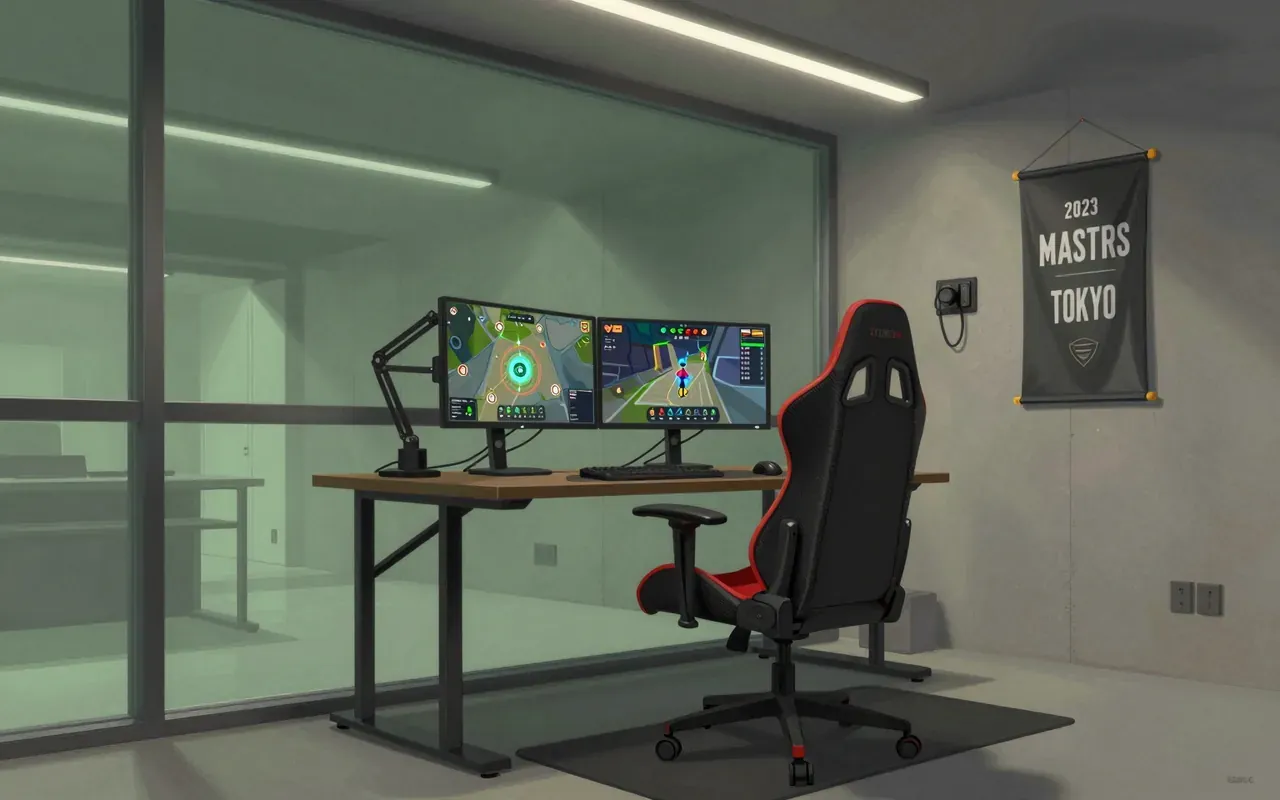
Valorant is a first-person tactical hero shooter developed and published by Riot Games. It launched on June 2, 2020. Players assume culturally grounded Agents in 5v5 attack/defend matches focused on Spike planting and defusal. Every round begins with a classic pistol and at least one signature ability charge. Weapons and ability charges are purchased using money earned from round outcomes, kills, and objectives. Agents have unique abilities requiring charges and ultimates charged via kills or orbs. Automatic and semi-automatic weapons feature unique spray patterns requiring player control for accuracy. Riot Games operates the Valorant Champions Tour.

11:11

Virtua Fighter 2

Sega · 1995

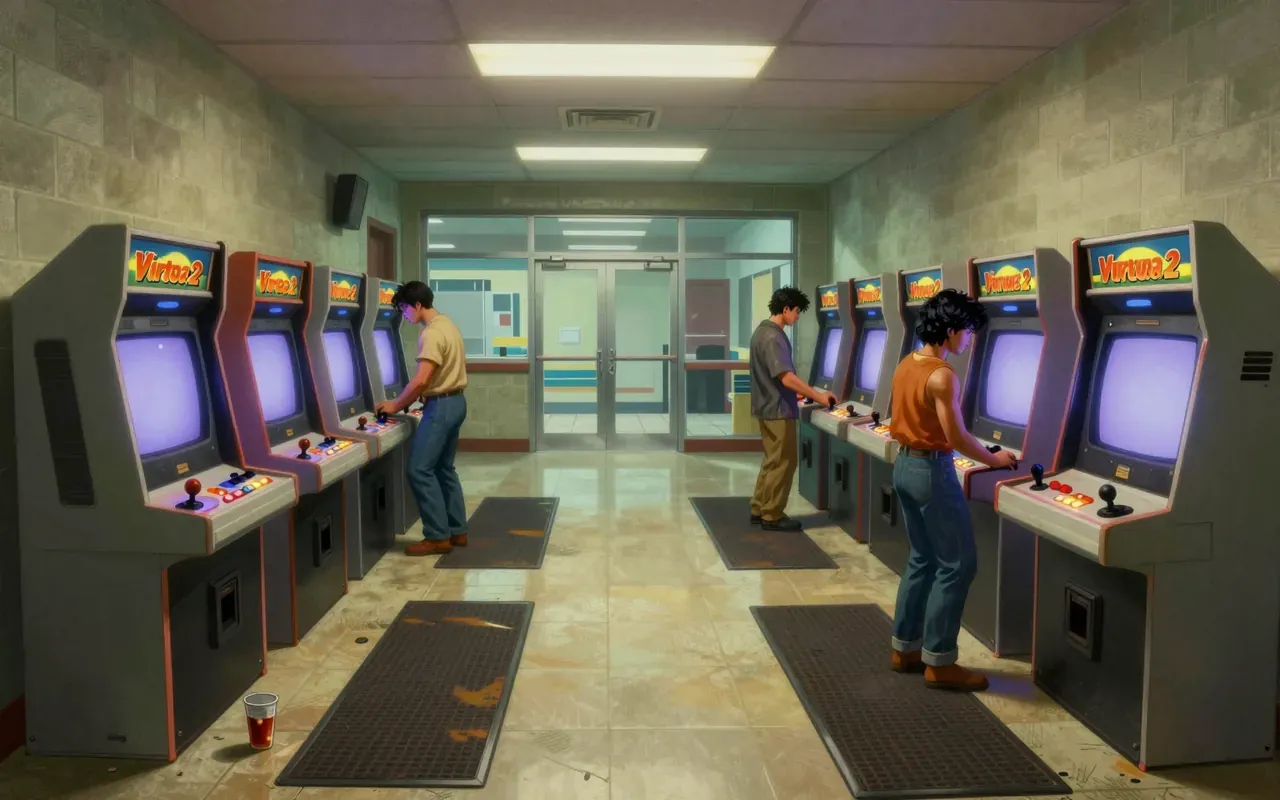
Virtua Fighter 2 is a 3D one-on-one fighting game developed by Sega AM2 for the Sega Model 2 arcade system board. It introduced adjustable arena size and infinite health, enabling sumo-style ring-out play. All characters share core mechanics like universal throws, while differing in style and expanded move sets including counters and throw prevention. It features motion-captured, texture-mapped 3D characters running at 60 FPS. It became Sega's best-selling arcade title of all time.

11:47

Virtua Fighter 5

Sega · 2006

Virtua Fighter 5 is a rigorously tuned, system-first 3D fighter built for deep spatial and temporal literacy. Its design assumes player investment in frame data, ring geometry, and layered defensive logic—not spectacle or hand-holding.

8:36

Wave Race 64

Nintendo · 1996

Wave Race 64 is a buoy-locked racing game for the Nintendo 64. It demands strict adherence to directional rules across escalating difficulty tiers. No story. No AI nuance. Just precision, points, and progression earned one lap at a time.

10:24

Wii Fit

Nintendo · 2007

Wii Fit is a simulation of physical discipline built around a single hardware input: the Wii Balance Board. It measures weight and centre of balance in real time. It offers over 40 activities — yoga, strength training, aerobics, balance games — all calibrated to that input. It supports up to eight user profiles, each tied to date of birth, height, and a Mii. It logs external activity manually. It uses an on-screen trainer in yoga and strength modes. It does not simulate athletic development. It simulates accountability.

10:29

Wolfenstein 3D

id Software · 1992

A foundational first-person shooter that uses rigid grid-based level design, fixed-height walls, and Nazi iconography as structural constraints—not just theme—to create a fast, lethal, and relentlessly focused combat loop.

10:28

World of Warcraft

Blizzard Entertainment · 2004

World of Warcraft is a persistent, factioned, realm-based MMORPG where progression is linear, social coordination is structural, and player agency is bounded by scheduled content and systemic repetition. It launched in North America on November 23, 2004, and is managed by Blizzard’s Team 2.

10:11

World of Warcraft: The Burning Crusade

Blizzard Entertainment · 2007

World of Warcraft: The Burning Crusade is a functional, tightly gated expansion — not a reinvention. It delivers new content strictly within the base game’s architecture, adding constraints as often as capabilities. Its value is proportional to your existing investment in World of Warcraft.

9:37

World of Warcraft: Wrath of the Lich King

Blizzard Entertainment · 2008

World of Warcraft: Wrath of the Lich King is the second expansion for Blizzard’s MMORPG World of Warcraft, set in the frozen continent of Northrend and centred on confronting the Lich King.

9:22

Wreckfest

Bugbear Entertainment · 2018

Wreckfest is a car simulator released on June 14, 2018 by Bugbear Entertainment using their ROMU engine. It features banger racing and demolition derby, with physics-driven soft-body damage that alters vehicle dynamics based on impact location. Players configure assists, buy and upgrade vehicles, and compete in career, multiplayer, and custom events. Its slower, more strategic pacing distinguishes it from faster destruction racers like Burnout.

9:01

Yoshi's Island

Nintendo · 1995

Yoshi's Island is a 2D side-scrolling platform game developed and published by Nintendo for the SNES. Players control Yoshis through 48 levels across six worlds to rescue Baby Luigi and reunite the brothers. It emphasises puzzle-solving and item-collecting — including hidden flowers and red coins — over pure platforming. Players use run-and-jump mechanics, a flutter jump, tongue-based enemy capture, egg-throwing, and transformation abilities. Every fourth level features a boss fight against an enlarged prior enemy. Yoshi collects coins for extra lives and retains his long tongue from Super Mario World.

8:24

Arkanoid

Taito · 1986

Arkanoid is a 1986 Taito arcade game. It is a block breaker where the player controls the Vaus paddle to bounce a ball and destroy bricks across 33 (or 36) levels.

7:54

BioShock

Ken Levine / Irrational Games · 2007

BioShock is a first-person shooter with role-playing customisation and stealth elements. You play as silent protagonist Jack, guided through Rapture toward objectives. You battle enemies using traditional weapons and plasmids—magic-like superpowers that consume EVE and can unlock new areas. Weapons are upgraded at scattered stations and fitted with varied ammo. Health is tracked and restored with consumables. Plasmids grant superpowers like fire or electricity, and can unlock new areas by melting ice or tripping locks. Using plasmids requires EVE, replenished via hypos or consumable food and drink. The player has a health meter that decreases when they take damage and can restore it with food or medical packs found throughout Rapture.

9:51

Bloodborne

FromSoftware · 2015

Bloodborne is a third-person action role-playing game developed by FromSoftware and directed by Hidetaka Miyazaki. Released in 2015, it belongs to the Soulsborne subgenre. Players control a customizable Hunter exploring the interconnected Gothic city of Yharnam, engaging in aggressive, strategic combat with trick weapons and firearms. Progression hinges on lamp checkpoints, resource management (Blood Echoes, Insight), and environmental storytelling. Combat emphasises dodging, counterattacking, and close-range aggression. The game’s structure rewards repeated exploration and spatial memory. It offers no narrative hand-holding — story emerges through item descriptions, NPC interactions, and architectural cues.

10:02

BurgerTime

Data East · 1982

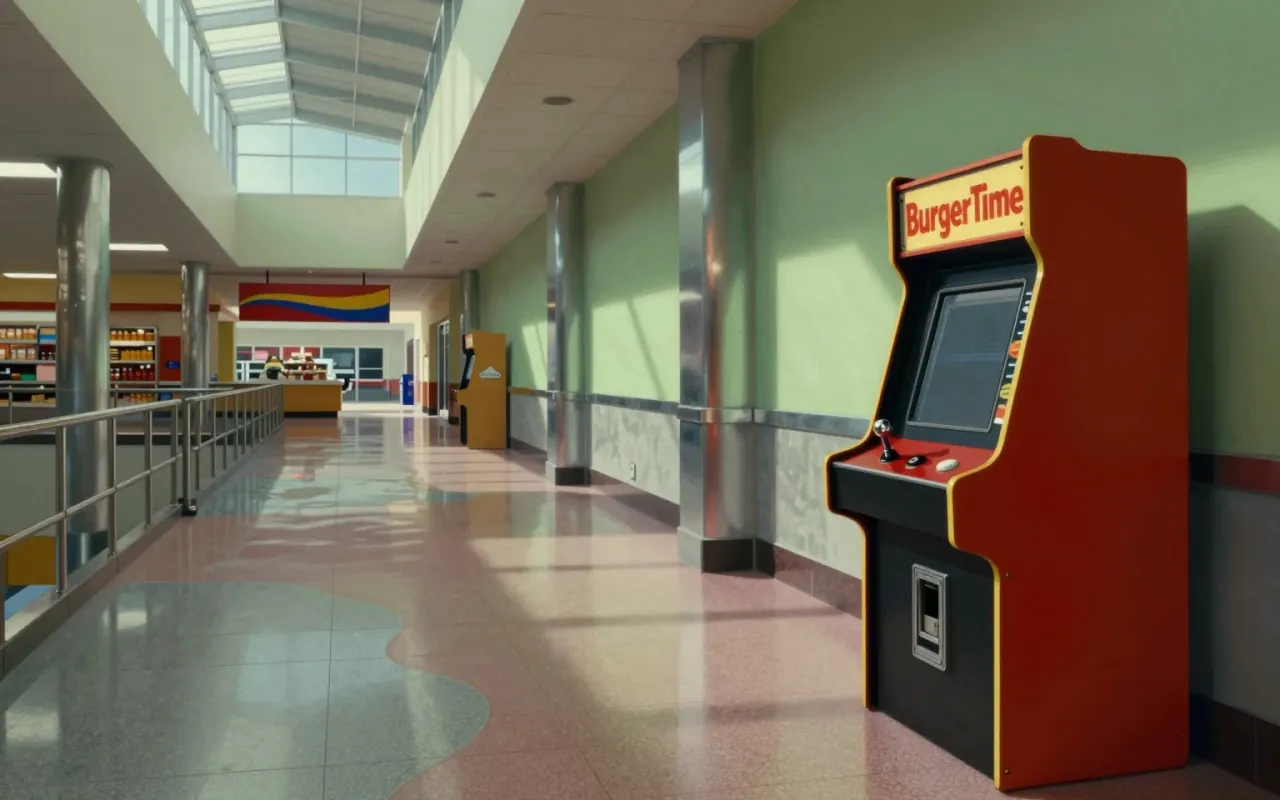
BurgerTime is a 1982 Data East arcade game where chef Peter Pepper walks across oversized burger ingredients on platforms and ladders to make them fall and stack into complete hamburgers while avoiding anthropomorphic hot dogs, fried eggs, and pickles. A limited supply of pepper can be thrown forward to briefly stun enemies. It was Data East's first major hit after abandoning the DECO Cassette System for dedicated arcade cabinets.

11:50

Castlevania: Symphony of the Night

Konami · 1997

Castlevania: Symphony of the Night restructures the action genre around exploration, transformation, and consequence. It replaces linearity with layered access. It replaces exposition with environmental logic. It replaces certainty with discovery — and demands the player pay attention.

8:53

Chrono Trigger

Square · 1995

Chrono Trigger is a 1995 turn-based RPG by Square that integrates combat into its field maps, replaces random encounters with visible or ambush enemies, and maintains clear, direct cause-and-effect in hit point management.

10:09

Cities: Skylines

Colossal Order · 2015

Cities: Skylines is a systems-first city-builder where players manage zoning, infrastructure, taxation, and district-level regulations to grow a functional urban area. It rewards methodical planning and iterative adjustment—not storytelling, speed, or spectacle.

9:05

Civilization II

Sid Meier · 1996

Civilization II is a foundational turn-based strategy game where players build a civilization from a primitive tribe while competing with computer-controlled rivals on a tile-based map. It offers three victory paths—conquest, space colonisation, or survival to 2020 AD—and lets players choose from 21 historical civilizations or create a custom one. Brian Reynolds was the primary designer; the 'Sid Meier's' prefix functioned as a quality signal. The base game supports only single-player mode. It models historical development through abstraction, not simulation.

10:21

Civilization IV

Firaxis · 2005

Civilization IV is a 4X turn-based strategy game built on the Gamebryo engine. It uses the empire-building model: players construct, expand, exploit, and exterminate across a procedurally generated square grid map.

9:01

Dark Souls III

FromSoftware · 2016

A precise, unforgiving action-RPG where every decision carries weight, every death has consequence, and every bonfire is both sanctuary and checkpoint.

9:28

Day of the Tentacle

LucasArts · 1993

Day of the Tentacle is a 1993 LucasArts point-and-click adventure built on the SCUMM engine. It uses time travel as a structural puzzle mechanic, splitting three protagonists across past, present, and future. Players switch between them and move items across eras using Chron-o-Johns or temporal placement. It features voice acting — a LucasArts first — and relies on cause-and-effect logic over reflexes or narrative choice.

9:44

Demon's Souls

FromSoftware · 2009

A punishing, systemic RPG where stamina, souls, and silence do all the talking.

10:20

Dig Dug

Namco · 1982

Dig Dug (Namco, 1982) is a maze chaser where the player carves tunnels to manipulate enemy movement and trigger rock falls. Its core loop — stop, latch, inflate, dodge — demands split-second timing and spatial foresight. It works because every action has immediate, visible, physical consequences. It does not work as a long-form experience: no story, no scaling challenge beyond repetition, no system depth beyond its two mechanics. It is for players who value clarity, consequence, and compact design over expansion or expression.

8:46

Disco Elysium

ZA/UM · 2019

Disco Elysium is a narrative RPG where dialogue and skill checks replace combat. Its 24 skills — grouped under Intellect, Psyche, Physique, and Motorics — speak autonomously during interactions. Checks use two six-sided dice and can trigger negative effects or quirks. Clothing modifies skills. The Thought Cabinet lets players internalise thoughts over in-game hours, granting benefits but occasionally drawbacks.

10:06

Doom II

id Software · 1994

Doom II is a deliberate, unapologetic escalation—not reinvention—of the original's formula. It loads the same engine with more demons, bigger maps, and sharper stakes, asking players to navigate chaos with muscle memory and opportunism. Its value lies entirely in how it plays now: tight, hostile, and unrelenting.

8:54

Dragon Quest III

Chunsoft · 1988

Dragon Quest III establishes foundational RPG structure — open-world traversal, class-based party building, day/night gating, turn-based combat, and experience-driven progression — all built on hardware constraints that shaped its rhythms and rules.

11:43

Dwarf Fortress

Bay 12 Games · 2006

Dwarf Fortress is a procedural simulation that demands reading over reacting, patience over progress, and interpretation over instruction. Its strength is systemic coherence—not accessibility.

10:58

Elden Ring

FromSoftware · 2022

Elden Ring is a third-person open-world action RPG developed by FromSoftware and released in 2022. Players explore six main areas on horseback, engage in melee or ranged combat, use stealth, upgrade attributes at sites of grace using runes, and participate in online co-op or PvP.

9:12

Escape from Monkey Island

LucasArts · 2000

Escape from Monkey Island is the fourth Monkey Island game and LucasArts’ final original adventure title. It is a narrative-driven Caribbean island-hopping game built on dialogue, puzzle-solving, and novel input schemes.