gamesbriefs
Highest rated

All briefs

467 briefs · 4633 min · 1–96 on page 1 of 5
7:58

Doom (1993 video game)

id Software · 1993

Doom (1993) is a first-person shooter for MS-DOS and Windows developed by id Software. It uses a 2.5D engine: environments render in 3D perspective but movement is confined to a 2D plane, and enemies are 2D sprites using billboarding. Players assume the role of a space marine fighting demons and possessed undead humans across labyrinthine levels grouped into episodes, each ending in a boss fight. Completion requires reaching a marked exit room while managing limited ammo, health, and armor—and avoiding hazards like toxic waste and crushing ceilings. Five difficulty levels scale enemy count, damage, speed, and aggression. The game supports cooperative and deathmatch multiplayer over local networks and modding via WAD files. Its design prioritises fast-paced action over narrative, with minimal plot conveyed through inter-episode text.
9:34

Metal Gear Solid 3: Snake Eater

Hideo Kojima / Konami · 2004

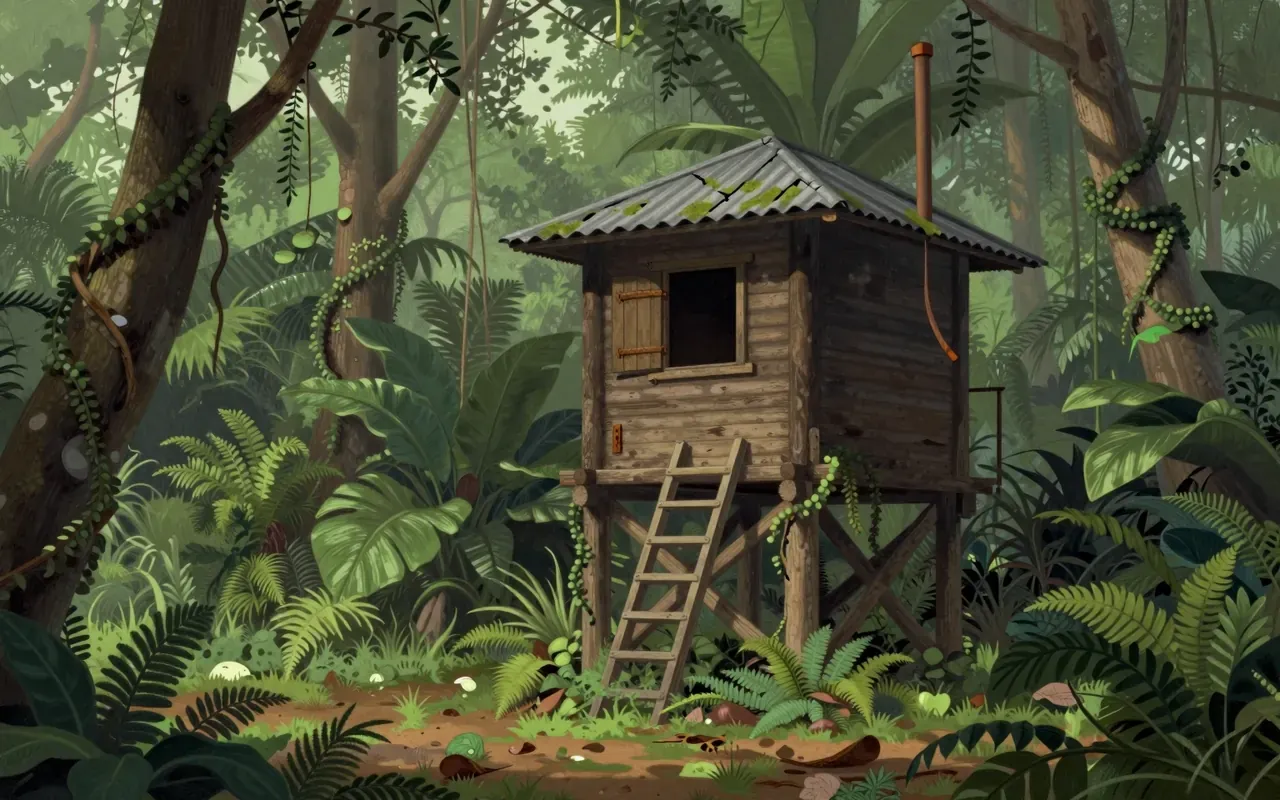
Metal Gear Solid 3: Snake Eater is a PlayStation 2 stealth game set in a Soviet tropical forest in 1964. It replaces abstract health with bodily injury tracking, swaps binary detection for a dynamic camouflage index, and ties stamina to foraging and rest. Its loop is observational, adaptive, and physically grounded—not cinematic, not reflexive, not narrative-first.
9:36

NBA Jam (1993 video game)

Midway · 1994

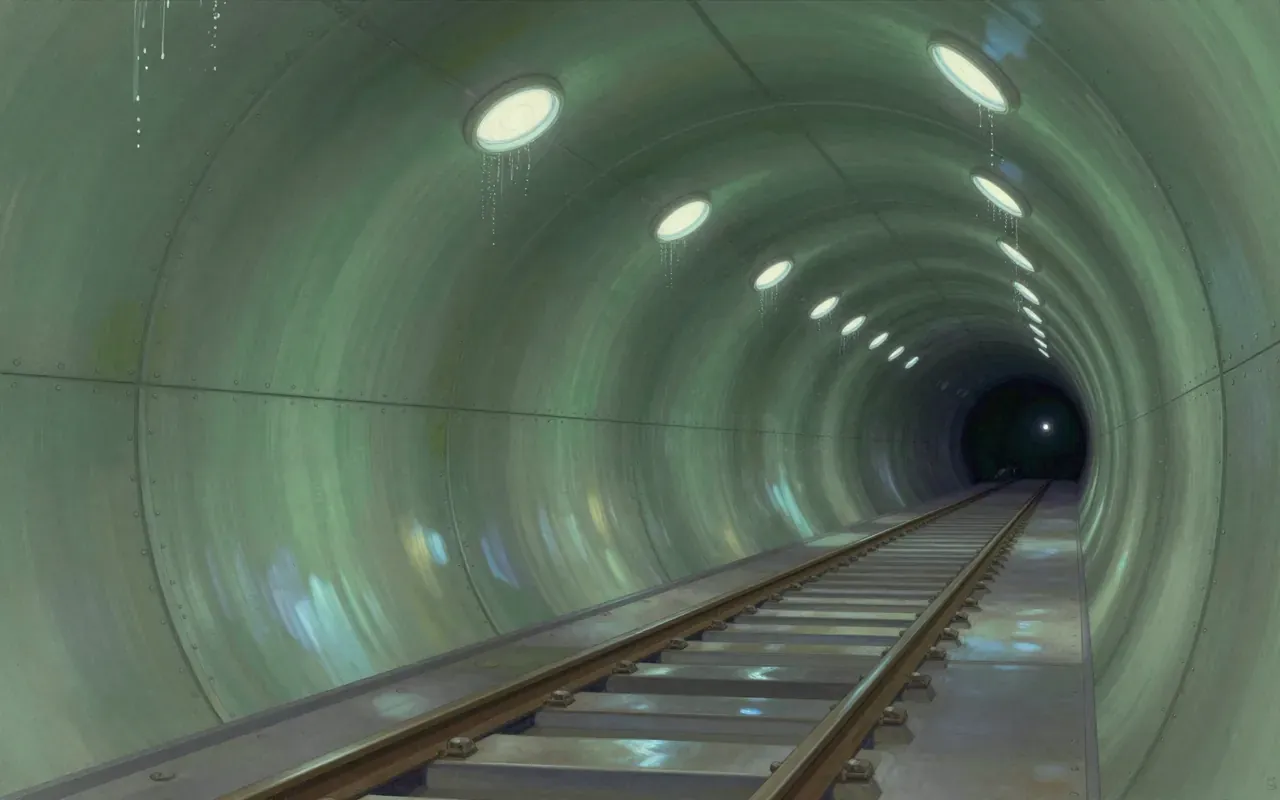
NBA Jam (1993) is a two-on-two arcade basketball game developed and published by Midway, featuring NBA-licensed teams and digitized likenesses of real players.

10:14

Prince of Persia (1989 video game)

Brøderbund · 1989

Prince of Persia (1989) is a cinematic platformer where time, health, and animation are tightly coupled systems—not flourishes. It originated on the Apple II during Broderbund’s early, hardware-conscious phase. Its design forces rhythm, precision, and memory. It does not adapt. It does not forgive. It runs on clocks, triangles, and rotoscoped frames.

9:32

The Witcher 3: Wild Hunt

CD Projekt Red · 2015

The Witcher 3: Wild Hunt is an open-world RPG built around authored consequence, not systemic simulation. Its combat demands precision, stamina, and resource management. Its world feels lived-in because of writing—not physics. It was made at great cost, with no DRM, and shipped with free DLC. It remains worth playing if you want narrative weight over procedural noise.

9:39

The Witness (2016 video game)

Jonathan Blow · 2016

The Witness is a first-person puzzle game developed and published by Thekla, Inc., released in 2016 on Windows and PlayStation 4. It is an open-world island filled with natural and human-made structures, where players solve over 650 puzzles by drawing paths on grids or across environments.

12:27

Uncharted 2: Among Thieves

Naughty Dog · 2009

Uncharted 2: Among Thieves is a third-person action-adventure platformer for PlayStation 3. It is developed by Naughty Dog. It continues the studio’s first approach to realistic worlds and characters. It constrains player action through fixed weapon loadouts, scarce grenades, and environment-locked traversal. It ties puzzle-solving to journal entries. It runs on a proprietary engine built for the PlayStation 3’s Cell architecture.

9:41

Unreal Tournament 2004

Epic Games · 2004

Unreal Tournament 2004 is a multiplayer-first first-person shooter built around movement systems, weapon dual-fires, and vehicle-integrated game types. It establishes clear win conditions per mode—objective sequencing in Assault, node capture and core destruction in Onslaught, hoop scoring in Bombing Run, flag retrieval in Capture the Flag. It falls short as a solo experience and offers no scaffolding for players unfamiliar with its movement grammar or objective logic.

9:42

Warcraft III: Reign of Chaos

Blizzard · 2002

Warcraft III: Reign of Chaos is a 2002 real-time strategy game by Blizzard. It uses fog-of-war, upkeep penalties, fixed top-down perspective, and hero progression to enforce tight, consequential decision-making.

11:08

UFO: Enemy Unknown

Julian Gollop · 2013

UFO: Enemy Unknown is a 1994 strategy game developed by Julian and Nick Gollop under Mythos Games. It divides play between the Geoscape—a global strategic layer beginning 1 January 1999—and the Battlescape—a voxel-based, turn-based tactical layer triggered by alien contact. It establishes the X-COM franchise. It asks players to manage finite resources, absorb permanent loss, and reconcile two deeply asymmetrical systems. It falls short in explanation, feedback, and accessibility—but not in consequence.

10:15

Braid (video game)

Jonathan Blow · 2008

Braid is a 2D puzzle-platform game developed by Thekla Inc., published by Microsoft, released on XBLA in 2008. Its art was created by David Hellman. It uses time manipulation as its central design pillar, delivered through six sequentially unlocked worlds, each governed by a distinct temporal rule. Narrative is conveyed through text between worlds, environmental art, and gameplay itself.

9:02

Guitar Hero (video game)

Harmonix · 2005

Guitar Hero (2005) is a rhythm game where players press coloured fret buttons and strum in time with scrolling notes on screen. Developed by Harmonix and published by RedOctane for the PlayStation 2, it uses a custom guitar-shaped controller with five colour-coded frets and a strum bar. Gameplay draws from Frequency and Amplitude, and supports both left- and right-handed configurations. A Rock Meter fails the song if depleted, and Star Power can be activated via whammy bar or tilt. Players earn points for hitting notes, chords and sustains, and increase a score multiplier through consecutive successful hits. Hammer-on and pull-off techniques allow faster note series without strumming each note. Standard controllers map notes to face buttons.

10:09

Half-Life (video game)

Valve · 1998

Half-Life replaces cutscenes with continuous control, levels with chapters, and abstract challenges with environmental logic. It asks players to observe, adapt, and inhabit a world—not just shoot through it.

10:07

Portal (video game)

Valve · 2007

Portal is a first-person puzzle game where players solve spatial challenges using a portal gun that creates bidirectional, color-coded connections between surfaces. Physics-based movement—especially momentum conservation and orientation realignment across portals—forms the core mechanical loop, enabling techniques like 'flinging'. Constraints include inability to place portals through existing portals, on moving or unsuitable surfaces, or past Emancipation Grills, which erase portals and destroy carried objects. Puzzles are structured across test chambers, with optional challenge modes emphasizing efficiency or added hazards. The player controls Chell, a silent protagonist guided and antagonized by GLaDOS, within a clinical, minimalist facility designed to foreground functional geometry over decoration.

8:40

Tempest (video game)

Atari · 1981

Tempest is a 1981 arcade tube shooter developed and published by Atari, Inc. It places a claw-shaped blaster on the near edge of a 3D, lane-based surface — often a closed tube — viewed from one end.

8:50

Asteroids (video game)

Atari · 1979

Asteroids (1979) is a multidirectional shooter developed by Atari, Inc. It uses custom vector-display hardware derived from Lunar Lander. The player controls a triangular spaceship with rotation, forward thrust, and forward fire. Movement obeys inertia: the ship continues drifting until thrust alters direction or friction halts it. Asteroids break into smaller, faster fragments when shot. Two types of flying saucers traverse the field and fire back. Screen edges wrap both horizontally and vertically. Hyperspace teleports the ship to a random location at risk of self-destruction or collision. The game features a high-score table with player initials. It was designed for arcade play and includes exploitable behaviours like edge-lurking to evade saucer aim.

9:53

Celeste (video game)

Maddy Makes Games · 2018

A tightly wound platformer where every mechanic serves both challenge and character. Its movement grammar is sparse but deeply interwoven. Its narrative is explicit, not allegorical—and its design never compromises difficulty to accommodate theme.

12:42

Dark Souls (video game)

FromSoftware · 2011

Dark Souls (2011) is a third-person action role-playing game and the first entry in a trilogy. It defines the Soulslike subgenre through high difficulty, environmental storytelling, and an interconnected world governed by deliberate, iterative gameplay.

10:30

Guild Wars (video game)

ArenaNet · 2005

Guild Wars (2005) is a competitive online role-playing game developed by ArenaNet and published by NCSoft. It features instanced PvE and PvP, a level cap of 20 (extendable to 200 attribute points via quests), and a strict eight-skill loadout drawn from a library of over a thousand. It replaces gear dependency and grinding with skill-based combat, profession-locked builds, and modular progression across missions and arenas. Revenue came from standalone expansions and microtransactions—not subscriptions.

11:34

Hades (video game)

Supergiant Games · 2018

Hades is a tightly wound action roguelike where Zagreus fights through randomized rooms in the Underworld to reach Mount Olympus. Combat relies on five precise inputs — attack, special, dash, magic, summon — with Boons from Olympians reshaping their effects each run. Death is frequent but productive: treasure funds permanent upgrades and narrative advances in the House of Hades between attempts. Rooms draw from pre-set layouts rather than generating freely, so variety emerges from enemy placement and Boon synergies — not spatial novelty. The game demands repetition, rewards pattern mastery, and ties every failure to forward motion. It is not about discovering new spaces, but mastering how known tools behave under shifting divine influence.

11:18

Soulcalibur (video game)

Namco · 1998

Soulcalibur (1999, Dreamcast) is Namco’s weapon-based fighting sequel to Soul Edge. It introduces eight-way sustained movement, forgiving input buffering, and expanded Guard Impact mechanics. Its design centres on weapon-driven character styles, tactical movement interacting with ring-out, and diversity in weapon behaviour and clash reactions.

9:16

StarCraft (video game)

Blizzard · 1998

StarCraft is a foundational RTS defined by enforced asymmetry across three races—Protoss, Zerg, and Terrans—each with unique units, economies, and strategic identities. Its campaign delivers thirty fixed missions, ten per race, with AI difficulty escalating automatically. It offers no difficulty adjustment, no mission retries, and no explicit pedagogy—only systemic divergence and player-driven translation.

10:40

The Last of Us (video game)

Naughty Dog · 2013

The Last of Us (2013) is a post-apocalyptic third-person action-adventure game developed by Naughty Dog for PlayStation 3. It follows Ellie and Joel across a United States overrun by humans infected with a Cordyceps-like fungus. Players traverse ruined environments, engage in vulnerable, resource-constrained combat using firearms, improvised weapons, and stealth, and craft or upgrade gear at workbenches. The design prioritises tension, scarcity, and character-driven stakes over systemic openness or player authorship.

10:21

Crash Team Racing

Naughty Dog · 1999

Crash Team Racing is a precise, class-driven kart racer built around a strict, multi-stage power slide mechanic. It demands rhythmic timing, not reflexes. Its hardware constraints — split-screen performance, memory limits — are visible in its design choices, not hidden behind abstraction. It is the last Crash game Naughty Dog made, and it plays like a farewell: focused, complete, and uncompromising.

10:21

Crypt of the NecroDancer

Brace Yourself Games · 2015

Crypt of the NecroDancer is a rhythm-gated roguelike released in April 2015 by Brace Yourself Games. All movement and attacks must occur on the musical beat. Enemies follow fixed rhythmic patterns — some on every beat, others on subdivisions. Missing the beat resets scoring and risks damage. The dungeon has four zones, each with four levels. Input supports dance pad, keyboard, or gamepad.

10:07

TrackMania Nations

Nadeo · 2006

TrackMania Nations is a deliberately constrained 2006 arcade racer. It removes collision, car choice, and environmental variety to focus entirely on solo time-attack precision. Its loop is simple: run, fail, restart, refine. It asks for repetition, spatial memory, and fine motor control — nothing more, nothing less.

10:30

Wipeout 2097

Psygnosis · 1996

Wipeout 2097 is a PlayStation-era anti-gravity racing game developed by Psygnosis using the console as primary reference hardware in preparation for its September 1995 Western launch. Players race against AI opponents, aiming to finish in the highest position possible. Vehicles travel at high speeds and require air-brakes for cornering. A weapons system lets players eliminate opponents mid-race. Each vehicle has a shield energy quota; depletion from weapons or impacts destroys the craft. Destroyed ships can be recharged at pit stops at the cost of race time. The Quake Disruptor creates a wave effect that launches opponents into the air. Difficulty escalates across three classes — Vector, Venom, Rapier — each with higher speeds and more complex tracks.

10:16

Advance Wars

Intelligent Systems · 2001

Advance Wars is a deterministic, grid-based strategy game where victory is defined by elimination or capture — never story, never spectacle. Its rules are tight, its feedback immediate, its constraints absolute. It runs on the Game Boy Advance. It was made by Intelligent Systems. It came out in 2001.

9:32

Age of Empires II

Ensemble Studios · 1999

Age of Empires II is a real-time strategy game developed by Ensemble Studios in 1999, running on the Genie Game Engine. It is the second title in the original Age of Empires series. Players advance one of 13 civilizations through four historical Ages to build towns, gather resources, create armies, and defeat opponents.

10:24

Beat Saber

Beat Games · 2018

Beat Saber is a virtual reality rhythm game developed by Beat Games in 2018.

10:53

Borderlands 2

Gearbox Software · 2012

Borderlands 2 is a shooter built around loot as feedback, class skills as rhythm, and repetition as reward. Its design commits to systems over spectacle—and it works.

9:57

Burnout 3: Takedown

Criterion Games · 2004

Burnout 3: Takedown is a 2004 arcade racing game developed by Criterion Games and published by Electronic Arts and Acclaim Entertainment. It is the third instalment in the Burnout series, defined by fast-paced arcade racing. Its central innovation is the Takedown mechanic: slamming opponents until they crash, which fills and extends the boost meter. Boost is earned through risky driving—including drifting, near misses with traffic, and driving in oncoming lanes—and used to rapidly increase speed. Standard circuit races take place on carriageways and city streets populated with traffic. Single Race mode pits the player against five AI opponents in a single or multiple lap race. Crash mode involves causing monetary damage in multi-vehicle pileups at junctions, featuring Crashbreakers and power-ups like Heartbreaker. Impact Time—a slow-motion state triggered by crashes—enables Aftertouch, letting players steer wrecked chassis into rivals. The game runs at 60 fps during driving for responsiveness, dropping to 30 fps during crashes to render more particles and debris.

9:51

Burnout Paradise

Criterion Games · 2008

Burnout Paradise is a racing game where the city is the only level, the car is the only tool, and crashing is the only score.

10:08

Counter-Strike: Global Offensive

Valve · 2012

Counter-Strike: Global Offensive is a team-based, round-driven, economy-focused multiplayer shooter where asymmetry, recoil control, and mode-specific rules define every session.

9:10

Dirt Rally

Codemasters · 2015

Dirt Rally is a focused, unforgiving rally simulation that replaces spectacle with consequence. It demands repetition, observation, and adaptation—not reflexes or narrative. Its strength is in its specificity: real locations, real cars, real weather, real penalties. Its limit is in what it refuses to offer: accessibility, explanation, or compromise.

9:06

Donkey Kong Country

Rare · 1994

Donkey Kong Country is a side-scrolling platform game where players control Donkey and Diddy Kong across 40 levels accessed via a world map. Gameplay involves jumping between platforms, avoiding obstacles, swapping between characters with distinct abilities (Donkey: stronger, terrain-slap; Diddy: faster, more agile), defeating enemies through jumping, rolling, or throwing barrels, and completing boss fights at the end of each area. The game features collectibles, animal buddies with special abilities, bonus stages, and multiplayer modes.

9:39

Donkey Kong Country 2

Rare · 1995

Donkey Kong Country 2 is a tightly wound 2D platformer where asymmetrical character abilities, mandatory boss gates, and zero-tolerance checkpointing define its rhythm. It teaches through repetition, punishes hesitation, and refuses to separate movement from consequence.

9:50

Doom Eternal

id Software · 2020

Doom Eternal is a first-person shooter where players control the Doom Slayer to battle demonic forces of Hell. Combat is fast-paced and requires constant movement. Players must manage health, armor, and ammo — restoring health via Glory Kills after staggering enemies, refilling armor by igniting enemies with a flamethrower, and obtaining ammo by using the chainsaw on enemies (except for BFG and Crucible Blade ammo and charges, which are only available in combat arenas). Glory Kills recharge the Blood Punch melee attack, which destroys enemy armor. The Destructible Demons system causes enemies' bodies to deteriorate progressively as they take damage. The Slayer is highly agile, capable of double-jumping, wall-climbing, and using an omnidirectional dash to evade enemies.

9:27

F-Zero GX

Nintendo · 2003

F-Zero GX is a high-speed futuristic racing game built around track memorisation, reflexes, and precise vehicle control. It retains core mechanics from F-Zero X but expands them with customizable machines, energy-based boosting and damage, dynamic track elements (dash/jump plates, obstacles), and advanced cornering techniques like drifting and snaking. Its structure includes Grand Prix, Story, Time Attack, and multiplayer modes, all governed by energy management, vehicle tuning, and escalating difficulty. The game was developed by Amusement Vision and published by Nintendo for the GameCube.

10:10

Fire Emblem Awakening

Intelligent Systems · 2012

Fire Emblem Awakening is a tactical RPG for Nintendo 3DS where grid-based combat, relationship-building, and permadeath choices define every session. It launched as the series’ make-or-break title — and succeeded by selling 400,000 units in Japan within its first year.

10:35

Hitman 3

IO Interactive · 2021

Hitman 3 refines the assassination loop to its sharpest point: observe, disguise, infiltrate, eliminate. It assumes competence. It delivers density. It ends where it began — in the architecture of opportunity.

10:38

Hitman: Blood Money

IO Interactive · 2006

Hitman: Blood Money is a stealth assassination game released in May 2006. It is the fourth title in the Hitman franchise. Developed by IO Interactive and published by Eidos Interactive, it launched on Windows, PlayStation 2, Xbox, and Xbox 360. The player controls Agent 47 in third-person, navigating levels with a map that shows topography, targets, and characters. Armed guards, security checkpoints, and witnesses obstruct progress. The game penalises excessive noise and violence. New mechanics include climbing, body disposal, using NPCs as human shields, improved unarmed combat, and weapon and equipment upgrades — five weapons and some equipment can be upgraded. Missions allow multiple elimination methods, including accidental-looking kills and improvised weaponry, even in the presence of bystanders. Critics praised the game at release, and retrospectives have called it the best in the series.

8:39

Kirby Super Star

Nintendo · 1996

Kirby Super Star is a side-scrolling platformer anthology composed of seven distinct game modes and two minigames. It unifies them with Kirby’s core abilities: inhalation, copying, floating flight, guarding, and Helper-based cooperation.

10:54

Left 4 Dead

Valve · 2008

Left 4 Dead is a cooperative first-person shooter released in 2008 by Valve. Players control one of four survivors navigating zombie-infested environments to reach safe areas. Its defining feature is the AI Director, which dynamically adjusts enemy spawns and item placements to ensure varied, tension-filled experiences across playthroughs. Cooperation is structurally enforced via mechanics like wall-visible teammate outlines, shared healing, mandatory revival from incapacitation, and lethal consequences for repeated failure to recover. Campaign mode includes safehouse checkpoints, crescendo events, and defensive finales, while multiple modes (Versus, Survival, Single-Player) extend replayability. The game uses the Source engine and emphasizes cinematic, film-inspired presentation and communication systems — including voice callouts and visual cues — to sustain coordinated group action.

9:13

Mortal Kombat II

Midway · 1993

Mortal Kombat II is a 1993 arcade fighting game by Midway. It improves on the original with faster pacing, refined movement options, and expanded finishers. It removes bonus games in favour of a win-counter. Finishing moves are disabled against or by boss or secret characters.

10:28

Outer Wilds

Mobius Digital · 2019

Outer Wilds is a tightly wound clockwork of time, memory, and celestial mechanics. It gives you nothing but questions—and insists you answer them in order.

8:39

Pac-Man

Namco · 1980

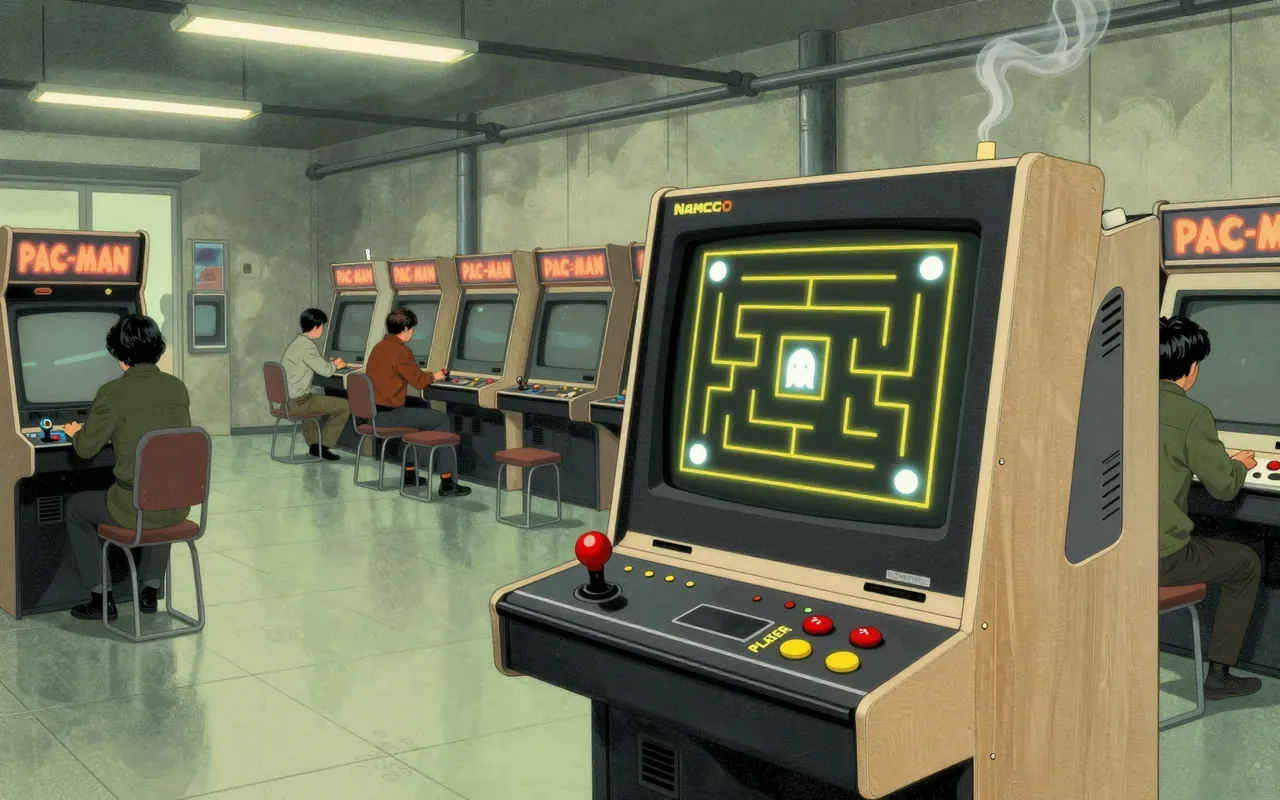
Pac-Man is a foundational arcade game released by Namco in Japan in 1980 (test-marketed 22 May, wide release July) and North America in November 1980. Its design centres on eating dots in a fixed maze while evading four ghosts—Blinky, Pinky, Inky, and Clyde—each governed by a distinct AI rule. Power pellets temporarily reverse ghost behaviour and enable Pac-Man to consume them. Completion of each level requires clearing all dots; contact with a ghost costs a life. The game ends when all lives are lost.

12:03

Persona 3

Atlus · 2006

Persona 3 is a PlayStation 2 RPG released by Atlus in 2006. It combines traditional RPG mechanics with simulation elements. The game follows the protagonist, who balances their daily life of going to school and building relationships with others with fighting the monstrous Shadows during the Dark Hour. Each day is divided into daytime and evening segments. Except for scripted events, such as plot progression or special events, the player is free to choose how each day is spent, with most activities causing time to pass. The types of activities and characters that can be interacted with vary depending on the day of the week and time of day. Additionally, some activities are limited by the protagonist's three attributes; Academics, Charm, and Courage, which can be built by performing various activities or making certain correct choices. During the evening, players can choose to visit Tartarus, the game's main dungeon, where they can build their party's experience and gain new items. On the day of the full moon, players will participate in a boss battle to progress the story.

11:10

Persona 4

Atlus · 2008

Persona 4 is a PlayStation 2 RPG by Atlus, set in the fictional Japanese countryside town of Inaba in 2011. It divides gameplay between daily life in Inaba and dungeon exploration in the surreal TV World, accessed through televisions. Players manage segmented days—'After School/Daytime' and 'Evening'—with most actions consuming one segment. Evening options vanish after visiting the TV World. Five attributes (Understanding, Diligence, Courage, Knowledge, Expression) gate activities and dialogue, growing through specific real-world actions. Social Links with characters map to the Major Arcana and enhance combat and Persona fusion. Fog appears after consecutive rainy days; failing to rescue a captive before fog triggers a permanent game over requiring reload or rewind. Developed by P-Studio—established in 2006—and directed by Katsura Hashino, it was published and localised for North America by Atlus USA.

9:45

Persona 5

Atlus · 2016

Persona 5 is a Japanese role-playing game developed by P-Studio and published by Atlus in 2016. It simulates one academic year in Tokyo through a rigid day-night cycle, blending social relationship-building (Confidants) with dungeon-crawling in two distinct Metaverse realms: narrative Palaces and procedural Mementos.

8:22

Street Fighter III

Capcom · 1999

Street Fighter III discards familiarity to enforce precision. Its parry system removes all passive defence. Every dash, leap, or super jump exists only as long as your timing holds. It is not generous. It is not nostalgic. It is calibrated.

10:06

Subnautica

Unknown Worlds Entertainment · 2014

Subnautica is a first-person, open-world survival action-adventure game set mostly underwater on the alien ocean planet 4546B. You play as Ryley Robinson, sole survivor of the Aurora crash. Your objectives are to gather resources, survive local flora and fauna, and escape.

10:26

Tactics Ogre

Quest · 1995

Tactics Ogre is a tightly wound tactical RPG where turn order is dynamic, consequence is immediate, and narrative choice reshapes the world physically and morally.

9:38

Team Fortress 2

Valve · 2007

Team Fortress 2 is a 2007 multiplayer first-person shooter by Valve Corporation for Windows, Xbox 360, and PlayStation 3. Players join RED or BLU teams and select from nine classes, each with fixed primary, secondary, and melee weapons. Victory depends on class synergy and objective execution. Critical hits randomly triple damage for some weapons. Objectives are introduced via video and announced mid-match by the Administrator.

10:17

The Stanley Parable

Davey Wreden · 2013

The Stanley Parable is a narrative-first game about obedience, authorship, and the fiction of player agency. It offers no combat, no progression, and no persistent world — only walking, pressing, opening, and listening. Its design is a provocation: every choice you make is anticipated, narrated, and contained.

8:56

Tony Hawk's Pro Skater

Neversoft · 1999

Tony Hawk's Pro Skater is a tightly wound trick-chaining machine. It asks for precision, repetition and split-second decisions — then rewards them with escalating points, visual flash and palpable momentum. Its constraints — fixed camera, two-minute windows, diminishing trick scores — are not limitations. They are the architecture of its appeal.

10:47

Unreal Tournament

Epic Games · 1999

Unreal Tournament (1999) is a tightly constrained arena shooter built for repeatable, high-skill duels. Its design rejects sprawl, narrative, and persistence in favour of immediate spatial logic, weapon-based physics, and player-defined rulesets. It remains potent not because it aged well—but because it never tried to age at all.

11:11

Virtua Fighter 2

Sega · 1995

Virtua Fighter 2 is a 3D one-on-one fighting game developed by Sega AM2 for the Sega Model 2 arcade system board. It introduced adjustable arena size and infinite health, enabling sumo-style ring-out play. All characters share core mechanics like universal throws, while differing in style and expanded move sets including counters and throw prevention. It features motion-captured, texture-mapped 3D characters running at 60 FPS. It became Sega's best-selling arcade title of all time.

11:47

Virtua Fighter 5

Sega · 2006

Virtua Fighter 5 is a rigorously tuned, system-first 3D fighter built for deep spatial and temporal literacy. Its design assumes player investment in frame data, ring geometry, and layered defensive logic—not spectacle or hand-holding.

9:51

Bloodborne

FromSoftware · 2015

Bloodborne is a third-person action role-playing game developed by FromSoftware and directed by Hidetaka Miyazaki. Released in 2015, it belongs to the Soulsborne subgenre. Players control a customizable Hunter exploring the interconnected Gothic city of Yharnam, engaging in aggressive, strategic combat with trick weapons and firearms. Progression hinges on lamp checkpoints, resource management (Blood Echoes, Insight), and environmental storytelling. Combat emphasises dodging, counterattacking, and close-range aggression. The game’s structure rewards repeated exploration and spatial memory. It offers no narrative hand-holding — story emerges through item descriptions, NPC interactions, and architectural cues.

11:50

Castlevania: Symphony of the Night

Konami · 1997

Castlevania: Symphony of the Night restructures the action genre around exploration, transformation, and consequence. It replaces linearity with layered access. It replaces exposition with environmental logic. It replaces certainty with discovery — and demands the player pay attention.

8:53

Chrono Trigger

Square · 1995

Chrono Trigger is a 1995 turn-based RPG by Square that integrates combat into its field maps, replaces random encounters with visible or ambush enemies, and maintains clear, direct cause-and-effect in hit point management.

10:21

Civilization IV

Firaxis · 2005

Civilization IV is a 4X turn-based strategy game built on the Gamebryo engine. It uses the empire-building model: players construct, expand, exploit, and exterminate across a procedurally generated square grid map.

9:01

Dark Souls III

FromSoftware · 2016

A precise, unforgiving action-RPG where every decision carries weight, every death has consequence, and every bonfire is both sanctuary and checkpoint.

9:28

Day of the Tentacle

LucasArts · 1993

Day of the Tentacle is a 1993 LucasArts point-and-click adventure built on the SCUMM engine. It uses time travel as a structural puzzle mechanic, splitting three protagonists across past, present, and future. Players switch between them and move items across eras using Chron-o-Johns or temporal placement. It features voice acting — a LucasArts first — and relies on cause-and-effect logic over reflexes or narrative choice.

9:44

Demon's Souls

FromSoftware · 2009

A punishing, systemic RPG where stamina, souls, and silence do all the talking.

10:20

Dig Dug

Namco · 1982

Dig Dug (Namco, 1982) is a maze chaser where the player carves tunnels to manipulate enemy movement and trigger rock falls. Its core loop — stop, latch, inflate, dodge — demands split-second timing and spatial foresight. It works because every action has immediate, visible, physical consequences. It does not work as a long-form experience: no story, no scaling challenge beyond repetition, no system depth beyond its two mechanics. It is for players who value clarity, consequence, and compact design over expansion or expression.

8:46

Disco Elysium

ZA/UM · 2019

Disco Elysium is a narrative RPG where dialogue and skill checks replace combat. Its 24 skills — grouped under Intellect, Psyche, Physique, and Motorics — speak autonomously during interactions. Checks use two six-sided dice and can trigger negative effects or quirks. Clothing modifies skills. The Thought Cabinet lets players internalise thoughts over in-game hours, granting benefits but occasionally drawbacks.

10:58

Elden Ring

FromSoftware · 2022

Elden Ring is a third-person open-world action RPG developed by FromSoftware and released in 2022. Players explore six main areas on horseback, engage in melee or ranged combat, use stealth, upgrade attributes at sites of grace using runes, and participate in online co-op or PvP.

8:39

Factorio

Wube Software · 2016

Factorio is a factory simulation game developed and published by Czech studio Wube Software.

9:11

Final Fantasy X

Square · 2001

Final Fantasy X (2001) is a PlayStation 2 RPG by Square that replaces the Active Time Battle system with the Conditional Turn-Based Battle system, abandons traditional leveling for the Sphere Grid, redefines summoning via persistent Aeons, and implements interactive Overdrives. It runs on a continuous 3D world map.

9:57

Galaga

Namco · 1981

Galaga is a fixed shooter arcade game developed and published by Namco in 1981.

10:05

Half-Life 2

Valve · 2004

Half-Life 2 is a 2004 first-person shooter by Valve. It is played from Gordon Freeman’s perspective in a linear campaign combining combat, exploration, puzzle-solving, platforming, and scripted sequences. Its core innovation is the gravity gun, which lets the player pull and throw objects to solve puzzles and fight. The game maintains seamless transitions between modes and integrates physics-based interaction throughout.

9:21

Hollow Knight

Team Cherry · 2017

Hollow Knight is a 2D side-scrolling Metroidvania. The player controls a silent insectoid warrior exploring the underground fallen kingdom of Hallownest. Core gameplay involves attacking enemies with a sword-like Nail, gaining Soul from combat to fuel abilities like Focus (mask regeneration) and offensive spells, and using Soul for charm-based boosts. Hit points are represented by masks; losing all masks results in death and spawns a Shade at the death location, marked on the map. The game features nonlinear exploration, ability-gated progression, fast travel via Stag Stations, and a charm system that consumes limited charm notches. It was developed and published by Team Cherry, released first on Linux, macOS, and Windows.

8:50

Ico

Fumito Ueda · 2001

Ico is a third-person action-adventure built around protecting and guiding Yorda through an abandoned castle. Its minimalist design removes UI, dialogue, and combat options for Yorda — making her presence a structural necessity, not a narrative flourish. The player jumps, climbs, pushes, pulls, and lifts — always in service of moving her forward. The fixed camera follows both characters, panning slightly to reveal environment. Light is overexposed and desaturated. Story is minimal and told in fictional languages. Mechanics were conceived before story.

8:56

Mass Effect 2

BioWare · 2010

Mass Effect 2 is a tightly authored, choice-driven action RPG that prioritises narrative consequence and squad loyalty over systemic freedom. Its strength lies in how imported choices reshape the story, how class design shapes combat, and how the galaxy map serves plot—not exploration. It asks players to commit to a single, high-stakes arc. It withholds open-ended world interaction, real-time loadout flexibility, and non-linear quest resolution.

11:14

Metroid Prime

Retro Studios · 2003

Metroid Prime redefined what a 3D adventure could be — not through spectacle, but structure.

9:45

Minecraft

Mojang · 2009

Minecraft is a sandbox and survival game developed by Mojang Studios. Its first alpha version was released on 17 May 2009. It began as a clone of Infiniminer.

10:52

Portal 2

Valve · 2011

Portal 2 is a first-person puzzle-platform game developed by Valve and released in 2011. It builds on the original Portal's portal-gun mechanic with new tools—gels, lasers, tractor beams, and launch plates—and introduces cooperative play with two robot characters. All gameplay occurs in discrete test chambers inside the decaying Aperture Science facility.

10:42

Resident Evil 4

Capcom · 2005

Resident Evil 4 (Capcom, 2005) is a GameCube action-horror title in which Leon S. Kennedy rescues Ashley Graham from a cult in rural Spain. It replaces fixed camera angles and slower pacing with dynamic over-the-shoulder shooting, laser-sighted aiming, limb-targeted combat, context-sensitive environmental interaction, and quick time events. It received universal acclaim and was a financial success for Capcom, leading to ports across multiple systems.

9:00

Robotron: 2084

Williams Electronics · 1982

A foundational twin-stick shooter that replaces rhythm with reflex, structure with surge, and progression with persistence.

10:30

Sekiro: Shadows Die Twice

FromSoftware · 2019

Sekiro: Shadows Die Twice is a 2019 action-adventure game developed by FromSoftware. Players control Wolf, a shinobi on a quest to rescue his lord Kuro. Gameplay focuses on stealth, exploration, and combat—with particular emphasis on boss battles. It is played from a third-person perspective. Compared to FromSoftware's Dark Souls series, Sekiro features fewer role-playing elements, lacks character creation and the ability to level up a variety of stats, and has no real-time multiplayer elements. It does include gear upgrading, special abilities with a prosthetic arm, a skill tree, and limited ability customization. Combat revolves around using a katana to attack enemy posture and balance, deflecting incoming attacks to create openings for a single killing blow. Stealth allows players to instantly eliminate or severely damage most enemies if they can get in range undetected. Sekiro is part of the Soulslike subgenre defined by high difficulty and environmental storytelling. Hidetaka Miyazaki directed the game.

10:09

Shadow of the Colossus

Fumito Ueda · 2005

Shadow of the Colossus is a third-person action-adventure built around sixteen large-scale boss encounters in a seamless open world. It was directed and lead-designed by Fumito Ueda at Sony Computer Entertainment’s Japan Studio. Its structure is cyclical, minimal, and mechanic-first—designed under PlayStation 2 hardware constraints that forced reduction: from 48 planned colossi to 16, and no day/night cycle.

10:52

Silent Hill 2

Team Silent · 2001

Silent Hill 2 is a 2001 survival horror game developed by Team Silent within Konami Computer Entertainment Tokyo. It uses third-person perspective, no HUD, light-dependent maps, manual annotation, and environmental progression to frame James Sunderland’s search for his deceased wife as an act of psychological excavation.

9:56

Sonic the Hedgehog 2

Sega · 1992

Sonic the Hedgehog 2 is a side-scrolling platformer released on the Sega Genesis. It tasks the player with stopping Doctor Robotnik from stealing the Chaos Emeralds to power the Death Egg. It introduces Tails as a controllable sidekick and the spin dash as a core mobility tool.

8:40

Sonic the Hedgehog

Sega · 1991

Sonic the Hedgehog (1991) is a speed-first 2D platformer built to define Sega’s identity against Nintendo. Its loop is acceleration → memorised path → consequence of misstep → rapid recovery. It asks for repetition, not explanation. It rewards anticipation, not reaction. It is not generous. It is specific.

10:36

StarCraft II

Blizzard · 2010

StarCraft II is a real-time strategy game developed and published by Blizzard Entertainment for Windows and Mac OS X. Players act as military commanders for one of three species across single-player campaigns and multiplayer modes. Versus mode supports team sizes from 1v1 up to 4v4. Player skill is ranked in regional ladders divided into bronze through grandmaster leagues. Archon mode allows multiple humans to jointly control one player's forces in a 1v1 match. Co-op mode pairs two players against AI-controlled opponents, each commanding a unique hero commander. Commanders level up across co-op matches, unlocking upgrades and abilities that alter future gameplay. Mutations are optional modifiers that alter co-op missions with increased difficulty and chaotic effects.

10:29

Stardew Valley

Eric Barone · 2016

Stardew Valley is a top-down, open-ended farm life simulation where players inherit a dilapidated farm from their deceased grandfather, leave a corporate job, and rebuild life near Pelican Town in Stardew Valley.

9:57

Street Fighter IV

Capcom · 2008

Street Fighter IV is a 2008 fighting game by Capcom. It runs on Taito Type X2 arcade hardware. It uses 3D models on a traditional 2D gameplay plane. It belongs to Capcom’s flagship Street Fighter franchise — one of the most popular fighting game series.

10:28

Suikoden II

Konami · 1998

Suikoden II is a PlayStation RPG by Konami (1998) that ties narrative, recruitment, and strategy into a single arithmetic: level gaps dictate XP, rune slots dictate magic, and sidequests dictate who joins your army. It refuses to explain itself — and rewards attention to its systems with structural integrity, not spectacle.

9:51

Super Mario Bros.

Nintendo · 1985

Super Mario Bros. establishes a foundational platforming loop: move right through side-scrolling stages, avoid hazards and enemies, collect coins and power-ups, and reach the flagpole. Core mechanics include dynamic size-changing via Super Mushroom (granting temporary invincibility and brick-breaking), precise jump-based enemy defeat (with varied responses per enemy type), and life management through coin counts, hidden items, and chaining actions. World 1-1 functions as an embedded tutorial, teaching mechanics through repetition and escalation rather than explicit instruction. Hardware constraints shaped design decisions—e.g., Goombas were made with a flipped sprite to save memory, clouds and bushes reuse the same tile, and background tiles are algorithmically generated. The game’s scrolling engine, adapted from Excitebike, enables smooth acceleration from walk to run—a technical departure from constant-speed movement in earlier platformers.

12:00

Super Mario World

Nintendo · 1990

Super Mario World is a 2D side-scrolling platformer for the SNES, built around dual-layer navigation (overworld map + linear side-scrolling levels), expanded movement mechanics (Spin Jump, Cape Feather flight/gliding), and new systems like Yoshi riding, power-up storage, and secret Star Road routes.

11:54

Super Metroid

Nintendo · 1994

Super Metroid is a 2D side-scrolling action-adventure game set on the fictional planet Zebes, where Samus Aran pursues a Metroid stolen by Ridley. Its design revolves around non-linear exploration, directional combat, and progressive ability-gated traversal using power-ups like Morph Ball, Spring Ball, and Speed Booster. Movement mechanics—including wall jumping and Moon Walking—expand spatial agency. Systems like the automap, inventory screen, and save stations structure progression. The game is part of Nintendo's Metroid franchise and was sold as an individual title among more than 5.9 billion Nintendo games sold worldwide.

9:20

Super Smash Bros. Melee

Nintendo · 2001

Super Smash Bros. Melee is a platform fighter where damage is tracked as a percentage that directly governs knockback, not depletion. Players use directional joystick input plus a single button to perform attacks—including special moves mapped to B + direction. Victory comes from knocking opponents off themed stages—not reducing their health to zero. Up to four players compete locally in Stock or Time modes. It is a Nintendo-published title featuring internationally recognised Nintendo characters. It belongs to the Super Smash Bros. franchise, a major Nintendo IP.

9:04

System Shock 2

Looking Glass Studios / Irrational Games · 1999

System Shock 2 is a first-person action role-playing survival horror game set aboard a starship in a cyberpunk 2114. You play as a soldier fighting a genetic infection through combat, exploration, and skill development. Gameplay consists of first-person combat and exploration, with role-playing elements including hacking and psionic abilities. Navigation is first-person with a HUD showing character/weapon info, map, and drag-and-drop inventory. The game fuses FPS immediacy with RPG consequence, demanding patience and attention from the player.

10:14

Tekken 3

Namco · 1997

Tekken 3 is a 3D fighting game developed by Namco, launched in arcades in March 1997. It refines the series’ combat with universal sidestepping, lower jumps, universal reversals, faster knockdown recovery, expanded juggling, and new combo throws. It adds two minigames—Tekken Force (a side-scrolling beat 'em up) and Tekken Ball (a volleyball-style combat mode)—and implements a PlayStation-specific unlock system where only 10 of 24 fighters are initially available.