gamesbriefs
Highest rated

All briefs

467 briefs · 4633 min · 193–288 on page 3 of 5
8:10

Fire Emblem: The Blazing Blade

Intelligent Systems · 2003

Fire Emblem: The Blazing Blade is a tactical RPG where permanent death, class-based roles, and square-grid combat define every choice. It asks players to weigh risk against reward, memorise ranges, and accept loss as instruction—not failure.

10:14

Fire Emblem: Three Houses

Intelligent Systems · 2019

Fire Emblem: Three Houses is a tactical RPG released in 2019 by Intelligent Systems in partnership with Koei Tecmo. Intelligent Systems provided the main plot, game system, and mechanics; Koei Tecmo handled the bulk of the programming. Players choose their character's gender and name at the start. Gameplay alternates between story-driven battles and social simulation segments at Garreg Mach Monastery—the central hub for all activities. Selecting a house determines the narrative path from that point forward. The opening half focuses on school life, then the story skips ahead five years and shifts to war, locking the player to their chosen house. Players manage a calendar with limited days to allocate to varied monastery activities—including teaching, field exercises, greenhouse planting, fishing, and free-time interactions. Relationships are built via Support actions influenced by player choices and dialogue.

9:18

Forza Horizon

Playground Games · 2012

Forza Horizon is a festival-driven open-world racer that swaps lap timing for stunt chaining, uses Colorado’s roads as its track, and runs exclusively on Xbox 360. It works because it makes aggression pay. It falters because it never deepens beyond that loop.

11:08

Grim Fandango

LucasArts · 1998

Grim Fandango (1998) is LucasArts’ first 3D adventure game. It replaces UI cues with Manny Calavera’s head-turning and inventory management with coat-jacket animations. Players solve puzzles by collecting and combining objects, talking through dialogue trees, and navigating pre-rendered environments — all without death or unwinnable states. Its strengths are its writing, voice acting, soundtrack, and stylised world. Its weaknesses are stiff movement, fixed-camera disorientation, and repetitive environmental feedback. It rewards patience and attention. It resists speed and muscle memory.

10:12

Guild Wars 2

ArenaNet · 2012

Guild Wars 2 delivers responsive storytelling, dynamic world events, and skill-based combat — all without subscription fees. But its 'living world' relied on scheduled, often temporary content. Its branching narrative lives behind instanced doors. Its ambition outpaced its persistence.

10:44

Guilty Gear Strive

Arc System Works · 2021

Guilty Gear Strive is a 2D fighting game developed by Arc System Works in Yokohama. It reconstructs the franchise, removes Instant Kill, introduces Wall Break, omits mechanical explanations from its tutorial, and launches without ranked mode.

11:28

Halo 3

Bungie · 2007

Halo 3 is a first-person shooter released on September 25, 2007, by Bungie. It is the third mainline Halo title. It features on-foot and vehicular combat, a fixed loadout system, and Forge—a real-time, budget-limited map editor for multiplayer maps.

13:26

Halo: Combat Evolved

Bungie · 2001

Halo: Combat Evolved is a foundational console FPS that redefined player agency through hardware-aware design — not open-ended freedom, but tightly scoped, controller-optimised loops of movement, shielding, and vehicle-based pacing.

10:31

Injustice: Gods Among Us

NetherRealm Studios · 2013

Injustice: Gods Among Us is a 2013 DC fighting game by NetherRealm Studios. It uses a 2.5D plane, single-round matches, two life bars, a four-button layout (including a character-specific trait), power-vs-gadget class distinctions, stage transitions triggered by corner heavy attacks, and a super meter filled by action or damage and spent on enhanced moves or counters.

10:38

Left 4 Dead 2

Valve · 2009

Left 4 Dead 2 is a tightly wound co-op FPS that uses procedural pacing and rigid inventory to forge intense, fleeting group cohesion — but collapses without live human coordination.

10:55

Mario Kart 64

Nintendo · 1997

Mario Kart 64 is a foundational local multiplayer racing game built around item-driven chaos, weight-class trade-offs, and split-screen immediacy. It asks players to react faster than they think—and to forgive the game when luck overrides skill. Its hardware constraints shaped its clarity: no HUD clutter, no camera tricks, no persistence beyond the next race.

9:18

Mario Kart Wii

Nintendo · 2008

Mario Kart Wii is a 2008 Wii racing game where 24 Mario characters race on 32 themed tracks using items to attack or boost. It supports two- to four-player local split screen and Battle Mode (balloon popping). Motion controls via the bundled Wii Wheel define its feel — intuitive but imprecise. Half the content is locked behind completion objectives. Online play ended in May 2014.

10:42

Mortal Kombat (2011 video game)

NetherRealm Studios · 2011

Mortal Kombat (2011) is a 2.5D fighting game developed by NetherRealm Studios and published by Warner Bros. Interactive Entertainment for PlayStation 3 and Xbox 360 in April 2011. It is the ninth installment in the Mortal Kombat series. The game runs at 60 fps on a strict two-dimensional plane, with 3D-rendered characters. Four controller buttons map to specific limbs. A three-tiered super meter charges through performing special moves, being blocked, or being hit — enabling enhanced specials (level one), combo interrupts (level two), and X-ray moves (level three), which show internal bone and organ damage. Extra modes include a multi-character story mode, Fatality training, Challenge Tower, tag team fighting, and online play.

8:15

Mother 3

Nintendo · 2006

Mother 3 is a Nintendo-published multiplayer RPG. It uses top-down party exploration, rhythm-activated turn-based combat, XP-driven permanent stat growth, equipment-based attribute boosts, hot-spring healing, and frog-mediated saving. Dragon Power serves as late-game battle-earned currency. It offers a tightly authored, environmentally embedded RPG loop—but its most distinctive mechanics arrive late and remain narrowly scoped.

11:08

Path of Exile

Grinding Gear Games · 2013

Path of Exile is a systemic ARPG that trades narrative continuity for procedural depth, instanced purity, and build-driven replayability.

10:27

Prince of Persia: The Sands of Time

Ubisoft Montreal · 2003

Prince of Persia: The Sands of Time (2003) is a foundational third-person action-adventure by Ubisoft Montreal that reimagined the franchise’s 2D roots as a 3D parkour-and-time-rewind system. Built around acrobatic traversal, trap navigation, and sand-infected enemy combat, it uses the Dagger of Time to rewind mistakes and freeze or kill foes — turning time into a limited, tactical resource. Farah provides AI archery assistance that doubles as environmental hazard. Health is restored at water sources; magic fountains expand maximum health. The dynamic third-person camera shifts contextually, denying manual control. Released in 2003, it was a critical and financial success — over 14 million copies sold by 2014 — and launched a trilogy.

9:49

Quake III Arena

id Software · 1999

Quake III Arena (1999) is a multiplayer-first FPS built atop OpenGL hardware acceleration. It replaces narrative with tiered bot combat in the Arena Eternal — a gladiatorial setting created by the alien Vadrigar. Players advance through eight fixed tiers, mastering role-specialised weapons that spawn at fixed map locations on timed intervals. Tournament maps serve as two-player duels and function as 'boss battles' in single-player. No story campaign exists. Combatants include figures drawn from Doom, Quake, and Quake II.

9:27

Radiant Historia

Atlus · 2010

Radiant Historia is a tightly authored, system-led RPG where timeline navigation and grid combat are interlocked — not decorative. Its constraints (DS hardware, reset enemy positions, fixed branches) are visible, consistent, and consequential. It asks for attention to sequence, spatial relationships, and cause-and-effect — not endurance or memorisation.

9:18

Return to Castle Wolfenstein

Gray Matter Interactive · 2001

Return to Castle Wolfenstein is a first-person shooter built on id Tech 3, where the player navigates levels and fights enemies including Nazi soldiers, undead, and experimental mutants. In the game's single-player mode, players use combat and stealth to complete objectives across 27 levels in 7 missions. Missions begin with a mission briefing, providing information about objectives, and may include activities such as reaching the end of an area, defeating all the enemies, collecting certain items, eliminating specific enemies, or stealth missions. The player acquires weapons and ammo throughout levels, including for pistols, submachine guns, rifles, grenades, rockets, flamethrowers, and experimental weapons including the Venom, a minigun, and the Tesla Gun, which shoots electricity at enemies. Some weapons have alternate fire modes, such as rifles that have a scope, or shoot projectiles. The player can also engage in melee combat by either kicking or using a knife. Damage is location-specific, with headshots damaging enemies more than other areas. Special items can be collected that increase the player's health, ammo, armor, or stamina.
9:37

Shin Megami Tensei II

Atlus · 1994

Shin Megami Tensei II is a first-person, post-apocalyptic RPG for the Super Famicom, developed by Atlus’s Creative Department 1st Production (Team Maniax). It uses lunar phase to gate demon negotiation, law/chaos/neutrality alignment to shape story and recruitment, and fusion with inheritance and accident mechanics to build party composition. It demands system literacy, tolerates opacity, and rewards consistent alignment play.

9:18

Shin Megami Tensei III: Nocturne

Atlus · 2003

Shin Megami Tensei III: Nocturne is a PlayStation 2 RPG developed by Atlus and directed by Katsura Hashino. Released in 2003, it was the first main-series Megami Tensei game released in the United States (2004). Its design centres on a weakness-driven 'Press Turn' battle system, demon negotiation and fusion, and navigation across a symbolic 2D world map and grid-based 3D dungeons with automatic mapping and first-person 'Look' functionality. It sets difficulty at the start (Normal or Hard) and features a silent protagonist named during the opening.

10:40

Skate 3

EA Black Box · 2010

Skate 3 is a third-person open-world skateboarding game developed by EA Black Box in 2010. It tasks players with selling one million skateboards by completing challenges, after failing Jump The Shark. It introduces Easy and Hardcore difficulty modes, an optional tutorial (Skate School), and a park builder (Skate.Park). Online-only multiplayer at launch required DLC for offline party play.

10:52

Soulcalibur III

Namco · 2005

Soulcalibur III is a tightly wound, offline-only PlayStation 2 fighting game that binds narrative, strategy, and character systems into one progression loop. It demands interplay across modes, rewards precision in timed inputs, and refuses to separate personality from equipment. Its absence of online play is a structural choice—not an omission. It is dense, deliberate, and uninterested in hand-holding.

9:06

Splatoon 3

Nintendo · 2022

Splatoon 3 refines Nintendo's ink-based shooter without altering its foundational logic. It delivers tight, readable combat where weapon choice directly shapes movement, coverage, and team function. Its strength lies in consistency—not expansion.

10:57

SSX Tricky

EA Canada · 2001

SSX Tricky is a 2001 arcade snowboarding game developed by EA Canada for PlayStation 2, GameCube, and Xbox. It builds on SSX with twelve characters, Uber Tricks triggered by adrenaline, a rivalry system activated by knocking down opponents, and progression tied to medals and trick books. Tracks include remixes of Merqury City and Tokyo Megaplex, plus Garibaldi and Alaska.

10:01

Starsiege: Tribes

Dynamix · 1998

Starsiege: Tribes is a squad-based, multiplayer, first-person shooter developed by Dynamix as a side project alongside Starsiege. It features 40 outdoor maps, jetpack-assisted movement, physics-based skiing, and armour-class-dependent loadouts. Its dominant mode is Capture the Flag, where flags must be at base to score. It was one of Dynamix's best-known titles.

10:15

Steins;Gate

5pb. · 2009

Steins;Gate is a visual novel built around two precise, low-friction inputs — answering calls and selecting words in texts — that drive tightly wound branching narratives about causality and consequence. It demands sustained reading and rewards attention to detail, not dexterity or speed. Its design reflects its themes: small actions ripple across time, but only if you’re paying close enough attention to notice the trigger.

10:04

Street Fighter 6

Capcom · 2023

Street Fighter 6 is a 2D fighting game released in 2023 by Capcom. It is part of the Street Fighter franchise, which began in 1987 and has sold over 50 million copies. It features Fighting Ground (versus/training/arcade), World Tour (3D story mode with avatar progression), and Battle Hub (online lobby with emulated arcade titles).

10:20

Street Fighter Alpha 2

Capcom · 1996

Street Fighter Alpha 2 is a 1996 arcade fighting game developed and published by Capcom. It retains core mechanics from its predecessor—three-level Super Combo gauge, Alpha Counters, Air-Blocking, and Fall Breaking—and introduces the Custom Combo system, which replaces Chain Combos and allows players to chain basic and special moves freely while the Timer Gauge lasts. Guy and Gen retain limited Chain Combo ability. Each character gains two Alpha Counters (punch- and kick-initiated). Single-player mode features eight matches culminating in a character-specific final opponent and includes a secret rival encounter triggered by meeting certain conditions. The game was ported to PlayStation, Sega Saturn, Super Nintendo, and Windows.

8:34

Tekken 2

Namco · 1995

Tekken 2 refines the original's 3D fighting mechanics with new defensive and movement options—attack reversals, back throws, chain-throws, and character-specific sidesteps—while retaining the infinite plane and four-button layout. Its home console version adds structured training and endurance modes (Survival, Team Battle, Time Attack, Practice) with health carryover systems that shape long-session play. Unlock progression ties directly to Arcade Mode completion, and hardware constraints shaped the PlayStation port's development focus.

10:06

Tekken 5

Namco · 2005

Tekken 5 is a deliberate course correction. It strips away Tekken 4’s experimental terrain and positional mechanics to restore spatial fairness and rhythmic flow. It introduces the hot system — a narrow but impactful defensive tool — and cosmetic character customisation via in-game currency. Stages are either symmetrical boxes or barrier-free and infinitely scrolling. Floor cracking is present but singular and non-disruptive. Devil Within adds a beat ‘em up minigame. The game delivers on its core promise: consistent, readable 3D fighting with no hidden variables.

8:47

Tetris Effect

Monstars · 2018

Tetris Effect is a rhythm-driven, single-player reinterpretation of Tetris built for immersion, not competition. It adds music-synchronised stages, a time-stopping Zone mechanic, and a meta-game progression layer—but strips away multiplayer, scoring depth, and rule flexibility.

9:22

The Legend of Zelda: Tears of the Kingdom

Nintendo · 2023

Tears of the Kingdom is an expansion of Breath of the Wild’s open-world action-adventure framework, adding verticality through sky islands and the Depths, new traversal and construction mechanics, and four mandatory story dungeons.

9:02

The World Ends with You

Square Enix · 2007

A DS-native action RPG where combat, exploration and narrative all hinge on using both screens at once — scanning crowds, syncing attacks, and satisfying Reaper-imposed gates in Shibuya.

11:06

Universe Sandbox

Giant Army · 2008

Universe Sandbox (2008) is a physics simulation tool masquerading as a game. It lets players load real solar system data or invent new stars, planets, and black holes — then adjust mass, density, velocity, and time to watch gravity do its work. There is no score, no story, no failure state — only observation, iteration, and consequence. Its strength is fidelity to astrophysical cause-and-effect; its limit is the absence of any design layer between the user and the equations.

10:32

Unreal Tournament 2003

Epic Games · 2002

Unreal Tournament 2003 is a rule-bound multiplayer arena shooter with six distinct modes—each defined by unambiguous objectives, scoring, and role constraints. It offers no single-player campaign, no persistent progression, and no abstraction between action and consequence. Its design demands precision, awareness, and adherence to mode-specific logic—not improvisation or narrative immersion.

10:38

Valorant

Riot Games · 2020

Valorant is a first-person tactical hero shooter developed and published by Riot Games. It launched on June 2, 2020. Players assume culturally grounded Agents in 5v5 attack/defend matches focused on Spike planting and defusal. Every round begins with a classic pistol and at least one signature ability charge. Weapons and ability charges are purchased using money earned from round outcomes, kills, and objectives. Agents have unique abilities requiring charges and ultimates charged via kills or orbs. Automatic and semi-automatic weapons feature unique spray patterns requiring player control for accuracy. Riot Games operates the Valorant Champions Tour.

8:36

Wave Race 64

Nintendo · 1996

Wave Race 64 is a buoy-locked racing game for the Nintendo 64. It demands strict adherence to directional rules across escalating difficulty tiers. No story. No AI nuance. Just precision, points, and progression earned one lap at a time.

10:28

World of Warcraft

Blizzard Entertainment · 2004

World of Warcraft is a persistent, factioned, realm-based MMORPG where progression is linear, social coordination is structural, and player agency is bounded by scheduled content and systemic repetition. It launched in North America on November 23, 2004, and is managed by Blizzard’s Team 2.

9:01

Yoshi's Island

Nintendo · 1995

Yoshi's Island is a 2D side-scrolling platform game developed and published by Nintendo for the SNES. Players control Yoshis through 48 levels across six worlds to rescue Baby Luigi and reunite the brothers. It emphasises puzzle-solving and item-collecting — including hidden flowers and red coins — over pure platforming. Players use run-and-jump mechanics, a flutter jump, tongue-based enemy capture, egg-throwing, and transformation abilities. Every fourth level features a boss fight against an enlarged prior enemy. Yoshi collects coins for extra lives and retains his long tongue from Super Mario World.

8:24

Arkanoid

Taito · 1986

Arkanoid is a 1986 Taito arcade game. It is a block breaker where the player controls the Vaus paddle to bounce a ball and destroy bricks across 33 (or 36) levels.

7:54

BioShock

Ken Levine / Irrational Games · 2007

BioShock is a first-person shooter with role-playing customisation and stealth elements. You play as silent protagonist Jack, guided through Rapture toward objectives. You battle enemies using traditional weapons and plasmids—magic-like superpowers that consume EVE and can unlock new areas. Weapons are upgraded at scattered stations and fitted with varied ammo. Health is tracked and restored with consumables. Plasmids grant superpowers like fire or electricity, and can unlock new areas by melting ice or tripping locks. Using plasmids requires EVE, replenished via hypos or consumable food and drink. The player has a health meter that decreases when they take damage and can restore it with food or medical packs found throughout Rapture.

10:02

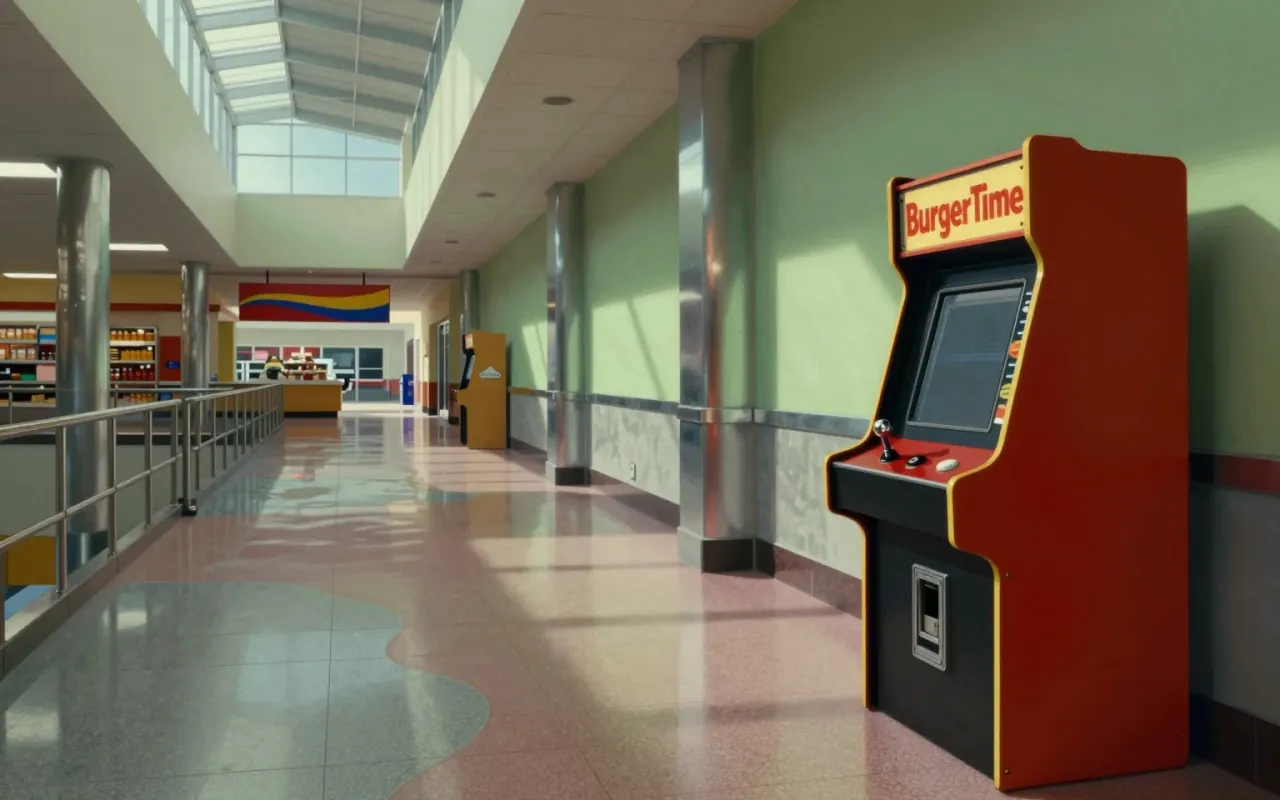
BurgerTime

Data East · 1982

BurgerTime is a 1982 Data East arcade game where chef Peter Pepper walks across oversized burger ingredients on platforms and ladders to make them fall and stack into complete hamburgers while avoiding anthropomorphic hot dogs, fried eggs, and pickles. A limited supply of pepper can be thrown forward to briefly stun enemies. It was Data East's first major hit after abandoning the DECO Cassette System for dedicated arcade cabinets.

10:09

Cities: Skylines

Colossal Order · 2015

Cities: Skylines is a systems-first city-builder where players manage zoning, infrastructure, taxation, and district-level regulations to grow a functional urban area. It rewards methodical planning and iterative adjustment—not storytelling, speed, or spectacle.

9:05

Civilization II

Sid Meier · 1996

Civilization II is a foundational turn-based strategy game where players build a civilization from a primitive tribe while competing with computer-controlled rivals on a tile-based map. It offers three victory paths—conquest, space colonisation, or survival to 2020 AD—and lets players choose from 21 historical civilizations or create a custom one. Brian Reynolds was the primary designer; the 'Sid Meier's' prefix functioned as a quality signal. The base game supports only single-player mode. It models historical development through abstraction, not simulation.

10:06

Doom II

id Software · 1994

Doom II is a deliberate, unapologetic escalation—not reinvention—of the original's formula. It loads the same engine with more demons, bigger maps, and sharper stakes, asking players to navigate chaos with muscle memory and opportunism. Its value lies entirely in how it plays now: tight, hostile, and unrelenting.

8:54

Dragon Quest III

Chunsoft · 1988

Dragon Quest III establishes foundational RPG structure — open-world traversal, class-based party building, day/night gating, turn-based combat, and experience-driven progression — all built on hardware constraints that shaped its rhythms and rules.

11:43

Dwarf Fortress

Bay 12 Games · 2006

Dwarf Fortress is a procedural simulation that demands reading over reacting, patience over progress, and interpretation over instruction. Its strength is systemic coherence—not accessibility.

10:53

Fallout 2

Black Isle Studios · 1998

Fallout 2 is a role-playing video game developed by Black Isle Studios in 1998. It is a direct sequel built on the same engine and design philosophy as its predecessor. It is not the origin of the Fallout series — Black Isle did not create the original Fallout, though many of its founding members came from that team.

9:26

Fallout: New Vegas

Obsidian Entertainment · 2010

Fallout: New Vegas is a licensed action role-playing game released in October 2010 by Obsidian Entertainment and published by Bethesda Softworks. It features dual-perspective gameplay, an open-world structure, VATS-based combat, branching dialogue trees, companion recruitment, and deep character customization via SPECIAL attributes and skill allocation—all set in a post-apocalyptic Mojave Desert.

8:42

Final Fantasy VI

Square · 1994

Final Fantasy VI is a role-playing game for the Super Nintendo Entertainment System developed and published by Square. Its gameplay is structured around four basic modes: overworld map, town and dungeon field maps, battle screen, and menu screen. The overworld map is a scaled-down representation of the game world used for directing characters to locations, with travel primarily by foot, chocobo, or airship. Enemies are randomly encountered on field maps and the overworld when traveling by foot, except in plot-driven cases. The menu screen is used to configure the traveling party, equipment, learned magic, and gameplay settings, and also tracks experience points and character levels. Plot progression occurs as the player moves through towns and dungeons, where town citizens provide helpful information and some operate item or equipment shops.

9:20

Final Fantasy VII

Square · 1997

Final Fantasy VII is a foundational 3D JRPG that replaces free movement with narrative-gated spatial modes. Its innovation lies in structural clarity—not immersion.

10:26

Grand Theft Auto V

Rockstar Games · 2013

Grand Theft Auto V is an action-adventure game released in 2013 by Rockstar Games. It features an open-world setting modelled on Southern California and Los Angeles, navigable on foot or by vehicle from third- or first-person perspectives. Players control three protagonists—Michael, Franklin, and Trevor—and switch between them during and outside linear story missions centred on heists. Gameplay includes shooting, driving, melee combat, explosives, and a 'wanted' system that escalates law enforcement response to crimes. The world is fully explorable after the prologue and supports context-specific activities, property purchases, stock trading, and character-specific skills. Combat uses auto-aim and cover systems; health regenerates to halfway, with respawns at hospitals upon death. Heists involve AI accomplices with unique skills and support multiple strategies. The game runs on the Rockstar Advanced Game Engine (RAGE) and is part of the Grand Theft Auto franchise, originally published by BMG Interactive.

10:54

Lode Runner

Brøderbund · 1983

Lode Runner is a tightly wound logic puzzle game built around a single, elegant mechanic: digging temporary holes to trap guards, then walking over them before they fill. It demands precision, foresight, and tolerance for opaque enemy behaviour. Its 150 levels escalate cleanly, and its shipped level editor made player authorship part of the core experience. It belongs to the Apple II era—not just chronologically, but architecturally.

9:31

Mario Kart 8

Nintendo · 2014

Mario Kart 8 is a polished, accessible, and relentlessly social racing game built for short bursts and local chaos. Its anti-gravity gimmick adds spectacle but not substance. Its strength is in consistent, responsive feedback — not innovation.

10:20

Nights into Dreams

Sega · 1996

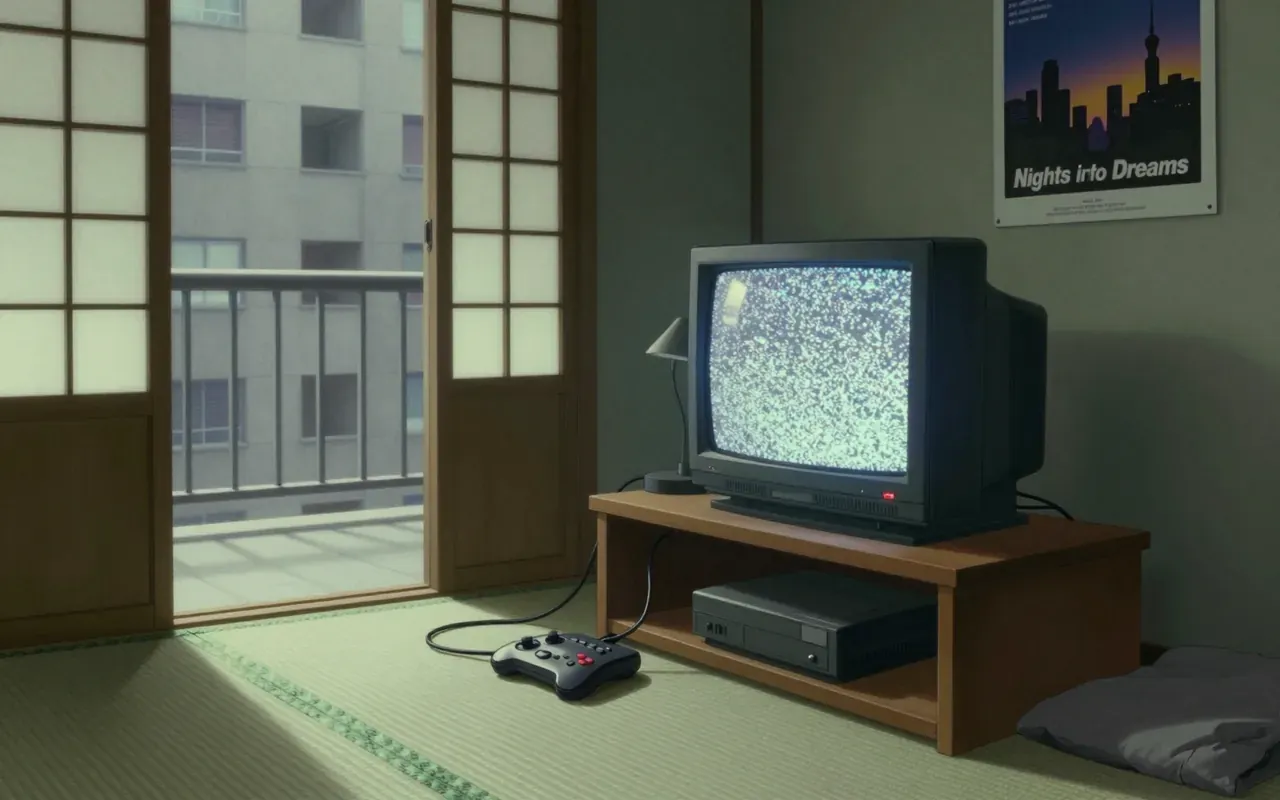
Nights into Dreams is a Saturn-exclusive action game where players alternate between timed ground navigation and fixed-path 3D flying to recover stolen Ideyas and defeat Wizeman.

11:02

Phantasy Star IV

Sega · 1993

Phantasy Star IV is a linear, story-driven RPG on the Sega Genesis. It uses turn-based combat, level-based progression, Technique-based magic, and combination attacks. Its manga-style panels and expanded script distinguish it within the series. Only 14 of 15 combination attacks function. Developed internally by Sega’s Consumer Development division, it belongs to Sega’s multi-million-selling Phantasy Star franchise.

11:23

Red Dead Redemption

Rockstar Games · 2010

Red Dead Redemption is a third-person, open-world action-adventure game developed by Rockstar Games using the Rockstar Advanced Game Engine (RAGE). It is set in fictionalised versions of the Western United States and Northern Mexico—specifically the regions of New Austin, West Elizabeth, and Nuevo Paraíso. Players control John Marston through linear story missions, then his son Jack in the epilogue. Core gameplay revolves around horse travel, Dead Eye–enhanced gunfights, a morality-based Honor/Fame system, dynamic random events, and a bounty mechanic triggered by crimes. An online multiplayer mode supports up to 16 players in cooperative and competitive modes set in a recreation of the single-player world.

11:26

Red Dead Redemption 2

Rockstar Games · 2018

Red Dead Redemption 2 is a meticulously simulated Western world built on procedural consequence — not player authorship.

9:53

Resident Evil 2

Capcom · 1998

Resident Evil 2 is a third-person survival horror game released by Capcom in 1998. It is the second entry in the Resident Evil series, which launched in 1996. Players control either Leon S. Kennedy or Claire Redfield as they attempt to escape Raccoon City during a zombie outbreak caused by a biological weapon. Gameplay revolves around exploration, puzzle-solving, and combat under strict resource constraints—including limited ammunition and tight inventory space. Tank controls govern movement independently of camera angle. Health is communicated visually through character posture and gait rather than numerical indicators. The Zapping System links the two protagonists’ scenarios, creating four distinct playthroughs. Safe rooms serve as the only locations for saving and item storage.

10:05

RimWorld

Ludeon Studios · 2016

RimWorld is a construction and management simulation game developed and published by Ludeon Studios for Windows, macOS, and Linux. It functions as a story generator driven by procedural 'storyteller' algorithms that select events to shape narrative experiences. Players oversee stranded colonists on a procedurally generated planet, forming and sustaining a colony while managing survival needs, mental stability, and external threats. Colonists are task-driven rather than directly controlled, and the game ends via spaceship construction, AI-assisted ship recovery, or DLC-specific endings. Events scale in difficulty and are influenced by configurable storyteller modes and difficulty presets.

9:35

SimCity 2000

Maxis / Will Wright · 1993

SimCity 2000 replaces top-down abstraction with isometric spatial logic, adds elevation and underground layers, and expands infrastructure choice—but offers no deeper explanation of how its systems connect. It rewards experimentation, not mastery.

9:38

Sinistar

Williams Electronics · 1982

Sinistar is a 1982 Williams Electronics arcade shooter where the player collects crystals from planetoids to build Sinibombs, using them to destroy Sinistar — a demonic skull-faced spacecraft constructed by red worker ships and guarded by warrior ships. It was not widely ported to home systems. It followed Defender (1981) and Stargate (1981), and sits alongside Joust and Robotron: 2084 as one of Williams’ popular and influential titles.

10:30

Sonic the Hedgehog 3

Sega · 1994

Sonic the Hedgehog 3 is a 1994 Genesis/Mega Drive 2D side-scrolling platformer. It features Sonic and Tails across six zones (each with two acts), introduces Knuckles as an antagonist, and expands narrative through visual cutscenes. Players control Sonic while Tails runs alongside; a second player may join at any time to control Tails separately. Players may also play as Sonic or Tails alone. Tails can fly briefly by spinning his tails like a helicopter rotor. Unlike Sonic, Tails can also swim underwater. Levels are populated with 'Badniks', robots created by the villain, Dr. Robotnik; Sonic and Tails can defeat them by jumping on them or using the 'spin dash' attack, which also gives the character a speed boost. The levels include obstacles and other features such as vertical loops, corkscrews, breakable walls, spikes, water that the player can drown in, and bottomless pits.

10:24

Sonic & Knuckles

Sega · 1994

Sonic & Knuckles is a 1994 Sega Genesis platformer developed by Sega Technical Institute. Players choose Sonic or Knuckles to traverse six side-scrolling levels on Angel Island, each with two acts ending in miniboss and boss fights. Sonic jumps higher and uses shields; Knuckles glides and climbs walls. Cutscenes differ by character, reflecting their adversarial relationship. Bonus stages activate at checkpoints with 20+ rings — one involves orbiting glowing spheres while avoiding a rising light fence; the other is a bouncing slot-machine room.

9:40

Street Fighter II

Capcom · 1991

Street Fighter II (Capcom, 1991) is a timed, one-on-one, close-quarters combat fighting game. Players win rounds by depleting an opponent's health bar or having more health when time expires. Matches are best-of-three rounds. The original arcade version allows up to 10 rounds per match. A second player can join mid-single-player to trigger head-to-head play. Every third single-player match includes a bonus stage involving destruction of objects for points. Draws result in computer victory (single-player) or mutual loss (two-player). It is part of the Street Fighter franchise — one of Capcom's flagship franchises and among the most popular fighting game series in the genre.

10:38

Terraria

Re-Logic · 2011

Terraria is a 2D sandbox action-adventure game with no set goals. Players explore procedurally generated worlds, fight bosses to unlock progression, gather resources across biomes, craft equipment, and recruit NPCs by completing goals. Evil biomes like Corruption and Crimson spread and infect other areas. Resources such as ores are found in caves. The game supports single-player, multiplayer, and modding. It was developed by Re-Logic—an American independent studio based in Floyds Knobs, Indiana—using the Microsoft XNA framework. It launched on May 16, 2011, earlier than planned due to a beta leak. Development was paused in February 2012 but resumed in 2013, with major updates continuing thereafter.

10:38

The Elder Scrolls III: Morrowind

Bethesda · 2002

Morrowind is a dense, alien, self-contained world where freedom is structural — not just thematic. It refuses to hold your hand, explain its rules, or reward compliance. Its strength is in its refusal to simplify.

9:14

The Elder Scrolls V: Skyrim

Bethesda · 2011

Skyrim delivers open-world agency through fast travel, skill-based progression, and unconditional quest deferral — but offers no systemic consequences for how those freedoms are used. Its strength is in repetition, not responsiveness.

11:03

The Legend of Zelda: Ocarina of Time

Nintendo · 1998

A foundational 3D action-adventure that established targeting, context-sensitivity, and music-as-mechanic—but does so with hardware-imposed friction, not elegance.

8:46

The Sims 2

Maxis · 2004

The Sims 2 is a 2004 Maxis simulation that introduces full 3D, lifespan management, genetics, and 360° camera control to the franchise. It expands domestic agency but offers no narrative cohesion across its pre-built neighborhoods.

8:39

Alone in the Dark (1992 video game)

Infogrames · 1994

Alone in the Dark (1992) is a 3D horror adventure game set in 1920s Louisiana. The player selects Edward Carnby or Emily Hartwood and begins trapped in the attic of the haunted Derceto mansion. Escape requires exploration, weight-managed inventory use, and puzzle-solving—some enemies demand ritual solutions; others must be avoided entirely. Fixed camera angles and mixed 2D/3D visuals create deliberate tension. It received international attention upon release.
10:46

Apollo Justice: Ace Attorney

Capcom · 2007

Apollo Justice: Ace Attorney is a DS courtroom game built on three fixed actions — Press, Present, Perceive — and one hard constraint: you cannot move forward until you trigger the correct response. It works because every phase feeds the next. It falters because it offers no deviation from that feed.

9:13

Black Desert Online

Pearl Abyss · 2014

Black Desert Online replaces tab-targeting with twitch reflexes — and forces you to feed your horse before it dies in battle.

8:44

Bubble Shooter

Ilyon Dynamics · 2002

Bubble Shooter is a 2002 puzzle game by Absolutist, later expanded by Ilyon Dynamics. It asks players to clear marbles by matching three or more of the same colour before they reach the bottom line. It has four difficulty levels and two scoring modes: Classic (no limits) and Sniper (fewest shots wins).

10:30

Carmageddon II: Carpocalypse Now

Stainless Games · 1998

Carmageddon II: Carpocalypse Now is a 1998 Windows vehicular combat sequel developed by Stainless Games. It uses hardware acceleration to power a world-first fully featured physics engine, enabling detailed vehicle deformation — including fenders, spoilers, and catastrophic splitting — and replaces the original’s ‘stealworthy cars’ mechanic with universal purchase of wrecked vehicles.

9:28

Danganronpa 2: Goodbye Despair

Spike Chunsoft · 2012

Danganronpa 2: Goodbye Despair is a visual novel, adventure game, and role-playing video game developed by Spike before its 2012 merger with Chunsoft. Its structure divides time between Daily Life (dialogue-driven relationship building), Deadly Life (linear evidence collection after murder), and Class Trial (logic combat using Truth Bullets in a first-person shooter framework). Players earn Hope Fragments through Free Time conversations, exchange them for debate skills, and fund that loop with Monocoins earned from trial success and hidden Monokuma Figures. The game demands attention to verbal contradiction, rewards repetition as narrative escalation, and offers no mechanical evolution beyond its fixed, self-reinforcing systems.

11:11

Shin Megami Tensei: Digital Devil Saga

Atlus · 2004

Digital Devil Saga is a system-first RPG duology that treats combat as arithmetic and progression as inventory management. It runs on the PlayStation 2. It was made by Atlus’s Creative Department 1st Production (Team Maniax). It is a spin-off of the Megami Tensei series. It asks players to master a tight, punishing loop—not to lose themselves in a world.

8:20

Donkey Kong (1981 video game)

Nintendo · 1981

Donkey Kong (1981) is Nintendo’s first major arcade success and one of the first platform games. Developed by Shigeru Miyamoto after Radar Scope’s failure, it casts the player as Jumpman ascending a New York construction site across four single-screen stages—25, 50, 75, and 100 meters—to rescue Pauline from Donkey Kong. Gameplay revolves around running, jumping over gaps and obstacles, climbing ladders, and avoiding barrels, oil drums, cement pans, springs, and falling hazards—all under a shrinking bonus timer. Points reward precise actions: leaping, hammering, collecting items, and removing rivets. Lives end on contact, fatal falls, or timer expiry. Jumpman later became Mario.

9:20

Flashback (1992 video game)

Delphine Software · 1992

Flashback is a cinematic platformer whose gameplay resembles Prince of Persia and Another World. Each level spans many non-scrolling screens, nearly all of which feature multiple levels of altitude. Conrad exhibits realistic human running speed and jumping ability, and realistic weakness. He dies if he falls from a great height. Conrad carries a pistol with unlimited ammunition; a force shield, which absorbs a certain number of shots before needing recharging, acting as Conrad's health; and a portable force field with unlimited use, which can act as a temporary barrier to block enemies' shots. As Conrad progresses through the game's seven levels, he is increasingly presented with spatial puzzles, requiring the player to discover how to guide him toward his destination. Late in the game, Conrad receives a teleportation device, and is able to progress by throwing the device and teleporting into otherwise unreachable areas.

8:58

Fortnite Creative

Epic Games · 2018

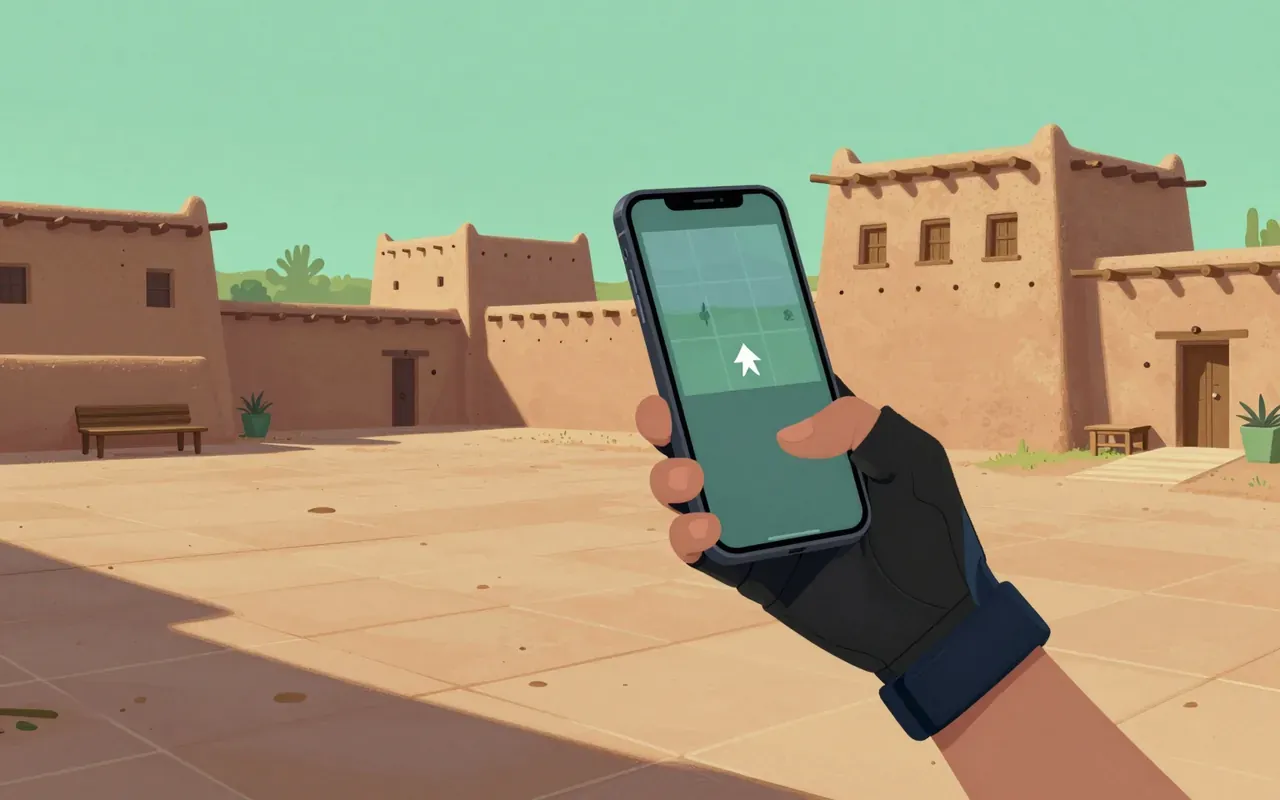
Fortnite Creative is a sandbox game mode developed by Epic Games. Players build custom worlds using Fortnite assets and publish them into the Fortnite Metaverse. Editing happens in real time via a handheld mobile phone tool. Players collaborate in Hubs capped at four people and teleport between islands using the Rift portal. Sessions support up to 100 players under custom rules. Each player may own up to 50 private islands. It is free-to-play across computer, console, and mobile platforms. Revenue comes from microtransactions, including the battle pass system.

10:22

Hexen: Beyond Heretic

Raven Software · 1995

Hexen: Beyond Heretic is a 1995 first-person shooter with action-adventure and action role-playing elements. It is the second entry in the 'Serpent Riders' trilogy. It is set in the dark fantasy world of Silverspring. It runs on a modified Doom engine.

12:35

Hitman: Codename 47

IO Interactive · 2000

Hitman: Codename 47 is a foundational stealth-action hybrid built on compromise: a forced pivot from MMO to shooter, then reshaped by executive vision into something slower, tenser, and more systemic. It rewards silence with money, punishes civilian deaths with deductions, and forces players to drag bodies to avoid alerts — all while running on a bespoke engine that pioneered ragdoll physics. Its brilliance lies in how it stitches together ideas from Deus Ex and Thief, then bends them around corpse logistics. Its flaw is that it never fully sheds its run-and-gun roots — some levels abandon stealth outright, and movement remains stubbornly unrefined. It is not a polished experience. It is a working blueprint.

9:44

The King of Fighters '94

SNK · 1994

The King of Fighters '94 is SNK’s inaugural team-based fighter, released in 1994 on the Neo Geo arcade system. It abandons round-based combat for sequential 3-on-3 matches using eight fixed teams. Players choose entry order, gain life restoration after each KO, and may call sidelined teammates for support attacks. A power gauge charges via blocking or damage — or manually, at high risk — and briefly strengthens basic attacks. It builds directly on SNK’s prior 2D fighting work in Fatal Fury and Art of Fighting, but shifts focus from individual mastery to team curation and structural rhythm.

8:53

King's Field (1994 video game)

FromSoftware · 1994

King's Field (1994) is FromSoftware’s debut PlayStation action role-playing game. It is a first-person dungeon crawler set in a vast underground labyrinth. The player explores five real-time 3D dungeon environments to uncover the source of a monster invasion.

10:04

King's Field (1995 video game)

FromSoftware · 1995

King's Field (1995) is FromSoftware’s second game and the first King's Field released outside Japan. It is Prince Aleph’s slow, solitary trek across the island of Melanat to recover the Moonlight Sword. Its design is defined by hardware-imposed slowness: movement, combat, and exploration all resist immediacy. It asks for patience, repetition, and tolerance of ambiguity — not engagement through clarity or reward.

10:48

King's Quest I

Sierra On-Line · 1984

King's Quest I is a foundational graphic adventure that trades player freedom for architectural control — every screen is a stage, every command a test of precise positioning, and every death a reminder that the machine holds all the cards.

9:20

Kirby 64: The Crystal Shards

Nintendo · 2000

Kirby 64: The Crystal Shards is a 2000 Nintendo 64 platformer developed by HAL Laboratory. It uses 3D rendering but locks movement to a 2D plane. Players collect 98 crystal shards across six worlds using Kirby’s core actions—walk, jump, inhale, fly—and seven copy abilities. Power Combos let players mix two abilities for 28 possible effects. Vehicle-based segments include riding King Dedede’s back, minecarts, and log flumes. Controls use the D-pad exclusively, following usability testing with children. All shards must be collected to reach the final boss and true ending.

9:51

Lunar Lander (1979 video game)

Atari · 1979

Lunar Lander (1979) is a vector-based arcade game by Atari, Inc. that reduces piloting to rotation, thrust, and fuel. It offers no story, no characters, no world—only a side-view landscape, a fragile module, and the unblinking arithmetic of descent.

9:26

Marvel vs. Capcom: Clash of Super Heroes

Capcom · 1998

Marvel vs. Capcom: Clash of Super Heroes is a 1998 2D tag-team fighting game developed by Capcom’s Division 2 for the CP System II arcade system. Players select two fighters, swap between them mid-match, and rely on off-screen regeneration and randomly assigned guest characters with limited uses. It introduces the simultaneous 'Variable Cross' attack and grants unlimited use of the Hyper Combo Gauge. Its 2D animated cartoon-style graphics follow Capcom’s post-Darkstalkers aesthetic.

9:44

Overwatch (2023 video game)

Blizzard Entertainment · 2022

Overwatch (2023) is a live-service hero shooter built on enforced role discipline, rapid iteration, and seasonal storytelling. It discards the original’s six-player format and promised PvE to double down on PvP refinement—and on sustaining engagement through constant design recalibration.

9:17

Payday: The Heist

Overkill Software · 2011

Payday: The Heist is a 2011 cooperative FPS by Overkill Software. It establishes the core loop of theft-driven co-op play, hostage-based revival, and civilian protection. Its randomisation adds replayability without altering mechanics. It lacks progression, narrative, or solo support. It runs on PlayStation 3 and Windows.

9:09

PUBG: Battlegrounds

PUBG Corporation · 2017

PUBG: Battlegrounds is a battle royale shooter where up to 100 players parachute onto an island, scavenge for gear, and fight to be the last survivor. The safe zone shrinks over time, forcing players into tighter spaces and more frequent encounters. Players choose solo, duo, or squad (up to four) modes, begin with no functional gear, and must rapidly adapt to dynamic conditions including shifting flight paths, red-zone bombings, and loot-dropping planes. It launched in early access on Windows in March 2017 and later on Xbox One, and was developed by Krafton's PUBG Studios and published by Krafton.

9:31

Pokémon Red, Blue, and Yellow

Game Freak · 1998

Pokémon Red, Blue, and Yellow are tightly constrained Game Boy RPGs built around three screens, turn-based battles, and enforced social play. They demand cooperation—not for story, but for completion. They reward patience, not improvisation. They are about checking boxes, not breaking rules.

8:12

Prince of Persia 2: The Shadow and the Flame

Brøderbund · 1993

Prince of Persia 2: The Shadow and the Flame is a 1993 Broderbund-published cinematic platformer that escalates tension through larger environments, denser combat, and an unforgiving real-time clock—without altering the foundational verbs established on the Apple II.