gamesbriefs
Highest rated

All briefs

467 briefs · 4633 min · 385–467 on page 5 of 5
9:21

Madden NFL 24

EA Sports · 2023

Madden NFL 24 improves on-field football with SAPIEN, Fieldsense, and 1,000+ new animations — but fractures its off-field modes across hardware generations and leaves Franchise and Superstar feeling incomplete. It is a technical upgrade with structural debt.

8:31

Marvel vs. Capcom: Infinite

Capcom · 2017

Marvel vs. Capcom: Infinite is a 2D tag-team fighter built around instant switching and temporary stone powers — a deliberate pivot from assist-driven complexity to combo-driven clarity.

8:50

Mortal Kombat 3

Midway · 1995

Mortal Kombat 3 (1995) is Midway's arcade fighting game that shifts focus from tournament narrative to Shao Kahn’s Earthrealm invasion. It introduces the Run button, chain combos, Animalities, and stage-breaking uppercuts — all governed by a shared Run meter and fixed sequences. Its design prioritises spectacle and accessibility over responsiveness or depth.

10:55

NBA 2K23

2K Sports · 2022

NBA 2K23 is a historically segmented basketball simulation. It divides the NBA into four playable eras — 1983–84, 1991–92, 2002–03, and 2022–23 — each with distinct arenas, logos, jerseys, rosters, draft classes, broadcast packages, and modifiable rules.

9:52

Need for Speed: Carbon

Black Box · 2006

Need for Speed: Carbon (2006, Black Box) is a rhythm-driven street racer built on repetition, territory, and tight mechanical loops — not simulation or story.

7:43

NFL Street

EA Sports · 2004

NFL Street is a rule-simplified, style-driven take on American football that swaps realism for rhythm. It runs on the core loop of perform → earn style → trigger Gamebreaker → dominate drive. Its strength is immediacy and attitude. Its limit is repetition — there is no evolution beyond the next taunt or touchdown.

10:10

No Man's Sky

Hello Games · 2016

No Man's Sky is a lean, deterministic simulation of scale — not story, not society, not persistence. It asks you to verify reality, not inhabit it.

9:45

Payday 2

Overkill Software · 2013

Payday 2 is a cooperative heist shooter released in 2013 by Overkill Software, developed with funding from Starbreeze Studios after their 2012 acquisition, and led in design by David Goldfarb.

9:07

Plants vs. Zombies 2

PopCap Games · 2013

Plants vs. Zombies 2 tightens the original’s loop into a five-row, sun-gated, one-mistake-per-lane test—but adds time travel without mechanical consequence, and free-to-play friction without structural reinvention.

10:59

Pong

Atari · 1972

Pong is not simple — it is surgically constrained.

10:44

Puyo Puyo Tetris

Sonic Team · 2014

Puyo Puyo Tetris is a deliberate, unapologetic juxtaposition—not an integration—of two established puzzle systems. Its strength lies in clarity, consistency, and competitive rigour. Its limitation is structural separation: no rule, constraint, or feedback bridges Puyo and Tetris beyond shared menus and scoring.

11:25

Quake 4

Raven Software · 2005

Quake 4 is a movement-first FPS built on Quake’s legacy, not its future.

10:06

Quake II

id Software · 1997

Quake II is a mission-driven, first-person shooter released in 1997 by id Software for Windows 95. It shifts the Quake series to a retaliatory human assault on the alien planet Stroggos against the Strogg. Movement is slower than Quake’s, with added crouching. Six new weapons join four redesigned Quake weapons; four Quake weapons are omitted. Power-ups include Quad Damage plus six new ones. Single-player uses repeated CGI cutscenes to mark progress through objectives like stealing a Tank Commander’s head or calling in an airstrike. Multiplayer supports deathmatch, co-op, and Capture the Flag via client/server and OpenGL. It establishes the human–Strogg war narrative that most later Quake entries follow — unlike Quake III Arena, which abandons continuity for arena combat.

9:52

Ring Fit Adventure

Nintendo · 2019

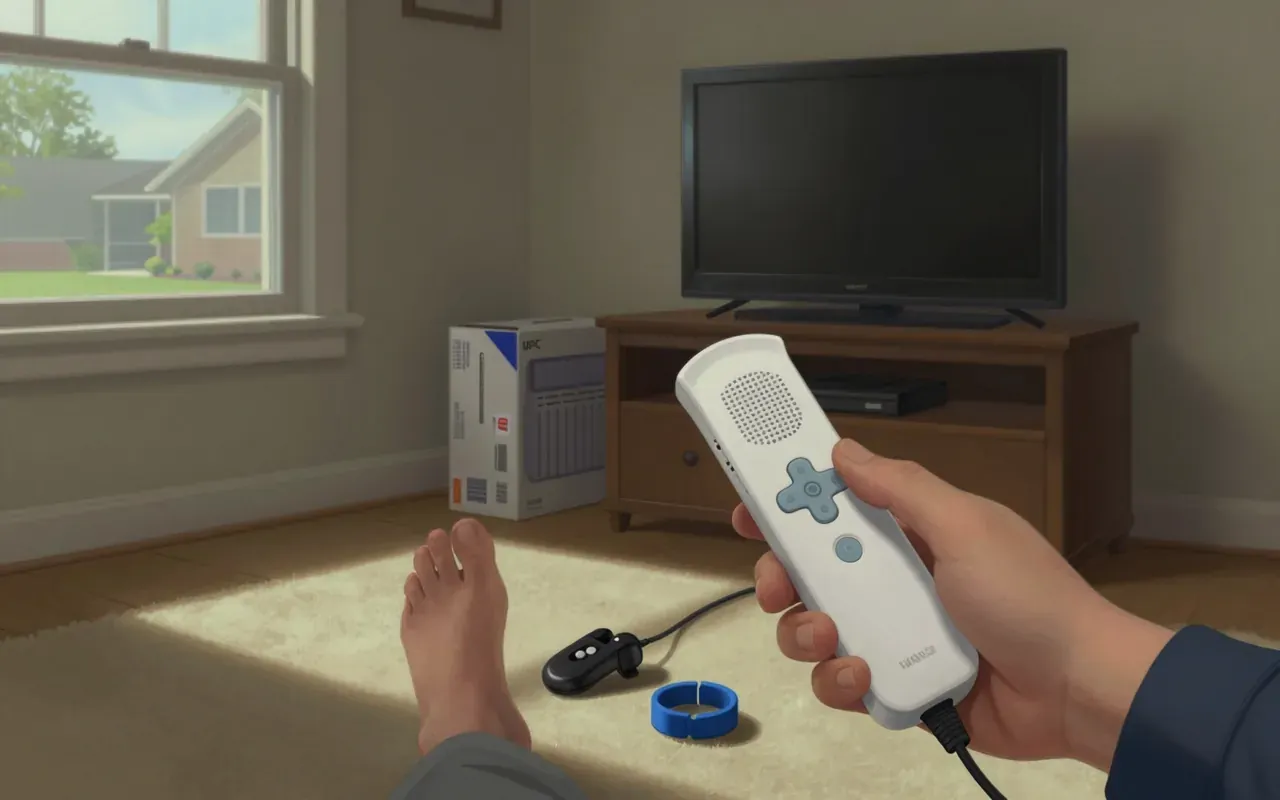
Ring Fit Adventure is an exercising role-playing video game developed and published by Nintendo for the Nintendo Switch. It requires two physical components—the Ring-Con and the Leg Strap—to translate real-world movement and strain into in-game actions. Its main mode is a turn-based RPG where overworld navigation (running in place, jumping via Ring-Con squeeze-and-release) and combat (exercise-based attacks, abdominal press defence) are fully dependent on those accessories. Exercises are colour-coded by target muscle group: red for arms, blue for legs, yellow for core, green for yoga. The design prioritises embodied routine over mechanical depth or narrative ambition.

10:37

Rock Band 2

Harmonix · 2008

Rock Band 2 is a four-player rhythm protocol that turns living rooms into rehearsal spaces. It works only when all inputs are present and all players are physically engaged. Its design is procedural, not expressive. Its longevity came from weekly DLC, not depth.

9:02

Skate 2

EA Black Box · 2009

Skate 2 is a 2009 skateboarding game developed by EA Black Box and published by Electronic Arts. Set in the fictional city of New San Vanelona, the single-player career mode follows a skateboarder released from jail five years after being arrested in the first game, Skate, who is tasked with popularising skateboarding in the city again after devastating earthquakes, avoiding security guards hired by the company 'Mongocorp' who have bought most of the city's property.

8:49

SSX

EA Canada · 2000

SSX (2000) is a PlayStation 2 arcade snowboard racer where tricks directly fuel speed via a boost meter. Developed by EA Vancouver (then EA Canada) under the EA Sports BIG banner, it replaces simulation with rhythm, timing, and terrain-as-launchpad. Uber Tricks, rivalries, and open-world structure belong to sequels — the original delivers tight, repeatable races across discrete global courses. It works because tricks are mandatory, not decorative. It wears thin because it offers no stakes beyond the next jump.

10:10

Star Wars: The Old Republic

BioWare · 2011

Star Wars: The Old Republic is BioWare’s first MMORPG. It launched in 2011. It is built around eight faction-locked classes, each with a three-act, level-gated storyline. Players choose Republic or Sith Empire but can align morally anywhere on the light/dark spectrum. Advancement comes through missions, exploration, and combat. Skills unlock automatically. Heroic missions require multi-player cooperation and reset daily. Player choices permanently alter storylines and affect NPC companions. All dialogue is fully voiced and uses a Mass Effect–style system. BioWare Austin was founded in March 2006 specifically for this project, with assistance from BioWare Edmonton. In 2023, BioWare Austin handed the game to Broadsword Online Games.

9:01

Superliminal

Pine Studio · 2019

Superliminal is a first-person puzzle game built entirely around forced perspective. Players manipulate objects by moving them while holding them, then dropping them at new apparent distances to scale them up or down. This enables climbing, bridging, and unlocking. Trompe-l'œil elements require precise alignment to become interactive. Puzzles involve navigating rooms to reach exits that are closed, elevated, or hidden. The game establishes a single, elegant perceptual rule—and sticks to it rigidly.

11:38

The King of Fighters XIV

SNK · 2017

The King of Fighters XIV is a 2016 2D fighting game developed by KOF Studio and published by SNK. It is the fourteenth main installment in The King of Fighters series. It is the first game in the series to be rendered entirely in 3D, although gameplay is restricted to a 2D plane. The game was released worldwide for the PlayStation 4 in August 2016 and ported to Windows and Japanese arcade cabinets in June 2017.

9:35

ToeJam & Earl

Sega · 1992

ToeJam & Earl is a 1992 Sega game that turns Earth into a stack of floating islands. Players control alien rappers searching for 10 spacecraft wreckage pieces. Movement is in 3/4 perspective. Islands are randomly generated and linked by elevators. Falling off an island drops the player to the layer below, requiring elevator relocation. The game supports single-player and cooperative two-player modes. In two-player mode, proximity unifies the screen and unlocks exclusive dialogue; separation splits the screen. Presents deliver temporary power-ups, but their contents are unknown until opened — and the 'Randomizer' power-up scrambles effects. Earthlings act as unpredictable NPCs, some hostile, some helpful.

11:52

Tony Hawk's Underground

Neversoft · 2003

Tony Hawk's Underground (2003, Neversoft) shifts the franchise from abstract high-score chasing to a story-anchored, exploration-led skate experience. Its trick system remains tightly tuned — ollies initiate combos, grinds demand stick precision, and the balance meter enforces constant correction. Narrative goals provide structure but little weight. Customisation and level editing add longevity. It rewards spatial fluency and repetition, not cinematic immersion.

9:08

Torchlight II

Runic Games · 2012

Torchlight II refines the ARPG loop with class-driven builds, overland pacing, and co-op—but ships with brittle networking and zero narrative weight. It works because it knows its limits.

10:40

Tribes 2

Dynamix · 2001

Tribes 2 is a multiplayer-only shooter built for large-scale, movement-driven team tactics — not solo heroics.

11:09

Tsukihime

Type-Moon · 2000

Tsukihime is a foundational Japanese visual novel that establishes narrative consequence as core gameplay — through death-triggered tutorials, rigid route architecture, and a completionist epilogue. Its 2000 release at Comiket 59 and immediate patching reflect its origins as an iterative, community-facing object — not a polished product. It asks for patience with prose, tolerance for adult content, and acceptance of its narrow interactivity. It gives back tightly controlled emotional arcs and structural clarity — nothing more.

10:13

Ultimate Marvel vs. Capcom 3

Capcom · 2011

Ultimate Marvel vs. Capcom 3 is a 2011 tag-team fighting game developed by Capcom’s Division 2 and Eighting. It uses a simplified three-button control scheme and emphasises rapid character swapping, aerial exchanges with meter manipulation, and the X-Factor mechanic for temporary damage, speed, and health regeneration boosts. Victory goes to the team that defeats all three opponents or holds more cumulative health at round end.

10:29

Wolfenstein 3D

id Software · 1992

A foundational first-person shooter that uses rigid grid-based level design, fixed-height walls, and Nazi iconography as structural constraints—not just theme—to create a fast, lethal, and relentlessly focused combat loop.

10:11

World of Warcraft: The Burning Crusade

Blizzard Entertainment · 2007

World of Warcraft: The Burning Crusade is a functional, tightly gated expansion — not a reinvention. It delivers new content strictly within the base game’s architecture, adding constraints as often as capabilities. Its value is proportional to your existing investment in World of Warcraft.

9:37

World of Warcraft: Wrath of the Lich King

Blizzard Entertainment · 2008

World of Warcraft: Wrath of the Lich King is the second expansion for Blizzard’s MMORPG World of Warcraft, set in the frozen continent of Northrend and centred on confronting the Lich King.

9:22

Wreckfest

Bugbear Entertainment · 2018

Wreckfest is a car simulator released on June 14, 2018 by Bugbear Entertainment using their ROMU engine. It features banger racing and demolition derby, with physics-driven soft-body damage that alters vehicle dynamics based on impact location. Players configure assists, buy and upgrade vehicles, and compete in career, multiplayer, and custom events. Its slower, more strategic pacing distinguishes it from faster destruction racers like Burnout.

9:12

Escape from Monkey Island

LucasArts · 2000

Escape from Monkey Island is the fourth Monkey Island game and LucasArts’ final original adventure title. It is a narrative-driven Caribbean island-hopping game built on dialogue, puzzle-solving, and novel input schemes.

8:26

Frogger

Konami · 1981

Frogger is a 1981 Konami arcade action game where the player guides frogs across a road and river to reach homes at the top of the screen.

9:18

Galaga '88

Namco · 1988

A fixed shooter where formation, capture, and rescue define every session.

11:09

Gran Turismo 4

Polyphony Digital · 2004

Gran Turismo 4 is a PlayStation 2 sim racing title by Polyphony Digital. It features A-Spec (first-person racing with experience-based progression), B-Spec (AI-directed crew-chief mode), Driving Missions, Photo Mode, and Nissan collaborations including the Fairlady Z NISMO S-Tune Concept and Z-Tune 350Z. It lacks online play at launch and uses reactive-only damage.

9:56

Grand Theft Auto III

Rockstar Games · 2001

Grand Theft Auto III is a foundational open-world action-adventure game that redefined spatial possibility in games—but its systems remain rigid, its controls unrefined, and its world more atmospheric than alive.

11:11

Grand Theft Auto: San Andreas

Rockstar Games · 2004

Grand Theft Auto: San Andreas is an action-adventure game published by Rockstar Games in 2004. Players control Carl 'CJ' Johnson in a third-person open world representing a fictionalised California and Nevada. The world comprises three cities—Los Santos, San Fierro, and Las Venturas—connected by rural and desert areas. Cities unlock progressively through the story; airports allow fast travel between them. Players complete linear story missions with fixed objectives, and may freely explore and undertake optional side missions. Navigation includes running, swimming, and vehicle use; combat includes melee, firearms, explosives, dual-wielding, and drive-by shootings. Weapons are acquired via purchase, looting corpses, or finding them scattered across the world. Safehouses—purchasable locations—are used to save progress and store vehicles. The game introduces role-playing elements such as character customisation, skill progression, gang territory control, and relationship management.

8:33

Gyruss

Konami · 1988

Gyruss is a Konami shoot 'em up arcade game from 1988. It uses one-point perspective with a central vanishing point. The player’s ship orbits the screen’s perimeter. Enemies are spaceships that must be destroyed to complete levels.

10:38

Jet Set Willy

Software Projects · 1984

Jet Set Willy is a flip-screen platformer where Miner Willy cleans his mansion after a party, navigating 60 rooms to collect glowing items. It abandons linear progression for open exploration, uses only left/right/jump controls, and punishes errors with room-reset deaths that cascade. Its design prioritises memory and timing over fairness or recovery.

8:47

Manic Miner

Bug-Byte · 1983

Manic Miner is a foundational platformer defined by constraint: fixed screens, fixed enemies, fixed timing, fixed reset. Its influence is historical. Its play is mechanical. Its value lies in how cleanly it exposes the grammar of the genre—before power-ups, before scrolling, before mercy.

8:47

Q*bert

Gottlieb · 1982

Q*bert is a 1982 Gottlieb arcade action-puzzle game where players use a diagonally mounted four-way joystick to hop Q*bert across a 28-cube pyramid, changing each cube’s colour by landing on it — with escalating rules per level — while avoiding deadly purple enemies, neutralising green enemies on contact, and surviving falls off the pyramid.

9:18

SimCity 3000

Maxis · 1999

SimCity 3000 refines the city simulation loop with decay, density, and deal-making — but never asks why the city exists, only how to keep its accounts balanced.

9:06

Sonic Adventure

Sega · 1998

Sonic Adventure is the first main Sonic game built for 3D — and the Dreamcast’s launch title.

8:29

Space Hawk

Orca · 1982

Space Hawk is a 1982 Intellivision multidirectional shooter where survival in drifting outer space is the sole objective.

8:31

Space Invaders

Taito · 1978

Space Invaders is a fixed shooter arcade game developed by Taito in 1978. The player controls a horizontally moving Laser Base at the bottom of the screen and fires upward at descending alien invaders arranged in five rows of eleven. Aliens move as a group, descending one step when hitting screen edges. The game ends immediately if any alien reaches the bottom — regardless of remaining lives. Aliens fire back; hits cost lives. Stationary bunkers provide partial cover but degrade from both alien and player fire. Movement and music accelerate as invaders are eliminated. Clearing all triggers a new wave starting lower. A mystery ship occasionally crosses the top for bonus points. It was Taito's most popular title and the most popular arcade game in history, beginning the golden age of arcade video games and contributing significantly to the growth of video games in the late 1970s.

9:08

Spy Hunter

Midway · 1983

Spy Hunter is a 1983 Midway arcade game. It is a vertical scrolling, top-down vehicular combat game where the player drives the G-6155 Interceptor sports car as a spy. The player uses a yoke, pedal, and gearshift to steer and control speed. The car has a machine gun with unlimited ammunition fired by pressing and holding a yoke button. Enemy vehicles—including a bomb-dropping helicopter—try to destroy the player's car or force it off the road. A score counter increments while the car is moving and on the road. Additional points are earned by destroying enemy vehicles using weapons or forcing them off the road.

10:52

Suikoden III

Konami · 2002

Suikoden III is a PlayStation 2 RPG by Konami Computer Entertainment Tokyo. It uses the Trinity Sight System to rotate control among Hugo, Chris, and Geddoe — each representing one side of a three-way conflict between the Grassland tribes, Zexen, and Harmonia. Protagonists are fully voiced. Recruitment of the 108 Stars of Destiny has no time limits. Combat features tandem front/back row action and chant-interruptible rune magic. Army battles use a node-based grid.

11:30

Super Mario 64

Nintendo · 1996

Super Mario 64 is a 1996 Nintendo 64 platform game and action-adventure title. It is the first Super Mario game with 3D graphics and a large open world. Bowser invades Princess Peach’s castle, kidnaps her, and hides Power Stars in magical paintings. As Mario, the player traverses levels and collects Power Stars to unlock areas of the castle, reach Bowser and rescue Peach. Mario’s abilities are far more diverse than in previous games. He can walk, run, jump, crouch, crawl, climb, swim, kick, grab objects, and punch using the game controller's analog stick and buttons. He can execute special jumps by combining a regular jump with other actions, including the double and triple jumps, long jump, backflip, and wall jump. The player can adjust the camera—operated by a Lakitu broadcasting Mario—and toggle between first-person and third-person view.

11:05

Tales of Phantasia

Namco Tales Studio · 1995

Tales of Phantasia is the foundational title of the Tales series—a technical pivot from turn-based to real-time party combat on the Super Famicom. Its Linear Motion Battle System defines engagement by splitting control: one character in motion, the rest in menus or AI. It delivers a focused revenge arc set in Aselia, where the destruction of Cress’s village serves a larger scheme to free Dhaos. Development was delayed from 1994 to late 1995 due to Namco-mandated changes—including the title—after Telenet contracted Namco following failed talks with Enix. Yoshiharu Gotanda conceived the game at Wolf Team.
9:27

The Last Ninja

System 3 · 1987

The Last Ninja is a precise, path-constrained isometric action-adventure that forces players to learn terrain, timing, and ritualised interaction. It works because its systems interlock cleanly—but it refuses flexibility, improvisation, or narrative expansion.

10:12

The Sims 4

Maxis · 2014

The Sims 4 is a social simulation game developed by Maxis and released in September 2014. It has no primary objectives or storyline. Players create Sims using Create-a-Sim, build homes in Build mode, and manage six depleting needs—hunger, bladder, hygiene, social, fun, and energy—through interactions with objects. Careers generate income, but advancement depends on developing linked skills. Aspirations and dynamic wants and fears provide optional goal-oriented structure. The game is open-ended and almost endless.

9:15

Ultima III: Exodus

Origin Systems · 1983

A foundational computer RPG that shifted the genre from solo brawling to party-based tactics and puzzle-driven resolution — built on Ultima’s reputation to launch Origin Systems during the 1983 crash.

9:29

Vandal Hearts

Konami · 1996

Vandal Hearts is a 1996 Konami tactical RPG defined by its isometric, rotatable 3D terrain, side-by-side turn structure, flexible movement, and strict leader-death loss condition. It offers varied stage objectives but no narrative or progression systems beyond core combat.

9:39

Zaxxon

Sega · 1982

Zaxxon is a 1982 Sega arcade shooter that pioneered isometric projection to create a pseudo-3D environment where altitude management—indicated by shadow and altimeter—is central to navigating fortress walls and obstacles. Movement is constrained to constant forward speed with vertical control only via joystick, requiring players to learn and internalise altitude-based spatial reasoning. Its design demanded new interface cues (joystick illustrations) due to unfamiliar control logic.

11:32

Zork

Infocom · 1977

Zork is a text adventure game developed by Infocom, released in episodic form starting in 1977, where players explore the abandoned Great Underground Empire by issuing natural-language commands to a sarcastic, conversational parser.

12:21

The Bard's Tale II: The Destiny Knight

Interplay · 1986

The Bard's Tale II: The Destiny Knight is a 1986 Interplay dungeon crawl that expands the first game’s scope with six cities, an explorable wilderness, banks, casinos, and the Archmage class — but retains its opaque interface and unrefined pacing.

8:20

Punch-Out!! (1984 video game)

Nintendo · 1984

Punch-Out!! (1984) is a rigid, reactive arcade boxing game built around telegraphed eye cues, fixed timing, and forced replay. It asks players to memorise patterns, not adapt to them. It gives no identity beyond initials and no outcome beyond repetition or defeat.

10:02

Golden Axe (video game)

Sega · 1989

Golden Axe is a 1989 arcade beat 'em up where players choose one of three warriors to fight through fixed screens of enemies in Yuria, using melee attacks and elemental spells that consume a finite magic resource — refilled only by kicking a blue thief — while health is restored by food dropped by a green thief. Sega announced plans to revive the dormant franchise in 2023.

10:18

2022 Formula One World Championship

Codemasters · 2022

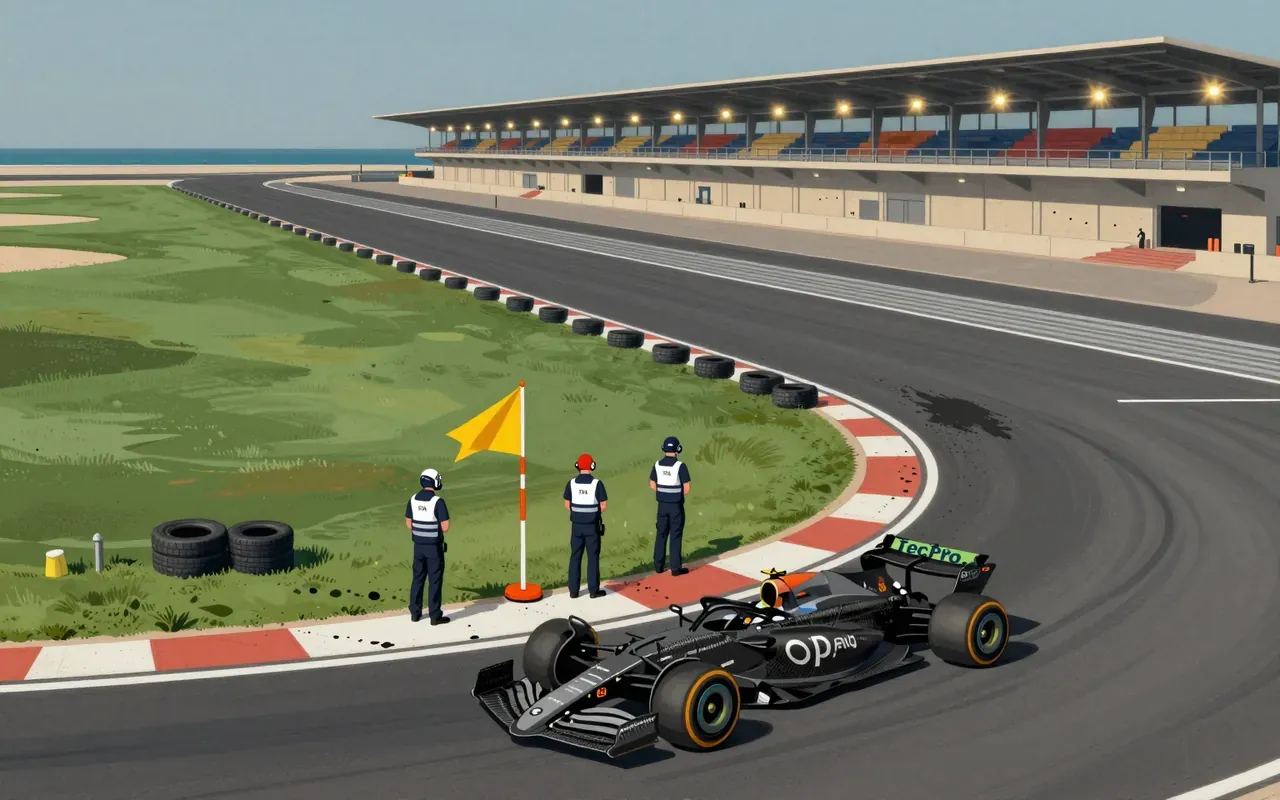
The 2022 Formula One World Championship game is Codemasters’ annual F1 series entry simulating the 73rd running of the championship. It models the full season — twenty-two Grands Prix, dual titles, ground-effect aerodynamics reintroduced after 1982, Pirelli tyres, two-driver teams, and the sprint format at exactly three events: Emilia Romagna, Austrian, and São Paulo — following team negotiations that cut the sprint schedule from six to three. It makes no claims about driver agency, team politics, or design intent behind regulation changes. It is a licensed procedural replica, not a reimagining.

9:05

Quake Champions

id Software · 2018

Quake Champions is a fast-paced arena-based shooter built on a hybrid id Tech and Saber3D Engine. It launched free-to-play with Ranger only, added purchasable characters, and replaced loot boxes with a battle pass model. It omits VR, Vulkan, SnapMaps, and mod support. Hardware limitations prevented console release. Each character has one passive and one active ability. It departs from Quake’s legacy of Internet deathmatch and fully 3D engine innovation.

9:23

Rage 2

Avalanche Studios · 2019

Rage 2 is a first-person shooter co-developed by Avalanche Studios and id Software. Players control Walker — a customisable Ranger — in an apocalyptic open world. Combat blends firearms, the wingstick, Nanotrite powers, and Overdrive, a mode that increases gun damage, heals Walker continuously, and boosts enemy energy drops. Vehicular combat includes trucks, buggies, and gyrocopters — and players may drive any vehicle in the world. The game offers no verified details about platforms, release date beyond 2019, sales, length, frame rate, resolution, player count, or critical reception.

9:44

Wii Sports

Nintendo · 2006

Wii Sports is a hardware demo disguised as a game. It reduces sport to arm motion. It asks nothing of the player but gesture—and gives back only confirmation. It worked because it was the first thing many people ever did with motion control. It does not work as a game today.

9:14

Clock Tower (1996 video game)

Human Entertainment · 1996

Clock Tower (1996) is a point-and-click survival horror game with 3D graphics, released by Human Entertainment on Super NES in 1995 and on PlayStation as Clock Tower 2 in 1996. Players navigate using cursor clicks, manage inventory via screen-top access, and survive Scissorman under a dynamic strength system shown by cursor colour. Narrative branches from early choices lead to ten possible endings.

10:18

Dragon's Lair (1983 video game)

Cinematronics · 1983

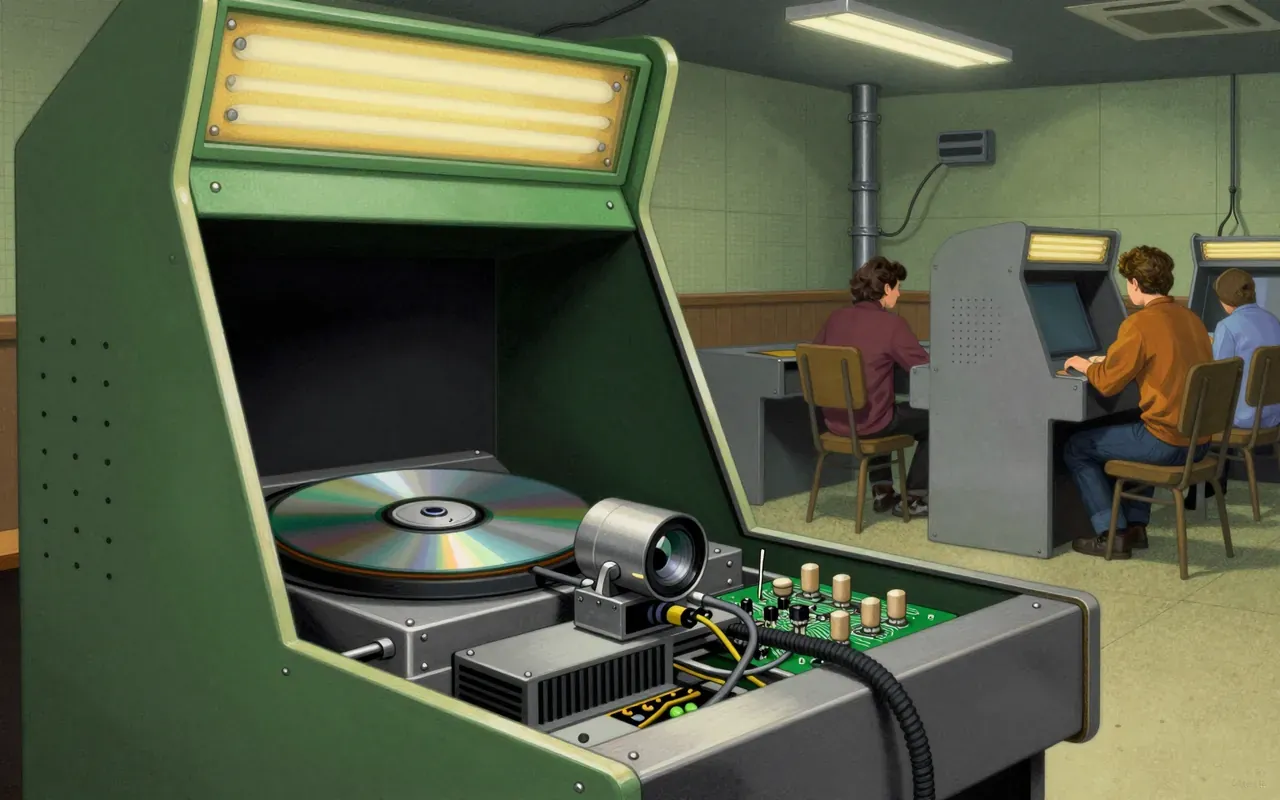
Dragon's Lair (1983) is an arcade-exclusive interactive film where players respond to quick time events during hand-animated cutscenes. It runs on LaserDisc hardware. Players control Dirk the Daring’s reflexes — not his movement or decisions. Narrative progression is predetermined. Levels are grouped into three cycles, selected dynamically. Dying moves the player forward. Failed levels must be repeated before reaching the Dragon's Lair. Some scenes repeat; some are mirrored, reversing required inputs. Operators could configure the cabinet to demand more coins mid-session. Cinematronics organised production in partnership with Advanced Microcomputer Systems and Don Bluth Productions. Starcom was formed to control rights. It was the first major LaserDisc video game.

10:18

Forza Motorsport (2005 video game)

Turn 10 Studios · 2005

Forza Motorsport (2005) is a simulation racing video game developed by Turn 10 Studios for Xbox. It was the inaugural title in a Microsoft Game Studios-commissioned series. It features licensed real-world cars, real and fictional tracks, arcade and career modes, driving assists, realistic vehicle damage, and deep car tuning.

9:37

Indy 500 (1977 video game)

Atari · 1977

Indy 500 (1977) is a cartridge for the Atari 2600 offering fourteen variations across four gameplay modes — Race Car, Crash n' Score, Tag, and Ice Race — each defined by distinct win conditions, player configurations, and physics constraints.

9:46

Revelations: Persona

Atlus · 1996

Revelations: Persona is Atlus’s 1996 PlayStation RPG that introduces the Persona series. It casts high school students who summon Personas—Jungian self-manifestations—to fight supernatural threats in a town shaped by lunar cycles and branching narrative paths.

9:33

Pro Evolution Soccer (video game)

Konami · 2001

The verified material establishes only that Pro Evolution Soccer (2001) is Konami’s first football sports simulation in the PES series, known in Japan as World Soccer: Winning Eleven 5, with region-specific commentary, and that it sits in a lineage from International Superstar Soccer to eFootball — but says nothing about how it plays, what it asks of a player, or what it delivers in practice.

9:50

Shivers (video game)

Sierra Online · 1995

Shivers is Sierra On-Line’s first first-person, point-and-click PC adventure game, released on CD-ROM in November 1995. It places a nameless, unseen, silent teenage protagonist inside a haunted museum to trap ten Ixupi spirits by solving puzzles, collecting vessel fragments, and matching talismans — all while managing a life-essence health bar and navigating a non-linear, open-ended environment with strict one-item inventory.

8:40

Street Fighter: The Movie (console video game)

Capcom · 1995

Street Fighter: The Movie (console video game) is a 1995 Capcom release for PlayStation and Sega Saturn. It adapts the 1994 film using digitised actor footage and bases its combat on Super Street Fighter II Turbo. Four modes exist: Movie Battle (Guile infiltrating Shadaloo City), Street Battle (twelve-fighter ladder), Vs. Mode, and Trial Mode. Super Special Moves require a half-full Super Combo gauge and two-button inputs. Regional versions differ in naming and voice samples. The Japanese release is titled Street Fighter: Real Battle on Film.

9:00

Ultima I: The First Age of Darkness

Origin Systems · 1981

Ultima I: The First Age of Darkness is a foundational computer RPG where 'The Stranger'—summoned from another world—must destroy the Gem of Immortality to end Mondain's rule in Sosaria.

9:41

Wolfenstein (2009 video game)

Raven Software · 2009

Wolfenstein (2009) is a first-person shooter that adds a supernatural layer — the Veil — to id Tech 4. It lets players slow time, bypass obstacles, and kill shielded enemies. Raven Software built it using id’s engine technology. Development problems led to layoffs. The Veil is mechanically functional but narratively detached. It is a technical demonstration, not a unified experience.

9:23

DayZ (video game)

Bohemia Interactive · 2013

DayZ is a multiplayer online survival game set in fictional plague-ravaged countries where players scavenge, manage health, evade infected, and negotiate threat from other players in a persistent world.

10:43

Lineage (video game)

NCSoft · 1998

Lineage is a medieval fantasy MMORPG developed and published by NCSoft. It launched in September 1998 as the company’s first game. It is built on NetHack’s stat, monster, and item systems with MMO mechanics added.

9:40

School Days (video game)

0verflow · 2005

School Days is a 2005 eroge visual novel by Stack Ltd. under its 0verflow brand. It uses branching narrative paths shaped by player decisions that track relationship states to produce romantic outcomes and endings — notably extreme 'bad endings' involving death or violence, especially those centred on Kotonoha Katsura. Its pornographic content varies by release: pixelated in original Japanese versions, uncensored in Western HQ, and omitted entirely in PS2 and PSP ports. It was adapted into a 12-episode anime series in 2007 and received manga adaptations.

9:56

Sonic R

Sonic Team · 1997

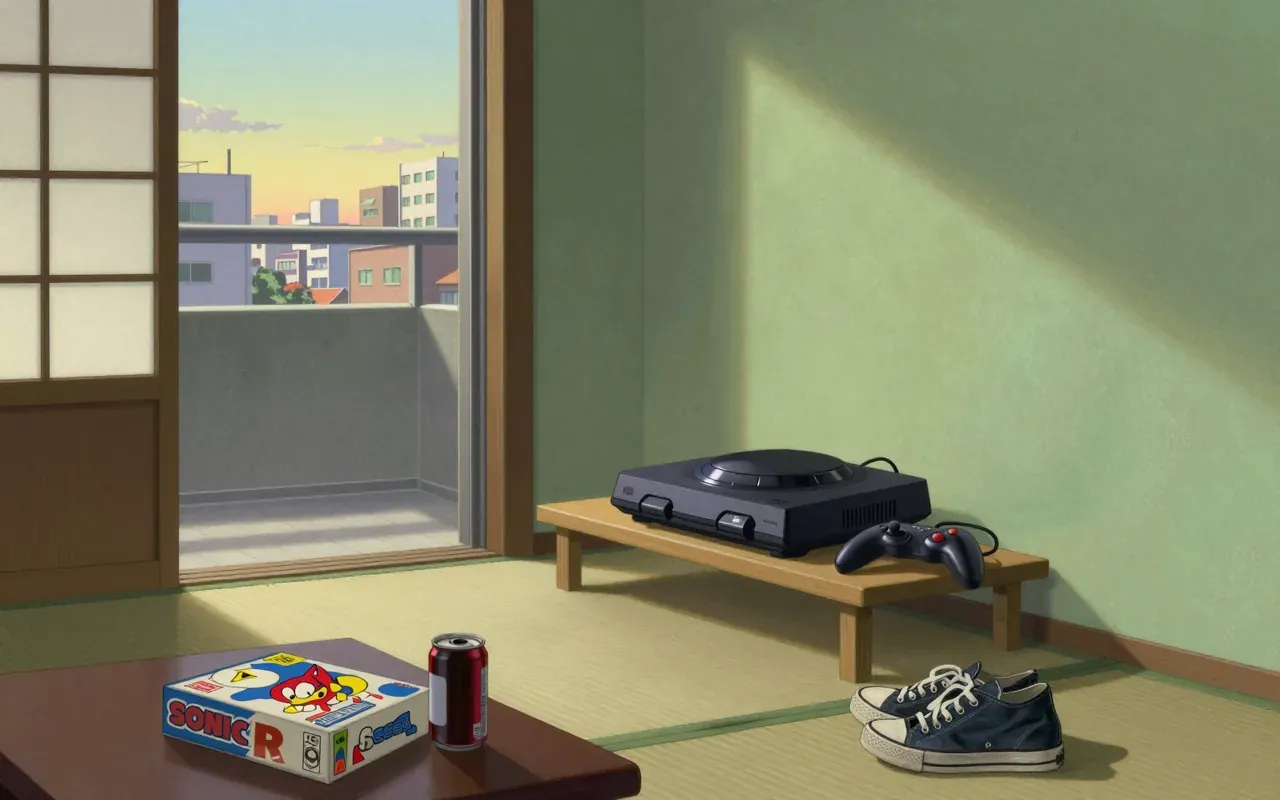
Sonic R (1997) is a foot-racing game co-developed by Sonic Team and Traveller's Tales for the Sega Saturn. It emphasises jumping, exploration, and item-based progression across five themed tracks — with reverse racing, ring trading, and unlockable characters tied to hidden token collection. Its design responds directly to Saturn hardware limits: custom engine, 12-layer transparency, and 30 fps target. It is not a kart racer, nor a traditional Sonic platformer — but a constrained experiment in 3D movement under technical duress.

9:52

Digimon World

Bandai · 1999

Digimon World is a PlayStation RPG where raising a single Digimon — through feeding, training, resting, and bathroom use — determines its evolution, intelligence, and battle effectiveness. Poor care locks players into Numemon, a weak Champion form. Battles restore order to File City by recruiting feral Digimon. When the Digimon ages out, it reverts to an egg — forcing a full restart.

10:20

Street Fighter V

Capcom · 2016

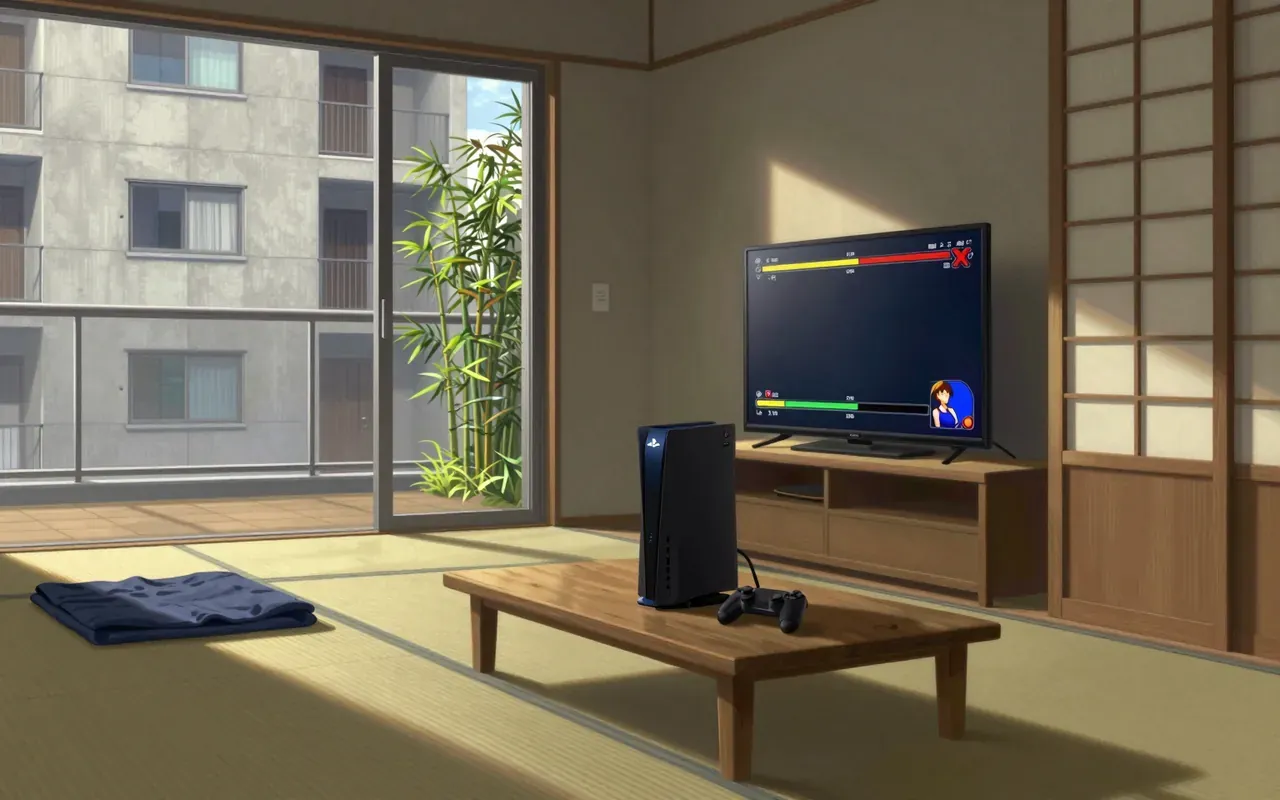
Street Fighter V is a 2D fighting game released in 2016. It uses two resource gauges — EX (built by landing attacks) and V-Gauge (built by receiving attacks) — to power special moves, counters, dodges, and transformative abilities. The visible Stun Meter incentivises aggressive, consecutive offence. It launched with minimal single-player content and poor online features. It failed to meet its sales target of 2 million units in March 2016.

9:35

Unreal II: The Awakening

Legend Entertainment · 2003

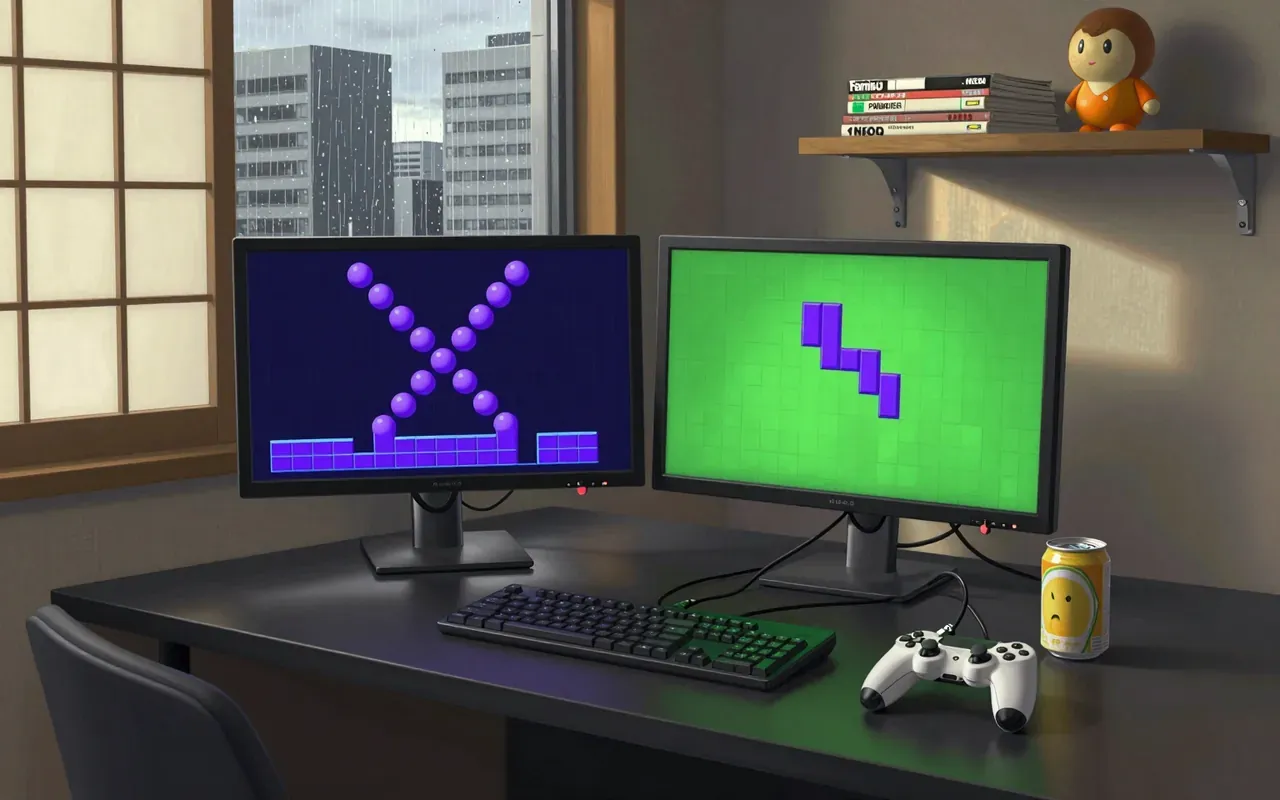
Unreal II: The Awakening is a 2003 first-person shooter developed by Legend Entertainment using the Unreal Engine. Its single-player campaign alternates between planetary/base combat missions and interlude levels aboard an orbiting spaceship, where players upgrade equipment and receive instructions. Its multiplayer expansion, XMP, is team-based (red vs. blue), built around artifact capture and generator control. Development was fraught. The game commercially failed and received an underwhelming reception. It was Legend’s final release.

10:24

Wii Fit

Nintendo · 2007

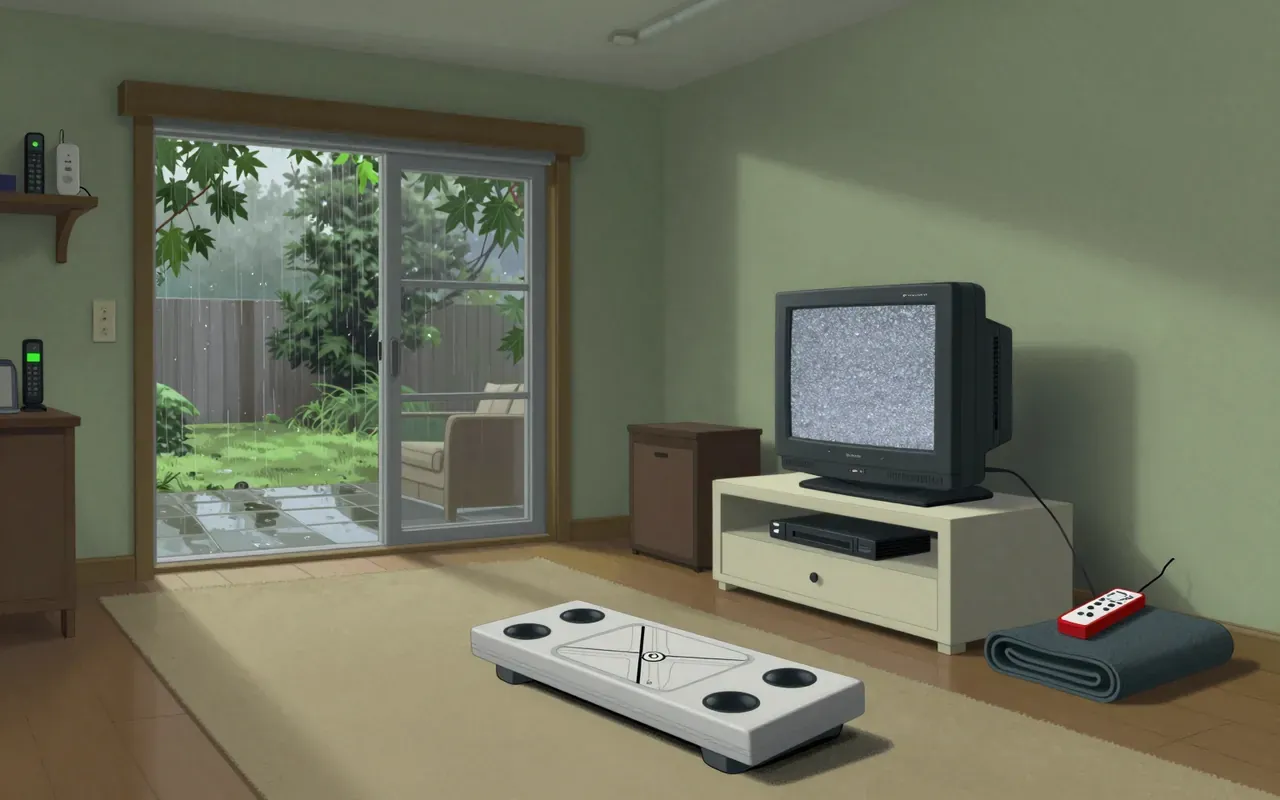
Wii Fit is a simulation of physical discipline built around a single hardware input: the Wii Balance Board. It measures weight and centre of balance in real time. It offers over 40 activities — yoga, strength training, aerobics, balance games — all calibrated to that input. It supports up to eight user profiles, each tied to date of birth, height, and a Mii. It logs external activity manually. It uses an on-screen trainer in yoga and strength modes. It does not simulate athletic development. It simulates accountability.

10:39

King's Field III

FromSoftware · 1996

King’s Field III is a foundational FromSoftware RPG from 1996 that prioritises scale and slow-paced first-person exploration over responsiveness. Its overground world is vast. Its combat is lethargic — a melee round against a low-level creature can last up to five minutes. Players teleport between cities via a map screen. It follows King’s Field II (1996) and precedes Echo Night and Shadow Tower (1998). It was developed and published by FromSoftware for PlayStation.