gamesbriefs
Longest first

All briefs

467 briefs · 4633 min · 193–288 on page 3 of 5
10:06

Tekken 5

Namco · 2005

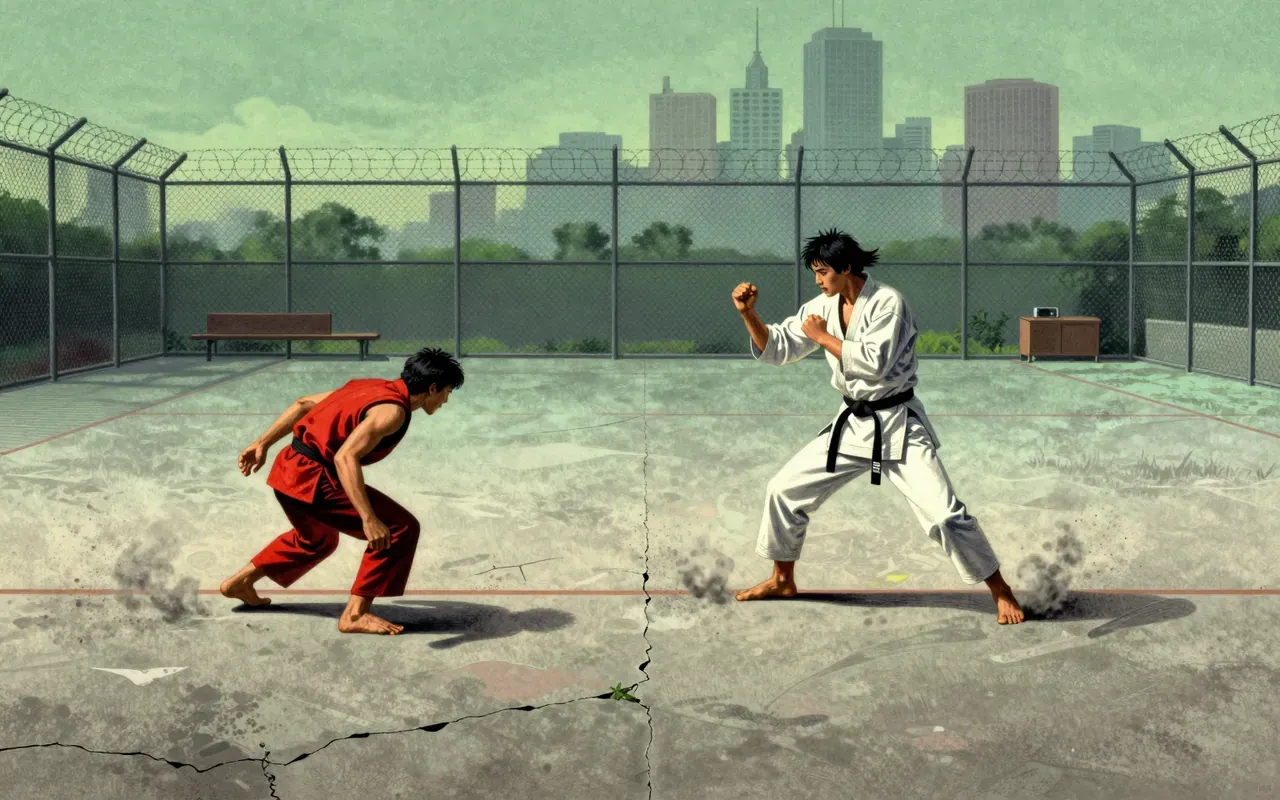
Tekken 5 is a deliberate course correction. It strips away Tekken 4’s experimental terrain and positional mechanics to restore spatial fairness and rhythmic flow. It introduces the hot system — a narrow but impactful defensive tool — and cosmetic character customisation via in-game currency. Stages are either symmetrical boxes or barrier-free and infinitely scrolling. Floor cracking is present but singular and non-disruptive. Devil Within adds a beat ‘em up minigame. The game delivers on its core promise: consistent, readable 3D fighting with no hidden variables.
10:06

Doom II

id Software · 1994

Doom II is a deliberate, unapologetic escalation—not reinvention—of the original's formula. It loads the same engine with more demons, bigger maps, and sharper stakes, asking players to navigate chaos with muscle memory and opportunism. Its value lies entirely in how it plays now: tight, hostile, and unrelenting.

10:05

Half-Life 2

Valve · 2004

Half-Life 2 is a 2004 first-person shooter by Valve. It is played from Gordon Freeman’s perspective in a linear campaign combining combat, exploration, puzzle-solving, platforming, and scripted sequences. Its core innovation is the gravity gun, which lets the player pull and throw objects to solve puzzles and fight. The game maintains seamless transitions between modes and integrates physics-based interaction throughout.

10:05

RimWorld

Ludeon Studios · 2016

RimWorld is a construction and management simulation game developed and published by Ludeon Studios for Windows, macOS, and Linux. It functions as a story generator driven by procedural 'storyteller' algorithms that select events to shape narrative experiences. Players oversee stranded colonists on a procedurally generated planet, forming and sustaining a colony while managing survival needs, mental stability, and external threats. Colonists are task-driven rather than directly controlled, and the game ends via spaceship construction, AI-assisted ship recovery, or DLC-specific endings. Events scale in difficulty and are influenced by configurable storyteller modes and difficulty presets.

10:04

King's Field (1995 video game)

FromSoftware · 1995

King's Field (1995) is FromSoftware’s second game and the first King's Field released outside Japan. It is Prince Aleph’s slow, solitary trek across the island of Melanat to recover the Moonlight Sword. Its design is defined by hardware-imposed slowness: movement, combat, and exploration all resist immediacy. It asks for patience, repetition, and tolerance of ambiguity — not engagement through clarity or reward.

10:04

NBA 2K (video game)

2K Sports · 1999

NBA 2K (1999) is the inaugural title of the NBA 2K series, released for the Sega Dreamcast. Developed by Visual Concepts and published by Sega, it features real NBA players and teams from the 1999–2000 season, custom player and team creation, and fictional commentary by Bob Steele and Rod West.

10:04

Splatoon (video game)

Nintendo · 2015

Splatoon is a Nintendo-developed and published team-based third-person shooter released in 2015 for the Wii U. It features online four-versus-four matches, local one-versus-one, and a single-player campaign. Players control Inklings who transform between humanoid and squid forms. In humanoid form, they shoot ink to cover terrain or splat opponents. In squid form, they swim through their own ink—including up walls and through grates—to hide and replenish ink. Enemy ink impedes movement, blocks swimming, and deals damage. Matches use the Wii U GamePad for map viewing and teammate launching, and players enter with a primary weapon, secondary weapon, and a special attack charged by inking terrain. Four competitive multiplayer modes define the experience: Turf War, Splat Zones, Tower Control, and Rainmaker.

10:04

Street Fighter 6

Capcom · 2023

Street Fighter 6 is a 2D fighting game released in 2023 by Capcom. It is part of the Street Fighter franchise, which began in 1987 and has sold over 50 million copies. It features Fighting Ground (versus/training/arcade), World Tour (3D story mode with avatar progression), and Battle Hub (online lobby with emulated arcade titles).

10:02

Wipeout (video game)

Psygnosis · 1995

Wipeout is a 1995 PlayStation anti-gravity racing game set in the F3600 league of 2052. Players select from eight craft—two per team—each defined by acceleration, top speed, mass, and turning radius. Six tracks depict futuristic Canada, the United States, and Japan. A seventh, Firestar, is set on Mars and unlocked only after completing the Rapier Championship.

10:02

Golden Axe (video game)

Sega · 1989

Golden Axe is a 1989 arcade beat 'em up where players choose one of three warriors to fight through fixed screens of enemies in Yuria, using melee attacks and elemental spells that consume a finite magic resource — refilled only by kicking a blue thief — while health is restored by food dropped by a green thief. Sega announced plans to revive the dormant franchise in 2023.

10:02

Dishonored: Death of the Outsider

Arkane Studios · 2017

Dishonored: Death of the Outsider is a first-person action-adventure game developed by Arkane Studios in Lyon. It is a standalone expansion concluding the Kaldwin-era arc of the Dishonored series. Players assume the role of Billie Lurk and use conventional weapons, gadgets—including a wrist-mounted crossbow, land mines, grenades, and a new hook mine—and fully unlocked supernatural abilities such as Displace and Semblance. Energy for powers regenerates automatically, eliminating consumables. The Chaos system is removed, and optional Contracts serve as side missions.

10:02

BurgerTime

Data East · 1982

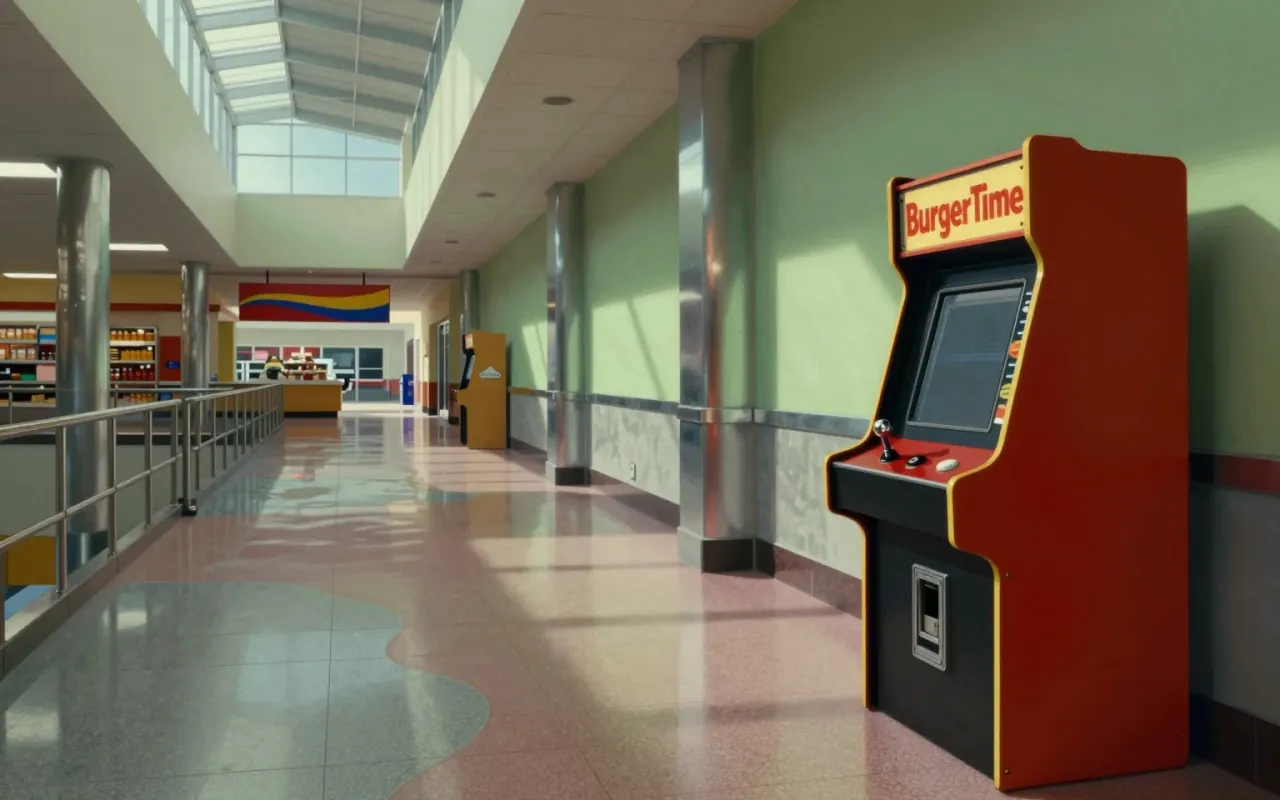
BurgerTime is a 1982 Data East arcade game where chef Peter Pepper walks across oversized burger ingredients on platforms and ladders to make them fall and stack into complete hamburgers while avoiding anthropomorphic hot dogs, fried eggs, and pickles. A limited supply of pepper can be thrown forward to briefly stun enemies. It was Data East's first major hit after abandoning the DECO Cassette System for dedicated arcade cabinets.


10:01

Halo 2

Bungie · 2004

Halo 2 is a first-person shooter released on November 9, 2004, by Bungie. It is a sequel to Halo: Combat Evolved. Players alternate between Master Chief and the Arbiter across a campaign structured around distinct factional perspectives and combat systems. Gameplay emphasises tactical weapon management—including dual-wielding, faction-specific ammo mechanics (overheating vs. reloading), and vehicle hijacking—within a regenerating-shield health model. Its multiplayer introduced automated matchmaking via Xbox Live playlists, prioritising accessible, skill-balanced online sessions over manual server selection.

10:01

Starsiege: Tribes

Dynamix · 1998

Starsiege: Tribes is a squad-based, multiplayer, first-person shooter developed by Dynamix as a side project alongside Starsiege. It features 40 outdoor maps, jetpack-assisted movement, physics-based skiing, and armour-class-dependent loadouts. Its dominant mode is Capture the Flag, where flags must be at base to score. It was one of Dynamix's best-known titles.

10:00

Wizardry: Proving Grounds of the Mad Overlord

Sir-Tech · 1981

Wizardry: Proving Grounds of the Mad Overlord is a 1981 dungeon-crawl RPG by Sirotech Software. It demands manual mapping, enforces strict party alignment rules, and offers no in-dungeon saving. Its ten-level dungeon beneath Trebor's castle exists solely to be descended — one floor at a time — until the party reaches Werdna and retrieves the amulet.

10:00

Diddy Kong Racing

Rare · 1997

Diddy Kong Racing is a 1997 Nintendo 64 kart racer developed and published by Rare. Players select from ten characters and race across five worlds—each containing four tracks—using cars, hovercraft, or aeroplanes. Victory over antagonist Wizpig comes solely through winning races. Vehicle types impose clear trade-offs: the car is all-round but slowest on sand and water; the hovercraft handles those surfaces but suffers poor acceleration and manoeuvrability; the aeroplane accesses aerial zones and turns sharply but has the lowest speed. All characters can use all vehicles. The design asks players to match vehicle to terrain—and learn why the match fails as often as it succeeds.

9:59

Tom Clancy's Splinter Cell: Blacklist

Ubisoft Toronto · 2013

Tom Clancy's Splinter Cell: Blacklist is a 2013 action-adventure stealth game developed by Ubisoft Toronto — its debut project. It gives players three clear paths: silent infiltration, aggressive stealth, or direct combat — each supported by tools like the Tri-Rotor drone, light destruction, corpse hiding, and sensor goggles. It runs in third-person. Players rotate the camera, crouch, run, and scale ledges. Killing alerts enemies who see corpses — so hiding bodies is essential. The game’s strength is its tight, readable cause-and-effect loop. Its weakness is the separation of its systems: stealth, action, and progression never fully converge.

9:59

Metal Gear Solid (video game)

Hideo Kojima / Konami · 1998

A top-down stealth action-adventure set inside a nuclear weapons facility, where players control Solid Snake to infiltrate, evade, and acquire key cards from bosses while managing shifting threat states: infiltration, alert, and evasion.

9:59

Doom 64

Midway · 1997

Doom 64 is a first-person shooter for the Nintendo 64 developed and published by Midway Games. Its gameplay follows the established Doom formula: players advance through 28 story levels and 4 secret levels by battling demons, collecting weapons and keys, and activating switches to reach each level's exit while surviving deadly ambushes and traps. The game uses a customized version of the Doom engine enabling new level geometry and dynamic colored lighting, and features unique visual assets including redesigned weapons and monsters. All weapons from Doom II return with new sprites and sound effects, plus a new weapon—the Unmaker—which uses hitscan but appears projectile-based and can be upgraded via three ancient artifacts scattered across levels. Most enemies from Doom and Doom II appear with similar behavior and attributes, though some—including the revenant, arch-vile, spiderdemon, and 'heavy weapon dude'—are omitted, and one new enemy—the nightmare imp—is added. A unique final boss, the Mother Demon, appears. The game’s narrative follows the Doom Marine returning alone to exterminate resurrected demons in quarantined UAC installations, culminating in his permanent self-exile in Hell after defeating the Mother Demon.

9:58

League of Legends

Riot Games · 2009

League of Legends is a five-versus-five MOBA where two teams push lanes, level champions via XP, spend gold on items, and destroy the enemy Nexus. It launched free-to-play on 27 October 2009. It has no single-player mode. It draws from Defense of the Ancients and Asian free-to-play design. It asks for sustained attention, team coordination, and adaptation to constant change.

9:58

Super Smash Bros. Brawl

Nintendo · 2008

Super Smash Bros. Brawl is a Nintendo-published platform fighter released in 2008. It uses percentage-based damage, ring-out objectives, simplified controls, and Smash Ball-triggered Final Smashes. It supports local multiplayer with multiple controllers, custom profiles, and single-player modes including The Subspace Emissary.

9:58

Apex Legends

Respawn Entertainment · 2019

Apex Legends is a squad-first, ping-driven, live-service hero shooter that prioritises coordinated entry, rapid adaptation, and long-term commitment over solo expression or narrative resolution.

9:57

Burnout 3: Takedown

Criterion Games · 2004

Burnout 3: Takedown is a 2004 arcade racing game developed by Criterion Games and published by Electronic Arts and Acclaim Entertainment. It is the third instalment in the Burnout series, defined by fast-paced arcade racing. Its central innovation is the Takedown mechanic: slamming opponents until they crash, which fills and extends the boost meter. Boost is earned through risky driving—including drifting, near misses with traffic, and driving in oncoming lanes—and used to rapidly increase speed. Standard circuit races take place on carriageways and city streets populated with traffic. Single Race mode pits the player against five AI opponents in a single or multiple lap race. Crash mode involves causing monetary damage in multi-vehicle pileups at junctions, featuring Crashbreakers and power-ups like Heartbreaker. Impact Time—a slow-motion state triggered by crashes—enables Aftertouch, letting players steer wrecked chassis into rivals. The game runs at 60 fps during driving for responsiveness, dropping to 30 fps during crashes to render more particles and debris.

9:57

Galaga

Namco · 1981

Galaga is a fixed shooter arcade game developed and published by Namco in 1981.

9:57

Street Fighter IV

Capcom · 2008

Street Fighter IV is a 2008 fighting game by Capcom. It runs on Taito Type X2 arcade hardware. It uses 3D models on a traditional 2D gameplay plane. It belongs to Capcom’s flagship Street Fighter franchise — one of the most popular fighting game series.

9:56

Command & Conquer (1995 video game)

Westwood Studios · 1995

Command & Conquer (1995) is a real-time strategy game developed by Westwood Studios. It builds on Dune II’s interface and adds pre-rendered 3D sprites, FMV briefings, and a streamed pop/rock/techno soundtrack. Players command GDI or Nod in a Tiberium-fuelled war. They deploy an MCV on flat land, gather Tiberium via harvesters, convert it to credits at refineries, store excess in silos, maintain power with plants, build units in faction-specific production structures, and advance along a tech tree. GDI prioritises firepower and armour at higher cost and slower speed; Nod prioritises speed, numbers, and unconventional tactics at lower durability and weaker weapons. Campaigns feature branching mission selection, FMV briefings, and objectives to destroy or capture enemy forces and bases. The DOS release supported up to four-player multiplayer; the Gold edition expanded this.

9:56

Need for Speed: Most Wanted (2005 video game)

Black Box · 2005

Need for Speed: Most Wanted (2005) is a street-racing game set in the fictional city of Rockport. Players use licensed real-world cars to defeat 15 Blacklist racers, complete varied race types—including Tollbooth and Speedtrap—and evade increasingly aggressive police pursuits governed by a heat-based escalation system. Cars can be upgraded and customised in Career mode. The game features Career, Quick Race, Challenge Series, and multiplayer modes on certain console editions.

9:56

Sonic R

Sonic Team · 1997

Sonic R (1997) is a foot-racing game co-developed by Sonic Team and Traveller's Tales for the Sega Saturn. It emphasises jumping, exploration, and item-based progression across five themed tracks — with reverse racing, ring trading, and unlockable characters tied to hidden token collection. Its design responds directly to Saturn hardware limits: custom engine, 12-layer transparency, and 30 fps target. It is not a kart racer, nor a traditional Sonic platformer — but a constrained experiment in 3D movement under technical duress.

9:56

Crysis 2

Crytek · 2011

Crysis 2 is a first-person shooter developed by Crytek and released in March 2011. It is a direct sequel to Crysis. It casts you as Force Recon Marine Alcatraz in an evacuated, war-torn New York City—the 'urban jungle'.

9:56

Grand Theft Auto III

Rockstar Games · 2001

Grand Theft Auto III is a foundational open-world action-adventure game that redefined spatial possibility in games—but its systems remain rigid, its controls unrefined, and its world more atmospheric than alive.

9:56

Sonic the Hedgehog 2

Sega · 1992

Sonic the Hedgehog 2 is a side-scrolling platformer released on the Sega Genesis. It tasks the player with stopping Doctor Robotnik from stealing the Chaos Emeralds to power the Death Egg. It introduces Tails as a controllable sidekick and the spin dash as a core mobility tool.

9:55

Far Cry 5

Ubisoft Montreal · 2018

Far Cry 5 is a first-person shooter developed by Ubisoft Montreal and released in 2018. It runs on the Dunia engine. Players explore Hope County freely on foot or by vehicle. They customise their silent protagonist, engage in ranged and melee combat, and use a ballistics system with bullet drop. Progression is region-based: most of the world opens after the intro, and Resistance Points earned through actions trigger story events.

9:54

Clannad (video game)

Key · 2004

Clannad (2004) is a visual novel by Key that uses dialogue choices to navigate a branching narrative across two arcs—School Life and After Story—gated by a light-collection mechanic requiring full scenario completion for the true ending.

9:53

Celeste (video game)

Maddy Makes Games · 2018

A tightly wound platformer where every mechanic serves both challenge and character. Its movement grammar is sparse but deeply interwoven. Its narrative is explicit, not allegorical—and its design never compromises difficulty to accommodate theme.

9:53

RollerCoaster Tycoon (video game)

Chris Sawyer · 1999

RollerCoaster Tycoon is a solo-built, tile-based construction and management simulation released in 1999 for Windows. Developed entirely by Chris Sawyer in x86 assembly language, it reflects his Lego-like design philosophy and interest in roller coaster engineering rather than personal riding experience. Players complete 21 preset scenarios (81 total with expansions) by building amusement parks, designing custom roller coasters piece-by-piece, hiring staff with defined roles, modifying terrain, and balancing visitor needs through strategic placement of amenities.

9:53

Resident Evil 2

Capcom · 1998

Resident Evil 2 is a third-person survival horror game released by Capcom in 1998. It is the second entry in the Resident Evil series, which launched in 1996. Players control either Leon S. Kennedy or Claire Redfield as they attempt to escape Raccoon City during a zombie outbreak caused by a biological weapon. Gameplay revolves around exploration, puzzle-solving, and combat under strict resource constraints—including limited ammunition and tight inventory space. Tank controls govern movement independently of camera angle. Health is communicated visually through character posture and gait rather than numerical indicators. The Zapping System links the two protagonists’ scenarios, creating four distinct playthroughs. Safe rooms serve as the only locations for saving and item storage.

9:52

Deus Ex (video game)

Warren Spector / Ion Storm · 2000

Deus Ex (2000) is an action role-playing game developed by Ion Storm and directed by Warren Spector. It combines first-person shooter, stealth, and RPG elements in a hub-based city structure. Players control JC Denton, a nanotech-augmented agent, and navigate environments using climbing, swimming, crouching, and object interaction. Missions are optional and objectives permit multiple solutions—stealth, hacking, or armed assault. Dialogue choices affect some events. Augmentations are permanent and energy-costed. Inventory space is limited. The game was built on the Unreal Engine, requiring added RPG systems. A post-release patch added deathmatch-style multiplayer.

9:52

The Sims (video game)

Will Wright / Maxis · 2000

The Sims is a social simulation video game developed by Maxis and published by Electronic Arts in 2000. Designed by Will Wright, it allows players to create and control virtual people called Sims, build and furnish homes, and manage Sims' needs, relationships, careers, and household finances. Its open-ended gameplay has no fixed win condition. The Sims is an artificial life game built around simulated characters who respond to needs, objects, and other Sims. Although Sims can act autonomously when free will is enabled, the player usually directs their actions, manages their household, and decides how they develop relationships, skills, careers, and homes. Because the game has no fixed win condition, it can be played indefinitely and has been described as more like a toy than a traditional game. Sims are influenced by the player to interact with objects or other Sims. If enabled in the game's options, Sims have a certain amount of free will, allowing them to autonomously interact with their world; however, the player can override most of these autonomous actions by canceling them in the action queue at the top of the screen.

9:52

Digimon World

Bandai · 1999

Digimon World is a PlayStation RPG where raising a single Digimon — through feeding, training, resting, and bathroom use — determines its evolution, intelligence, and battle effectiveness. Poor care locks players into Numemon, a weak Champion form. Battles restore order to File City by recruiting feral Digimon. When the Digimon ages out, it reverts to an egg — forcing a full restart.

9:52

Need for Speed: Carbon

Black Box · 2006

Need for Speed: Carbon (2006, Black Box) is a rhythm-driven street racer built on repetition, territory, and tight mechanical loops — not simulation or story.

9:52

Ring Fit Adventure

Nintendo · 2019

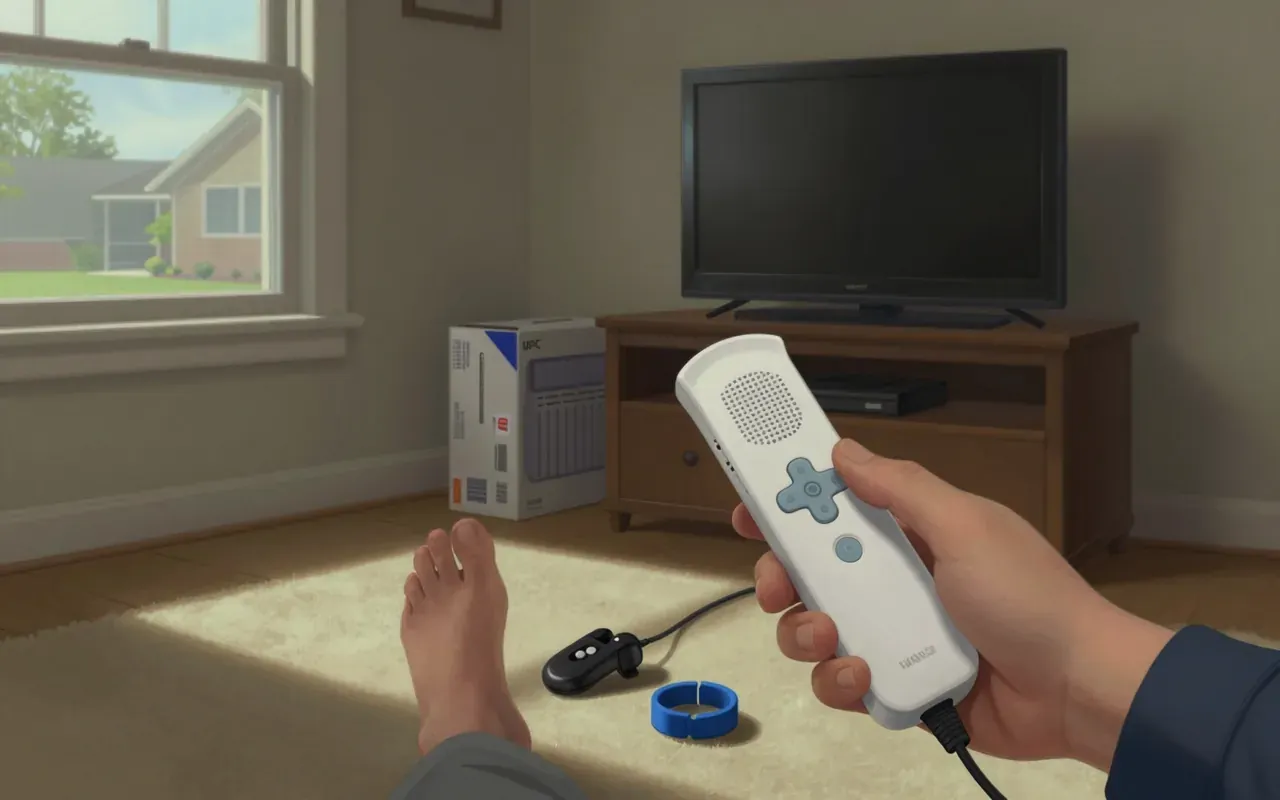
Ring Fit Adventure is an exercising role-playing video game developed and published by Nintendo for the Nintendo Switch. It requires two physical components—the Ring-Con and the Leg Strap—to translate real-world movement and strain into in-game actions. Its main mode is a turn-based RPG where overworld navigation (running in place, jumping via Ring-Con squeeze-and-release) and combat (exercise-based attacks, abdominal press defence) are fully dependent on those accessories. Exercises are colour-coded by target muscle group: red for arms, blue for legs, yellow for core, green for yoga. The design prioritises embodied routine over mechanical depth or narrative ambition.

9:51

Lunar Lander (1979 video game)

Atari · 1979

Lunar Lander (1979) is a vector-based arcade game by Atari, Inc. that reduces piloting to rotation, thrust, and fuel. It offers no story, no characters, no world—only a side-view landscape, a fragile module, and the unblinking arithmetic of descent.

9:51

Grandia (video game)

Game Arts · 1997

Grandia is a role-playing video game developed by Game Arts and published by Entertainment Software Publishing for the Sega Saturn in 1997. It uses 3D environments with 2D animated bitmap sprites for characters. The camera rotates freely in third-person and must be rotated to reveal hidden items or passageways. The game features a rotational party roster. Party members' statistics increase upon leveling up through experience points earned from defeating enemies. Characters learn new abilities by repeatedly using weapons or spells until their Skill Level increases. Weapons are divided into classes: swords, maces, axes, whips, and knives. A Skill screen in the main menu lists each party member's potential abilities and their learning requirements. The game encourages periodic switching between weapons.

9:51

Burnout Paradise

Criterion Games · 2008

Burnout Paradise is a racing game where the city is the only level, the car is the only tool, and crashing is the only score.

9:51

Bloodborne

FromSoftware · 2015

Bloodborne is a third-person action role-playing game developed by FromSoftware and directed by Hidetaka Miyazaki. Released in 2015, it belongs to the Soulsborne subgenre. Players control a customizable Hunter exploring the interconnected Gothic city of Yharnam, engaging in aggressive, strategic combat with trick weapons and firearms. Progression hinges on lamp checkpoints, resource management (Blood Echoes, Insight), and environmental storytelling. Combat emphasises dodging, counterattacking, and close-range aggression. The game’s structure rewards repeated exploration and spatial memory. It offers no narrative hand-holding — story emerges through item descriptions, NPC interactions, and architectural cues.

9:51

Super Mario Bros.

Nintendo · 1985

Super Mario Bros. establishes a foundational platforming loop: move right through side-scrolling stages, avoid hazards and enemies, collect coins and power-ups, and reach the flagpole. Core mechanics include dynamic size-changing via Super Mushroom (granting temporary invincibility and brick-breaking), precise jump-based enemy defeat (with varied responses per enemy type), and life management through coin counts, hidden items, and chaining actions. World 1-1 functions as an embedded tutorial, teaching mechanics through repetition and escalation rather than explicit instruction. Hardware constraints shaped design decisions—e.g., Goombas were made with a flipped sprite to save memory, clouds and bushes reuse the same tile, and background tiles are algorithmically generated. The game’s scrolling engine, adapted from Excitebike, enables smooth acceleration from walk to run—a technical departure from constant-speed movement in earlier platformers.

9:50

Quest for Glory: So You Want to Be a Hero

Sierra On-Line · 1989

Quest for Glory: So You Want to Be a Hero is a 1989 hybrid adventure/RPG by Sierra On-Line. It asks players to type commands, track time, manage hunger and fatigue, and develop skills organically—not through levels, but through action. Class choice (Fighter, Magic User, Thief) determines starting tools, puzzle solutions, and quest access—but cross-class skills are possible. Its systems behave like physical laws: predictable, persistent, and indifferent to player expectation.

9:50

Shivers (video game)

Sierra Online · 1995

Shivers is Sierra On-Line’s first first-person, point-and-click PC adventure game, released on CD-ROM in November 1995. It places a nameless, unseen, silent teenage protagonist inside a haunted museum to trap ten Ixupi spirits by solving puzzles, collecting vessel fragments, and matching talismans — all while managing a life-essence health bar and navigating a non-linear, open-ended environment with strict one-item inventory.

9:50

TERA (video game)

Blue Hole · 2011

TERA replaces tab-targeting with muscle memory — and demands you learn the difference between aiming and reacting.

9:50

Famicom Wars

Nintendo · 1988

Famicom Wars is Nintendo’s 1988 turn-based strategy game for the Famicom. Players command Red Star or Blue Moon across 15 initial maps, aiming to capture the enemy headquarters or eliminate all enemy units in one turn. Each turn provides funds to build units at owned factories, seaports, and airports; conquering cities near headquarters yields extra funds. Only foot soldiers can conquer cities, enabling repair/refuelling. Unit roles differ in firepower and support. Two secret ending maps unlock depending on the nation chosen against the CPU.

9:50

Doom Eternal

id Software · 2020

Doom Eternal is a first-person shooter where players control the Doom Slayer to battle demonic forces of Hell. Combat is fast-paced and requires constant movement. Players must manage health, armor, and ammo — restoring health via Glory Kills after staggering enemies, refilling armor by igniting enemies with a flamethrower, and obtaining ammo by using the chainsaw on enemies (except for BFG and Crucible Blade ammo and charges, which are only available in combat arenas). Glory Kills recharge the Blood Punch melee attack, which destroys enemy armor. The Destructible Demons system causes enemies' bodies to deteriorate progressively as they take damage. The Slayer is highly agile, capable of double-jumping, wall-climbing, and using an omnidirectional dash to evade enemies.

9:49

Quake III Arena

id Software · 1999

Quake III Arena (1999) is a multiplayer-first FPS built atop OpenGL hardware acceleration. It replaces narrative with tiered bot combat in the Arena Eternal — a gladiatorial setting created by the alien Vadrigar. Players advance through eight fixed tiers, mastering role-specialised weapons that spawn at fixed map locations on timed intervals. Tournament maps serve as two-player duels and function as 'boss battles' in single-player. No story campaign exists. Combatants include figures drawn from Doom, Quake, and Quake II.

9:48

Skate (2007 video game)

EA Black Box · 2007

Skate (2007) replaces animation with physics, and menus with motion. Its 120 Hz input loop forces players to internalise flick timing. It gives full control of trick execution — then withholds walking, dismounting, and female skaters. It asks for wrist discipline, not button memorisation. It rewards patience with authenticity, not spectacle.

9:47

Full Throttle (1995 video game)

LucasArts · 1995

Full Throttle is a 1995 LucasArts graphic adventure game built on SCUMM with INSANE for FMV, played from a third-person perspective using point-and-click navigation.

9:47

Diablo II

Blizzard · 2000

Diablo II is a rigid, act-locked RPG where procedural generation serves narrative containment — not freedom. Its power lies in enforced repetition across escalating difficulty tiers, each demanding full completion before unlocking the next. It asks for time, patience, and tolerance for systemic friction. It gives back loot, clarity, and a sense of earned scale — nothing more, nothing less.

9:46

Dance Dance Revolution (1998 video game)

Konami · 1998

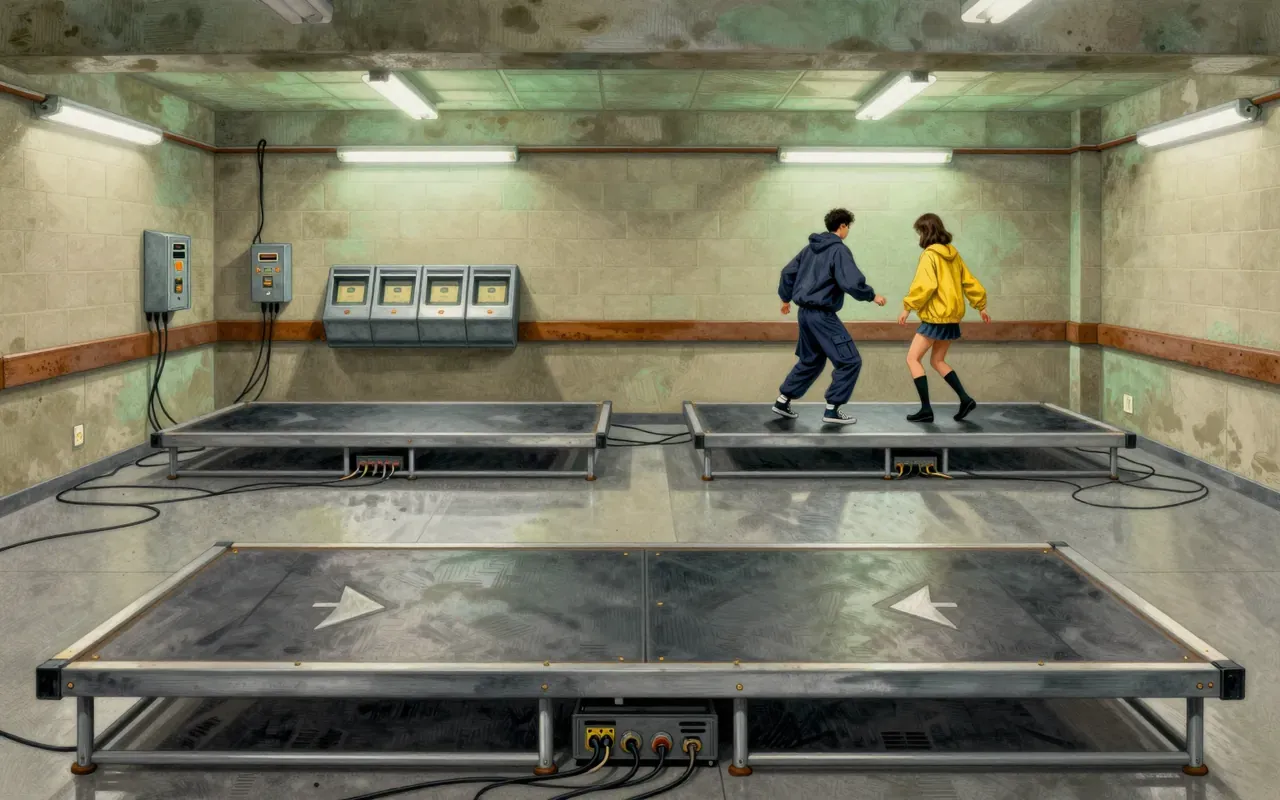
Dance Dance Revolution (1998) is a Konami arcade rhythm game that turns footwork into score. Players match scrolling arrows with steps on a dance pad. Timing judgments affect a life meter — the Dance Gauge — whose depletion ends the song. Combo tracking, step counts, and letter grades follow each performance. It runs under Konami’s Bemani brand. It has no narrative, no progression beyond song selection, and no solo longevity without hardware or social context.

9:46

Revelations: Persona

Atlus · 1996

Revelations: Persona is Atlus’s 1996 PlayStation RPG that introduces the Persona series. It casts high school students who summon Personas—Jungian self-manifestations—to fight supernatural threats in a town shaped by lunar cycles and branching narrative paths.

9:45

Tom Clancy's Splinter Cell (video game)

Ubisoft Montreal · 2002

Tom Clancy's Splinter Cell (2002) is a stealth action-adventure developed by Ubisoft Montreal, built from assets of the cancelled third-person shooter The Drift. It establishes light as a core gameplay stat via a persistent light meter, forces players into shadows, limits ammunition, and ties all vision modes—including night and thermal—to that same visibility logic. It was Ubisoft Montreal’s breakout title and a direct competitive response to Metal Gear Solid.

9:45

Heroes of Newerth

S2 Games · 2010

Heroes of Newerth is a 2010 MOBA developed by S2 Games, built on the K2 Engine, and based heavily on Defense of the Ancients. It features two factions — Legion and Hellbourne — competing to destroy the opponent’s central structure (World Tree or Sacrificial Shrine). Matches begin with a hero-picking phase designed to enforce role balance. Players progress by earning gold and experience through lane control, jungling, and killing neutral objectives like kongor and golems. Heroes fill strict functional roles (Carry, Support, Ganker, Jungler, Suicide) and are defined by primary attribute and attack type. Released for Windows, Macintosh, and Linux, it shifted to freeware in 2011 and made all heroes free for online play in 2012.

9:45

Payday 2

Overkill Software · 2013

Payday 2 is a cooperative heist shooter released in 2013 by Overkill Software, developed with funding from Starbreeze Studios after their 2012 acquisition, and led in design by David Goldfarb.

9:45

Persona 5

Atlus · 2016

Persona 5 is a Japanese role-playing game developed by P-Studio and published by Atlus in 2016. It simulates one academic year in Tokyo through a rigid day-night cycle, blending social relationship-building (Confidants) with dungeon-crawling in two distinct Metaverse realms: narrative Palaces and procedural Mementos.

9:45

Minecraft

Mojang · 2009

Minecraft is a sandbox and survival game developed by Mojang Studios. Its first alpha version was released on 17 May 2009. It began as a clone of Infiniminer.

9:45

The Legend of Zelda: A Link to the Past

Nintendo · 1991

A Link to the Past establishes the template for action-adventure structure: item-gated progression, parallel worlds with hard transitions, and dungeons as sequential logic puzzles. It assumes player patience, rewards observation, and refuses to separate exploration from consequence.

9:44

The King of Fighters '94

SNK · 1994

The King of Fighters '94 is SNK’s inaugural team-based fighter, released in 1994 on the Neo Geo arcade system. It abandons round-based combat for sequential 3-on-3 matches using eight fixed teams. Players choose entry order, gain life restoration after each KO, and may call sidelined teammates for support attacks. A power gauge charges via blocking or damage — or manually, at high risk — and briefly strengthens basic attacks. It builds directly on SNK’s prior 2D fighting work in Fatal Fury and Art of Fighting, but shifts focus from individual mastery to team curation and structural rhythm.

9:44

Overwatch (2023 video game)

Blizzard Entertainment · 2022

Overwatch (2023) is a live-service hero shooter built on enforced role discipline, rapid iteration, and seasonal storytelling. It discards the original’s six-player format and promised PvE to double down on PvP refinement—and on sustaining engagement through constant design recalibration.

9:44

StepMania

Chris Danford · 2001

StepMania is a cross-platform rhythm video game and engine originally developed as a clone of Dance Dance Revolution, evolving into an extensible rhythm game engine supporting various rhythm-based game types. Its core gameplay involves scrolling arrows meeting stationary targets in time with the song's beat, scored by timing accuracy, letter grade, and numeric score. Highest performance yields AAA+, requiring flawless timing, mine avoidance, and full hold arrow completion; failure results in an E grade when the life gauge fully depletes. It runs on Windows, Linux, FreeBSD, macOS, and Xbox.

9:44

Demon's Souls

FromSoftware · 2009

A punishing, systemic RPG where stamina, souls, and silence do all the talking.

9:44

Wii Sports

Nintendo · 2006

Wii Sports is a hardware demo disguised as a game. It reduces sport to arm motion. It asks nothing of the player but gesture—and gives back only confirmation. It worked because it was the first thing many people ever did with motion control. It does not work as a game today.

9:43

The Outer Worlds

Obsidian Entertainment · 2019

The Outer Worlds is a first-person action RPG where player agency is enforced by rigid, upfront stat choices — not narrative illusion. It runs on Windows, PS4, and Xbox One. Its world is built on corporate terraforming, not starship dogfights. Every dialogue option, inventory slot, and stealth path is earned, not granted.

9:42

Warcraft III: Reign of Chaos

Blizzard · 2002

Warcraft III: Reign of Chaos is a 2002 real-time strategy game by Blizzard. It uses fog-of-war, upkeep penalties, fixed top-down perspective, and hero progression to enforce tight, consequential decision-making.

9:42

Bejeweled Blitz

PopCap Games · 2010

A high-speed, one-minute match-three game that trades contemplation for velocity — and rewards relentless, real-time decision-making.

9:42

Excitebike

Nintendo · 1984

Excitebike is a tightly wound physics puzzle disguised as a motocross racer. Its loop is simple: accelerate, jump, land, repeat—until your timing is flawless. It asks for patience, precision, and tolerance for abrupt failure. It gives back immediate feedback, clear rules, and rare creative agency via its track editor. It withholds story, scalability, and forgiveness. It is not nostalgic fluff. It is functional design—brutal, specific, and still sharp.

9:41

Unreal Tournament 2004

Epic Games · 2004

Unreal Tournament 2004 is a multiplayer-first first-person shooter built around movement systems, weapon dual-fires, and vehicle-integrated game types. It establishes clear win conditions per mode—objective sequencing in Assault, node capture and core destruction in Onslaught, hoop scoring in Bombing Run, flag retrieval in Capture the Flag. It falls short as a solo experience and offers no scaffolding for players unfamiliar with its movement grammar or objective logic.

9:41

Wolfenstein (2009 video game)

Raven Software · 2009

Wolfenstein (2009) is a first-person shooter that adds a supernatural layer — the Veil — to id Tech 4. It lets players slow time, bypass obstacles, and kill shielded enemies. Raven Software built it using id’s engine technology. Development problems led to layoffs. The Veil is mechanically functional but narratively detached. It is a technical demonstration, not a unified experience.

9:40

School Days (video game)

0verflow · 2005

School Days is a 2005 eroge visual novel by Stack Ltd. under its 0verflow brand. It uses branching narrative paths shaped by player decisions that track relationship states to produce romantic outcomes and endings — notably extreme 'bad endings' involving death or violence, especially those centred on Kotonoha Katsura. Its pornographic content varies by release: pixelated in original Japanese versions, uncensored in Western HQ, and omitted entirely in PS2 and PSP ports. It was adapted into a 12-episode anime series in 2007 and received manga adaptations.

9:40

Street Fighter II

Capcom · 1991

Street Fighter II (Capcom, 1991) is a timed, one-on-one, close-quarters combat fighting game. Players win rounds by depleting an opponent's health bar or having more health when time expires. Matches are best-of-three rounds. The original arcade version allows up to 10 rounds per match. A second player can join mid-single-player to trigger head-to-head play. Every third single-player match includes a bonus stage involving destruction of objects for points. Draws result in computer victory (single-player) or mutual loss (two-player). It is part of the Street Fighter franchise — one of Capcom's flagship franchises and among the most popular fighting game series in the genre.

9:39

The Witness (2016 video game)

Jonathan Blow · 2016

The Witness is a first-person puzzle game developed and published by Thekla, Inc., released in 2016 on Windows and PlayStation 4. It is an open-world island filled with natural and human-made structures, where players solve over 650 puzzles by drawing paths on grids or across environments.

9:39

Donkey Kong Country 2

Rare · 1995

Donkey Kong Country 2 is a tightly wound 2D platformer where asymmetrical character abilities, mandatory boss gates, and zero-tolerance checkpointing define its rhythm. It teaches through repetition, punishes hesitation, and refuses to separate movement from consequence.

9:39

Zaxxon

Sega · 1982

Zaxxon is a 1982 Sega arcade shooter that pioneered isometric projection to create a pseudo-3D environment where altitude management—indicated by shadow and altimeter—is central to navigating fortress walls and obstacles. Movement is constrained to constant forward speed with vertical control only via joystick, requiring players to learn and internalise altitude-based spatial reasoning. Its design demanded new interface cues (joystick illustrations) due to unfamiliar control logic.

9:38

Suikoden (video game)

Konami · 1995

Suikoden (1995) is a Konami-published RPG that uses weapon range, speed-based turn order, and Rock-Paper-Scissors–driven duel and war systems to shape its combat and narrative. It demands strategic party formation, rewards systematic recruitment, and allows consequential failure in optional battles. It is structurally rigorous but opaque in execution details.

9:38

Team Fortress 2

Valve · 2007

Team Fortress 2 is a 2007 multiplayer first-person shooter by Valve Corporation for Windows, Xbox 360, and PlayStation 3. Players join RED or BLU teams and select from nine classes, each with fixed primary, secondary, and melee weapons. Victory depends on class synergy and objective execution. Critical hits randomly triple damage for some weapons. Objectives are introduced via video and announced mid-match by the Administrator.

9:38

Sinistar

Williams Electronics · 1982

Sinistar is a 1982 Williams Electronics arcade shooter where the player collects crystals from planetoids to build Sinibombs, using them to destroy Sinistar — a demonic skull-faced spacecraft constructed by red worker ships and guarded by warrior ships. It was not widely ported to home systems. It followed Defender (1981) and Stargate (1981), and sits alongside Joust and Robotron: 2084 as one of Williams’ popular and influential titles.

9:37

Indy 500 (1977 video game)

Atari · 1977

Indy 500 (1977) is a cartridge for the Atari 2600 offering fourteen variations across four gameplay modes — Race Car, Crash n' Score, Tag, and Ice Race — each defined by distinct win conditions, player configurations, and physics constraints.

9:37

Shin Megami Tensei II

Atlus · 1994

Shin Megami Tensei II is a first-person, post-apocalyptic RPG for the Super Famicom, developed by Atlus’s Creative Department 1st Production (Team Maniax). It uses lunar phase to gate demon negotiation, law/chaos/neutrality alignment to shape story and recruitment, and fusion with inheritance and accident mechanics to build party composition. It demands system literacy, tolerates opacity, and rewards consistent alignment play.

9:37

World of Warcraft: Wrath of the Lich King

Blizzard Entertainment · 2008

World of Warcraft: Wrath of the Lich King is the second expansion for Blizzard’s MMORPG World of Warcraft, set in the frozen continent of Northrend and centred on confronting the Lich King.

9:36

NBA Jam (1993 video game)

Midway · 1994

NBA Jam (1993) is a two-on-two arcade basketball game developed and published by Midway, featuring NBA-licensed teams and digitized likenesses of real players.

9:36

Overwatch (2016 video game)

Blizzard Entertainment · 2016

Overwatch is a team-based, online multiplayer first-person shooter released by Blizzard Entertainment in May 2016. It reuses assets from the cancelled Titan project but builds a new near-future world around the Omnic Crisis and the Overwatch peacekeeping force. Two teams of six select from over two dozen heroes—categorised as Damage, Tank, or Support—each with unique kits and an ultimate ability charged by combat actions. Players switch heroes mid-match to adapt to objectives like capturing control points or escorting payloads, all within time limits and asymmetric attacker-defender framing. Custom game modes are possible via limited scripting tools. Progression yields only cosmetic loot boxes. The setting is bright, cartoonish, and optimistic.

9:36

Diablo (video game)

Blizzard · 1996

Diablo (1996) is an action role-playing dungeon crawler developed by Blizzard North and published by Blizzard Entertainment for Windows. Players navigate procedurally generated levels using mouse-driven movement and keyboard-based spellcasting. Dungeon themes shape layout—catacombs feature long corridors, caves are non-linear. Quests are randomly assigned from tiers; only the final two are mandatory. Items degrade with use and are destroyed at zero durability. Griswold the Blacksmith repairs them for a fee; Warriors may self-repair at durability cost. Staves enable spellcasting without spell knowledge or mana. The game establishes a tight, friction-driven loop: explore, degrade, return, repeat—until the final two quests gate the end.

9:36

The House of the Dead

Sega · 1996

The House of the Dead is a 1996 Sega arcade rail shooter defined by strict shooting discipline, enemy-clearance gating, and boss-pattern literacy. Its design rewards fast, accurate head shots and punishes hesitation or misaim. It offers no narrative, no progression beyond path selection, and no mechanical expansion — only escalation within its narrow loop.

9:35

Broken Sword II: The Smoking Mirror

Revolution Software · 1997

Broken Sword II: The Smoking Mirror is a 1997 point-and-click adventure by Revolution Software. It runs on PC and PlayStation. Players guide George Stobbart—and briefly Nicole Collard—through hand-drawn 2D environments using a mouse or gamepad. Interaction relies on right-clicking for clues, branching dialogue for exposition, and collecting/combining objects to solve puzzles. A dynamic map unlocks new locations as the story progresses. It sold one million copies in the mid-1990s and was well received.

9:35

Dragon Quest (video game)

Chunsoft · 1986

Dragon Quest (1986) is a single-player RPG developed by Chunsoft. It simplifies Western RPG conventions for console audiences. The player controls a young hero who must defeat the Dragonlord and retrieve the stolen Balls of Light. Progression relies on open exploration gated by enemy strength, turn-based combat with four commands, and stat growth tied to experience and name input. Save systems differ: passwords in Japan, battery-backed RAM in North America. Its design prioritises narrative clarity and incremental empowerment over mechanical complexity.

9:35

F-Zero (video game)

Nintendo · 1990

F-Zero is a 1990 SNES launch title. It is a futuristic racing tournament set in 2560. Players select one of four characters, each piloting a unique hovercar. Races are five laps long. Players must avoid hazards like slip zones and magnets. Collisions drain a power meter. Energy is restored via pit areas. Lap placement must improve each time to avoid disqualification. Each lap grants a ~4-second 'Super Jet' boost and points based on finish position. The game uses Mode 7 graphics to simulate pseudo-3D motion.

9:35

ToeJam & Earl

Sega · 1992

ToeJam & Earl is a 1992 Sega game that turns Earth into a stack of floating islands. Players control alien rappers searching for 10 spacecraft wreckage pieces. Movement is in 3/4 perspective. Islands are randomly generated and linked by elevators. Falling off an island drops the player to the layer below, requiring elevator relocation. The game supports single-player and cooperative two-player modes. In two-player mode, proximity unifies the screen and unlocks exclusive dialogue; separation splits the screen. Presents deliver temporary power-ups, but their contents are unknown until opened — and the 'Randomizer' power-up scrambles effects. Earthlings act as unpredictable NPCs, some hostile, some helpful.

9:35

Unreal II: The Awakening

Legend Entertainment · 2003

Unreal II: The Awakening is a 2003 first-person shooter developed by Legend Entertainment using the Unreal Engine. Its single-player campaign alternates between planetary/base combat missions and interlude levels aboard an orbiting spaceship, where players upgrade equipment and receive instructions. Its multiplayer expansion, XMP, is team-based (red vs. blue), built around artifact capture and generator control. Development was fraught. The game commercially failed and received an underwhelming reception. It was Legend’s final release.

9:35

SimCity 2000

Maxis / Will Wright · 1993

SimCity 2000 replaces top-down abstraction with isometric spatial logic, adds elevation and underground layers, and expands infrastructure choice—but offers no deeper explanation of how its systems connect. It rewards experimentation, not mastery.