gamesbriefs
Shortest first

All briefs

467 briefs · 4633 min · 289–384 on page 4 of 5
10:09

The Dig (video game)

LucasArts · 1995

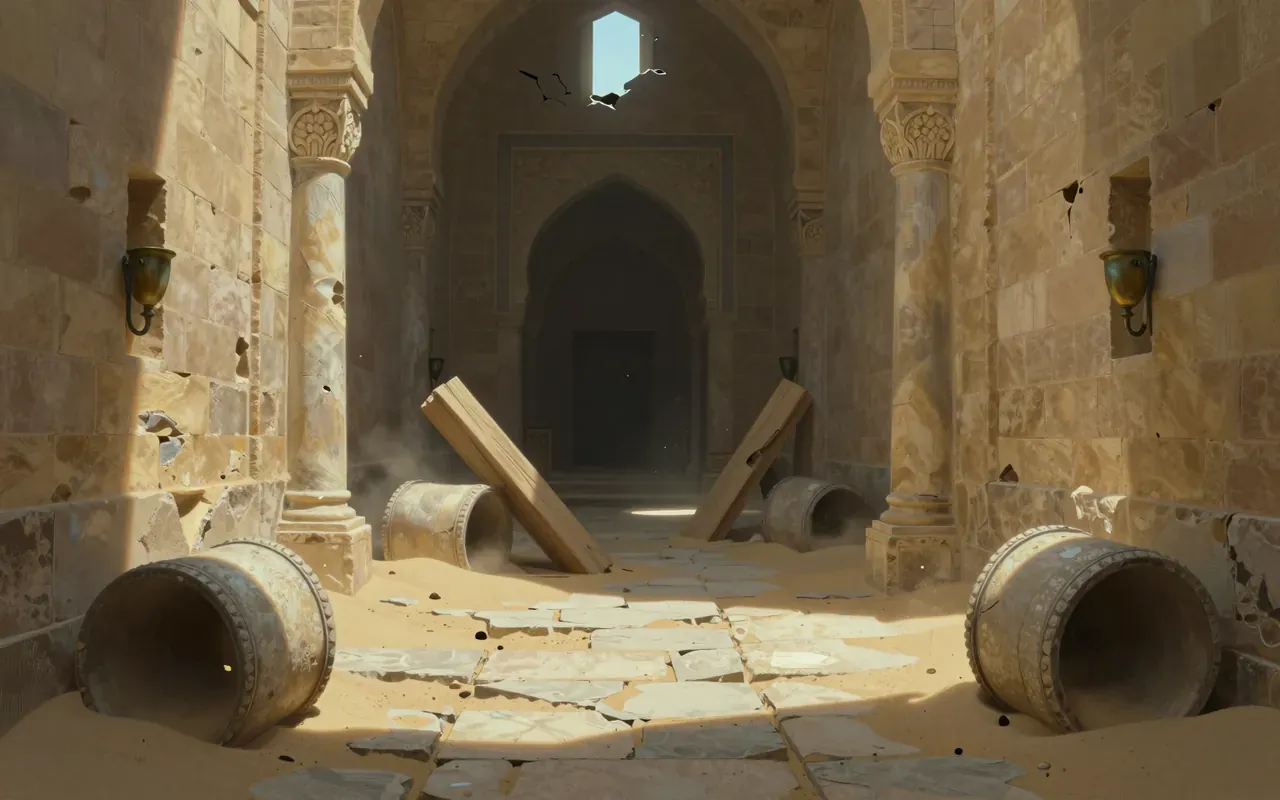
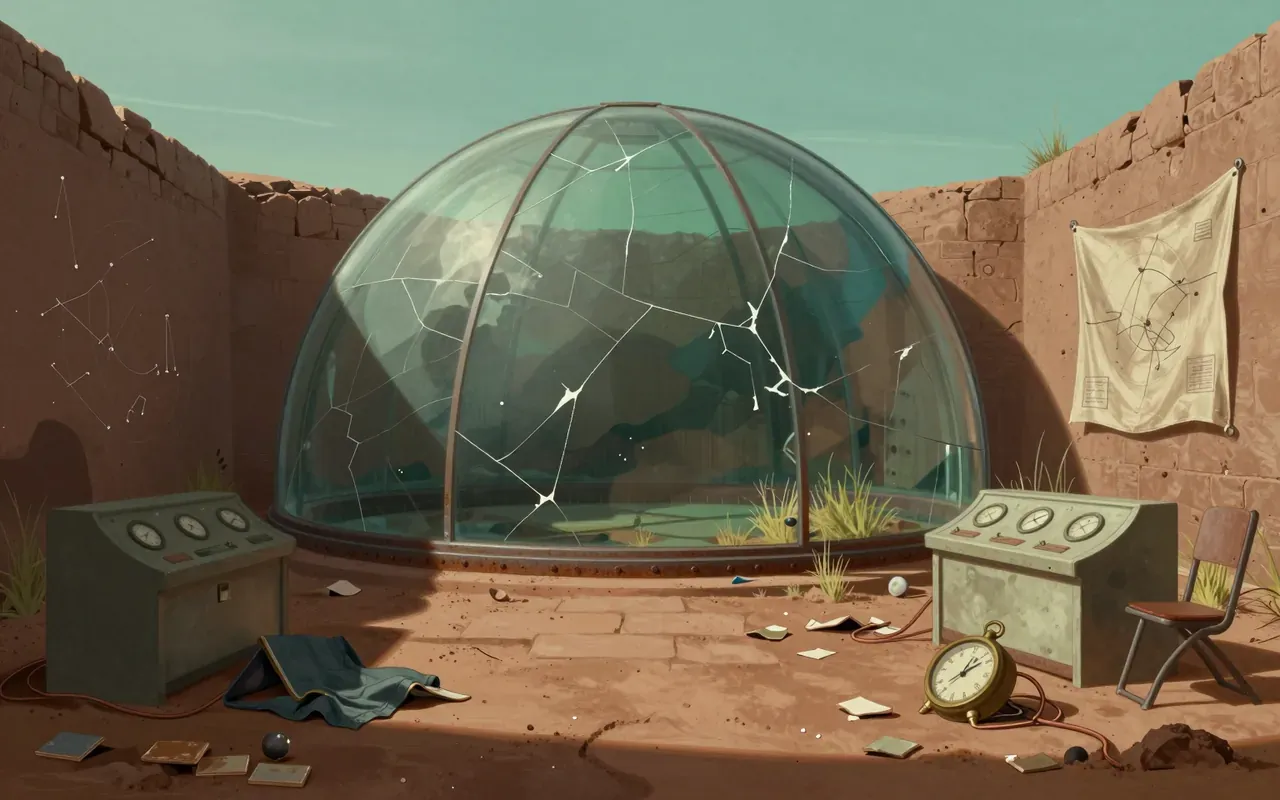
The Dig is a 1995 LucasArts point-and-click adventure game for PC and Macintosh. It casts the player as Commander Boston Low, stranded on an alien world after a failed lunar mission, investigating ancient ruins to understand a vanished civilisation and find a way home.

10:09

Cities: Skylines

Colossal Order · 2015

Cities: Skylines is a systems-first city-builder where players manage zoning, infrastructure, taxation, and district-level regulations to grow a functional urban area. It rewards methodical planning and iterative adjustment—not storytelling, speed, or spectacle.

10:09

Shadow of the Colossus

Fumito Ueda · 2005

Shadow of the Colossus is a third-person action-adventure built around sixteen large-scale boss encounters in a seamless open world. It was directed and lead-designed by Fumito Ueda at Sony Computer Entertainment’s Japan Studio. Its structure is cyclical, minimal, and mechanic-first—designed under PlayStation 2 hardware constraints that forced reduction: from 48 planned colossi to 16, and no day/night cycle.

10:10

Fire Emblem Awakening

Intelligent Systems · 2012

Fire Emblem Awakening is a tactical RPG for Nintendo 3DS where grid-based combat, relationship-building, and permadeath choices define every session. It launched as the series’ make-or-break title — and succeeded by selling 400,000 units in Japan within its first year.

10:10

No Man's Sky

Hello Games · 2016

No Man's Sky is a lean, deterministic simulation of scale — not story, not society, not persistence. It asks you to verify reality, not inhabit it.

10:10

Star Wars: The Old Republic

BioWare · 2011

Star Wars: The Old Republic is BioWare’s first MMORPG. It launched in 2011. It is built around eight faction-locked classes, each with a three-act, level-gated storyline. Players choose Republic or Sith Empire but can align morally anywhere on the light/dark spectrum. Advancement comes through missions, exploration, and combat. Skills unlock automatically. Heroic missions require multi-player cooperation and reset daily. Player choices permanently alter storylines and affect NPC companions. All dialogue is fully voiced and uses a Mass Effect–style system. BioWare Austin was founded in March 2006 specifically for this project, with assistance from BioWare Edmonton. In 2023, BioWare Austin handed the game to Broadsword Online Games.

10:11

Capcom vs. SNK: Millennium Fight 2000

Capcom · 2000

Capcom vs. SNK: Millennium Fight 2000 is a 2000 arcade fighting game that merges Capcom and SNK rosters under a custom team-building framework and dual-rule-set grooves.

10:11

World of Warcraft: The Burning Crusade

Blizzard Entertainment · 2007

World of Warcraft: The Burning Crusade is a functional, tightly gated expansion — not a reinvention. It delivers new content strictly within the base game’s architecture, adding constraints as often as capabilities. Its value is proportional to your existing investment in World of Warcraft.

10:12

Far Cry (video game)

Crytek · 2004

Far Cry (2004) is a first-person shooter set in a dynamic tropical archipelago. It uses environmental cover, sound, and optical tools to create a sensor-driven combat loop. Enemies react, coordinate, and communicate. Its open maps contrast with linear missions. It is Crytek’s debut AAA title, built on CryEngine, and the first Far Cry game.

10:12

Guild Wars 2

ArenaNet · 2012

Guild Wars 2 delivers responsive storytelling, dynamic world events, and skill-based combat — all without subscription fees. But its 'living world' relied on scheduled, often temporary content. Its branching narrative lives behind instanced doors. Its ambition outpaced its persistence.

10:12

The Sims 4

Maxis · 2014

The Sims 4 is a social simulation game developed by Maxis and released in September 2014. It has no primary objectives or storyline. Players create Sims using Create-a-Sim, build homes in Build mode, and manage six depleting needs—hunger, bladder, hygiene, social, fun, and energy—through interactions with objects. Careers generate income, but advancement depends on developing linked skills. Aspirations and dynamic wants and fears provide optional goal-oriented structure. The game is open-ended and almost endless.

10:13

Shining Force

Sega · 1992

Shining Force is a turn-based tactical role-playing game published by Sega during its console era (1983–2001), grouped with franchises like Phantasy Star and Megami Tensei. Battles occur on square grids: units move by Move stat, act once per turn (attack, cast, use item, or search), and turn order combines agility and randomness. Units gain EXP from combat and supportive actions like healing, enabling level progression. Allied units are individually characterized—each with background and personality—similar to Fire Emblem. Exploration mode functions as a traditional Japanese-style RPG, with Max representing the army outside battle. No claims support narrative branching, real-time elements, or modern UX features.

10:13

Ultimate Marvel vs. Capcom 3

Capcom · 2011

Ultimate Marvel vs. Capcom 3 is a 2011 tag-team fighting game developed by Capcom’s Division 2 and Eighting. It uses a simplified three-button control scheme and emphasises rapid character swapping, aerial exchanges with meter manipulation, and the X-Factor mechanic for temporary damage, speed, and health regeneration boosts. Victory goes to the team that defeats all three opponents or holds more cumulative health at round end.

10:14

Prince of Persia (1989 video game)

Brøderbund · 1989

Prince of Persia (1989) is a cinematic platformer where time, health, and animation are tightly coupled systems—not flourishes. It originated on the Apple II during Broderbund’s early, hardware-conscious phase. Its design forces rhythm, precision, and memory. It does not adapt. It does not forgive. It runs on clocks, triangles, and rotoscoped frames.

10:14

Space Quest I

Sierra On-Line · 1986

Space Quest I is a 1986 graphic adventure built on Sierra’s AGI engine. It asks players to type commands, navigate layered 2D spaces, consult the manual constantly for copy protection, and tolerate platform-specific interface splits—including no menus on Apple II. Its humour relies on parser friction, hardware constraints, and satirical worldbuilding. It works as a design document for early Sierra adventure grammar—not as a frictionless play experience.

10:14

Mario Party (video game)

Hudson Soft · 1998

Mario Party (1998) is a Hudson Soft-developed, Nintendo-published multiplayer party game for the Nintendo 64. It uses a board-game structure with dice-based movement, star-collecting goals, coin-earning mini-games, and eight themed boards. Six characters are playable. Up to four players may join, with at least one human and adjustable AI difficulty. Game length is chosen before play: Lite (20 turns), Standard (35), or Full (50). Stars are purchased from Toad using coins earned exclusively through mini-games played once per turn.

10:14

Fire Emblem: Three Houses

Intelligent Systems · 2019

Fire Emblem: Three Houses is a tactical RPG released in 2019 by Intelligent Systems in partnership with Koei Tecmo. Intelligent Systems provided the main plot, game system, and mechanics; Koei Tecmo handled the bulk of the programming. Players choose their character's gender and name at the start. Gameplay alternates between story-driven battles and social simulation segments at Garreg Mach Monastery—the central hub for all activities. Selecting a house determines the narrative path from that point forward. The opening half focuses on school life, then the story skips ahead five years and shifts to war, locking the player to their chosen house. Players manage a calendar with limited days to allocate to varied monastery activities—including teaching, field exercises, greenhouse planting, fishing, and free-time interactions. Relationships are built via Support actions influenced by player choices and dialogue.

10:14

Gran Turismo 2

Polyphony Digital · 1999

Gran Turismo 2 is a PlayStation racing simulation with two distinct modes—Arcade for instant access, Simulation for licensed progression—and nearly 650 cars across 27 tracks, including rally stages. Its brake dynamics were retuned to reduce lock-ups and oversteer. It expands on its predecessor in volume, not vision.

10:14

Tekken 3

Namco · 1997

Tekken 3 is a 3D fighting game developed by Namco, launched in arcades in March 1997. It refines the series’ combat with universal sidestepping, lower jumps, universal reversals, faster knockdown recovery, expanded juggling, and new combo throws. It adds two minigames—Tekken Force (a side-scrolling beat 'em up) and Tekken Ball (a volleyball-style combat mode)—and implements a PlayStation-specific unlock system where only 10 of 24 fighters are initially available.

10:15

Braid (video game)

Jonathan Blow · 2008

Braid is a 2D puzzle-platform game developed by Thekla Inc., published by Microsoft, released on XBLA in 2008. Its art was created by David Hellman. It uses time manipulation as its central design pillar, delivered through six sequentially unlocked worlds, each governed by a distinct temporal rule. Narrative is conveyed through text between worlds, environmental art, and gameplay itself.

10:15

Steins;Gate

5pb. · 2009

Steins;Gate is a visual novel built around two precise, low-friction inputs — answering calls and selecting words in texts — that drive tightly wound branching narratives about causality and consequence. It demands sustained reading and rewards attention to detail, not dexterity or speed. Its design reflects its themes: small actions ripple across time, but only if you’re paying close enough attention to notice the trigger.

10:16

Advance Wars

Intelligent Systems · 2001

Advance Wars is a deterministic, grid-based strategy game where victory is defined by elimination or capture — never story, never spectacle. Its rules are tight, its feedback immediate, its constraints absolute. It runs on the Game Boy Advance. It was made by Intelligent Systems. It came out in 2001.

10:17

The Stanley Parable

Davey Wreden · 2013

The Stanley Parable is a narrative-first game about obedience, authorship, and the fiction of player agency. It offers no combat, no progression, and no persistent world — only walking, pressing, opening, and listening. Its design is a provocation: every choice you make is anticipated, narrated, and contained.

10:18

Dragon's Lair (1983 video game)

Cinematronics · 1983

Dragon's Lair (1983) is an arcade-exclusive interactive film where players respond to quick time events during hand-animated cutscenes. It runs on LaserDisc hardware. Players control Dirk the Daring’s reflexes — not his movement or decisions. Narrative progression is predetermined. Levels are grouped into three cycles, selected dynamically. Dying moves the player forward. Failed levels must be repeated before reaching the Dragon's Lair. Some scenes repeat; some are mirrored, reversing required inputs. Operators could configure the cabinet to demand more coins mid-session. Cinematronics organised production in partnership with Advanced Microcomputer Systems and Don Bluth Productions. Starcom was formed to control rights. It was the first major LaserDisc video game.

10:18

Forza Motorsport (2005 video game)

Turn 10 Studios · 2005

Forza Motorsport (2005) is a simulation racing video game developed by Turn 10 Studios for Xbox. It was the inaugural title in a Microsoft Game Studios-commissioned series. It features licensed real-world cars, real and fictional tracks, arcade and career modes, driving assists, realistic vehicle damage, and deep car tuning.

10:18

Project Gotham Racing (video game)

Bizarre Creations · 2001

Project Gotham Racing is a 2001 Xbox racing game developed by Bizarre Creations. It uses the Kudos system to reward stylish driving—power sliding, two-wheeling, and overtaking—with points that decay on collision. Players advance by meeting both speed and Kudos thresholds across three modes: Kudos Challenge (medal-based style events), Quick Race (five-car races), and Arcade Race (additional style challenges). It runs at 60 FPS and supports split-screen multiplayer.

10:18

Pengo (video game)

Sega · 1982

Pengo is a 1982 arcade maze game developed by Coreland and published by Sega Enterprises, Inc. The player controls Pengo — a red penguin in the Antarctic — using a four-position joystick and one button to slide or crush ice blocks in an overhead maze. The goal is to eliminate all Sno-Bees and Sno-Bee eggs each round, optionally aligning three diamond blocks for bonus points. Rounds end when all enemies and eggs are destroyed; doing so in under 60 seconds awards time-based bonus points. The game features 16 rounds with intermissions.

10:18

2022 Formula One World Championship

Codemasters · 2022

The 2022 Formula One World Championship game is Codemasters’ annual F1 series entry simulating the 73rd running of the championship. It models the full season — twenty-two Grands Prix, dual titles, ground-effect aerodynamics reintroduced after 1982, Pirelli tyres, two-driver teams, and the sprint format at exactly three events: Emilia Romagna, Austrian, and São Paulo — following team negotiations that cut the sprint schedule from six to three. It makes no claims about driver agency, team politics, or design intent behind regulation changes. It is a licensed procedural replica, not a reimagining.

10:18

Advance Wars: Days of Ruin

Intelligent Systems · 2008

Advance Wars: Days of Ruin is a 2008 turn-based strategy game developed by Intelligent Systems for the Nintendo DS. It departs from earlier entries with a darker tone, toned-down CO powers, no Tag powers, and new units and terrain effects. Players command military forces on grid-based maps to defeat enemies by destroying all units or capturing their headquarters. Fog of war, weather, and terrain shape tactics. The campaign contains 26 story-driven missions. Multiplayer supports local hot-seat and online play via Nintendo Wi-Fi Connection.

10:19

Roblox

Roblox Corporation · 2006

Roblox is a platform for making and playing games. Released in 2006 by Roblox Corporation, it lets any user build and share games using Roblox Studio and Luau. It is free-to-play but relies on Robux for purchases and real-world payouts via Developer Exchange. Communication is limited to chat and direct messaging. There is no unified rule set, loop, or aesthetic — only the infrastructure that enables creation and exchange.

10:20

Street Fighter Alpha 2

Capcom · 1996

Street Fighter Alpha 2 is a 1996 arcade fighting game developed and published by Capcom. It retains core mechanics from its predecessor—three-level Super Combo gauge, Alpha Counters, Air-Blocking, and Fall Breaking—and introduces the Custom Combo system, which replaces Chain Combos and allows players to chain basic and special moves freely while the Timer Gauge lasts. Guy and Gen retain limited Chain Combo ability. Each character gains two Alpha Counters (punch- and kick-initiated). Single-player mode features eight matches culminating in a character-specific final opponent and includes a secret rival encounter triggered by meeting certain conditions. The game was ported to PlayStation, Sega Saturn, Super Nintendo, and Windows.

10:20

Street Fighter V

Capcom · 2016

Street Fighter V is a 2D fighting game released in 2016. It uses two resource gauges — EX (built by landing attacks) and V-Gauge (built by receiving attacks) — to power special moves, counters, dodges, and transformative abilities. The visible Stun Meter incentivises aggressive, consecutive offence. It launched with minimal single-player content and poor online features. It failed to meet its sales target of 2 million units in March 2016.

10:20

Dig Dug

Namco · 1982

Dig Dug (Namco, 1982) is a maze chaser where the player carves tunnels to manipulate enemy movement and trigger rock falls. Its core loop — stop, latch, inflate, dodge — demands split-second timing and spatial foresight. It works because every action has immediate, visible, physical consequences. It does not work as a long-form experience: no story, no scaling challenge beyond repetition, no system depth beyond its two mechanics. It is for players who value clarity, consequence, and compact design over expansion or expression.

10:20

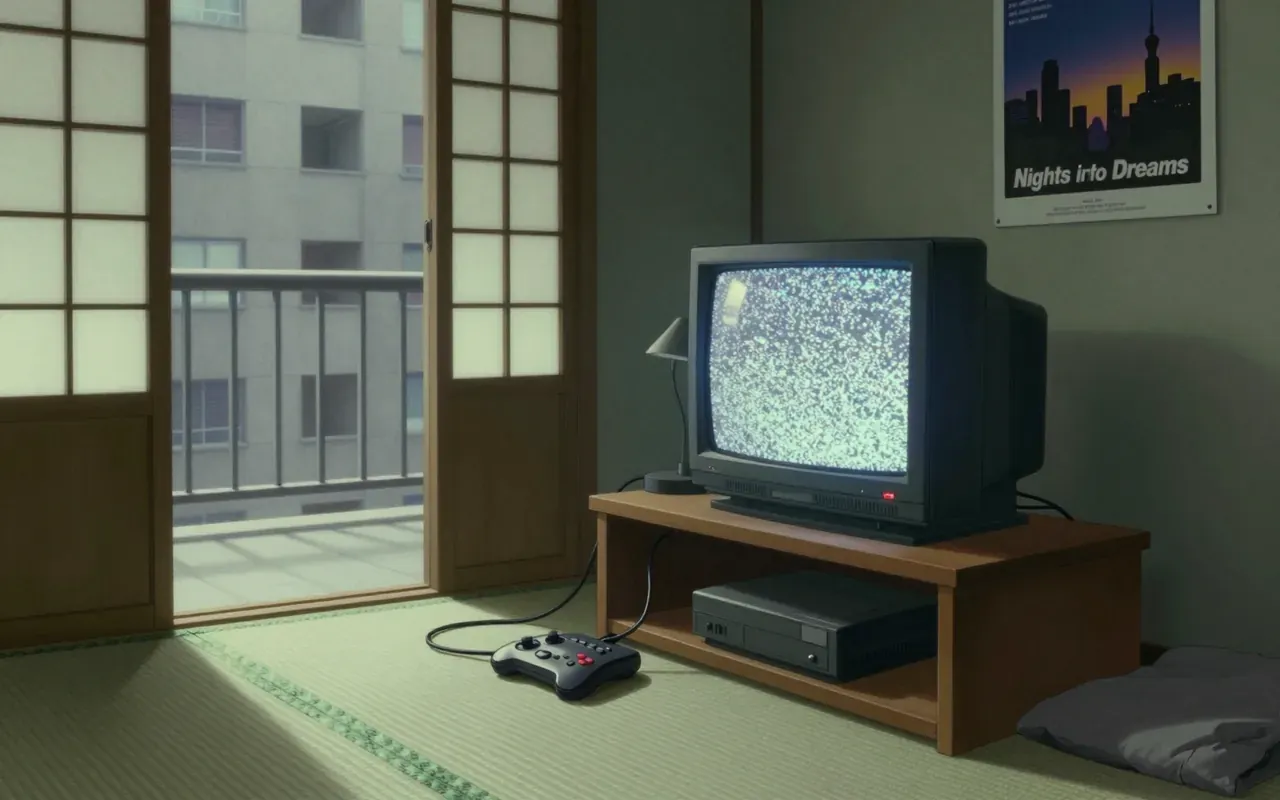
Nights into Dreams

Sega · 1996

Nights into Dreams is a Saturn-exclusive action game where players alternate between timed ground navigation and fixed-path 3D flying to recover stolen Ideyas and defeat Wizeman.

10:21

Crash Team Racing

Naughty Dog · 1999

Crash Team Racing is a precise, class-driven kart racer built around a strict, multi-stage power slide mechanic. It demands rhythmic timing, not reflexes. Its hardware constraints — split-screen performance, memory limits — are visible in its design choices, not hidden behind abstraction. It is the last Crash game Naughty Dog made, and it plays like a farewell: focused, complete, and uncompromising.

10:21

Crypt of the NecroDancer

Brace Yourself Games · 2015

Crypt of the NecroDancer is a rhythm-gated roguelike released in April 2015 by Brace Yourself Games. All movement and attacks must occur on the musical beat. Enemies follow fixed rhythmic patterns — some on every beat, others on subdivisions. Missing the beat resets scoring and risks damage. The dungeon has four zones, each with four levels. Input supports dance pad, keyboard, or gamepad.

10:21

AI: The Somnium Files

Spike Chunsoft · 2019

AI: The Somnium Files is a branching adventure game developed by Spike Chunsoft in 2019. It alternates between first-person investigation and timed third-person dream exploration ('Somnium'). Players use an AI assistant named Aiba to analyse scenes and augment vision. Progress requires completing multiple routes via a flowchart, with each route withholding key narrative information until all are finished.

10:21

Guitar Hero II

Harmonix · 2006

Guitar Hero II tightens the original's loop with chords, practice tools, and co-op roles—but remains rigid, unadaptive, and consequence-free. It trains timing, not musicianship.

10:21

Madden NFL

EA Sports · 1988

Madden NFL (1988) is the foundational entry in EA Sports’ long-running American football simulation series. Developed by EA Orlando and published by EA Sports, it launched on Apple II and established core tenets: 11-player teams, numerical player ratings, detailed play diagrams with John Madden’s coaching commentary, and broadcast-style voice narration. Later entries expanded into Franchise Mode — a multi-season management layer involving training camp, 16-game seasons, playoffs, and the Super Bowl — though this mode remains consistently criticised. The series operates under an exclusive NFL licensing agreement extending through the 2025–2026 season.

10:21

Civilization IV

Firaxis · 2005

Civilization IV is a 4X turn-based strategy game built on the Gamebryo engine. It uses the empire-building model: players construct, expand, exploit, and exterminate across a procedurally generated square grid map.

10:22

Colin McRae Rally (1998 video game)

Codemasters · 1998

Colin McRae Rally (1998) is a Codemasters rally simulation built around the 1998 World Rally Championship. It structures progression across three difficulty tiers — Novice (F2 front-wheel-drive), Intermediate (WRC four-wheel-drive), and Expert (Group B classics) — each with distinct cars and increasing challenge. Colin McRae and Nicky Grist provide authentic voice work, with McRae serving as the tutorial instructor. The game supports LAN multiplayer for up to eight players and two-player split-screen. A cheat-enabled Easter egg parodies the Barney and Betty Hill alien abduction incident. It was distributed in North America by Warner Bros. Interactive Entertainment.

10:22

F.E.A.R. (video game)

Monolith Productions · 2005

F.E.A.R. is a first-person shooter psychological horror game developed by Monolith Productions in Kirkland, Washington. It uses the studio’s LithTech engine and centres on reflex time, adaptive AI, and melee as a core combat pillar.

10:22

Hexen: Beyond Heretic

Raven Software · 1995

Hexen: Beyond Heretic is a 1995 first-person shooter with action-adventure and action role-playing elements. It is the second entry in the 'Serpent Riders' trilogy. It is set in the dark fantasy world of Silverspring. It runs on a modified Doom engine.

10:22

Diablo III

Blizzard · 2012

Diablo III is a 2012 action RPG built around loot-driven progression, real-time isometric combat, and mandatory online connectivity. Its systems prioritise frequency and clarity of reward over narrative or environmental storytelling. The game’s design enforces repetition, not reflection.

10:24

Beat Saber

Beat Games · 2018

Beat Saber is a virtual reality rhythm game developed by Beat Games in 2018.

10:24

Enemy Territory: Quake Wars

Splash Damage · 2007

Enemy Territory: Quake Wars is a class-based, objective-focused, team-oriented multiplayer FPS set in the Quake universe. Developed by Splash Damage and released in 2007, it uses a heavily modified id Tech 4 engine and introduces vehicles — a first for the Quake series. Teams are asymmetrical (human GDF and alien Strogg), yet share the same basic weapons and tools. Gameplay focuses on one or two main objectives at a time, not spread across the map. New objectives appear dynamically during play, often tied to class-specific capabilities. Players can form fireteams — user-created or game-generated — to coordinate strategy. An XP-based progression system rewards mission completion, resetting per campaign.

10:24

Wii Fit

Nintendo · 2007

Wii Fit is a simulation of physical discipline built around a single hardware input: the Wii Balance Board. It measures weight and centre of balance in real time. It offers over 40 activities — yoga, strength training, aerobics, balance games — all calibrated to that input. It supports up to eight user profiles, each tied to date of birth, height, and a Mii. It logs external activity manually. It uses an on-screen trainer in yoga and strength modes. It does not simulate athletic development. It simulates accountability.

10:24

Sonic & Knuckles

Sega · 1994

Sonic & Knuckles is a 1994 Sega Genesis platformer developed by Sega Technical Institute. Players choose Sonic or Knuckles to traverse six side-scrolling levels on Angel Island, each with two acts ending in miniboss and boss fights. Sonic jumps higher and uses shields; Knuckles glides and climbs walls. Cutscenes differ by character, reflecting their adversarial relationship. Bonus stages activate at checkpoints with 20+ rings — one involves orbiting glowing spheres while avoiding a rising light fence; the other is a bouncing slot-machine room.

10:25

Rage (video game)

id Software · 2011

Rage is a first-person shooter with integrated vehicular traversal and combat, featuring customizable weapons and ammo, dual enemy archetypes, and structured racing events with variable opposition and armament. Players upgrade vehicles via event rewards and engage in both open-world exploration and mission-based progression.

10:26

Tactics Ogre

Quest · 1995

Tactics Ogre is a tightly wound tactical RPG where turn order is dynamic, consequence is immediate, and narrative choice reshapes the world physically and morally.

10:26

Grand Theft Auto V

Rockstar Games · 2013

Grand Theft Auto V is an action-adventure game released in 2013 by Rockstar Games. It features an open-world setting modelled on Southern California and Los Angeles, navigable on foot or by vehicle from third- or first-person perspectives. Players control three protagonists—Michael, Franklin, and Trevor—and switch between them during and outside linear story missions centred on heists. Gameplay includes shooting, driving, melee combat, explosives, and a 'wanted' system that escalates law enforcement response to crimes. The world is fully explorable after the prologue and supports context-specific activities, property purchases, stock trading, and character-specific skills. Combat uses auto-aim and cover systems; health regenerates to halfway, with respawns at hospitals upon death. Heists involve AI accomplices with unique skills and support multiple strategies. The game runs on the Rockstar Advanced Game Engine (RAGE) and is part of the Grand Theft Auto franchise, originally published by BMG Interactive.

10:27

Prince of Persia: The Sands of Time

Ubisoft Montreal · 2003

Prince of Persia: The Sands of Time (2003) is a foundational third-person action-adventure by Ubisoft Montreal that reimagined the franchise’s 2D roots as a 3D parkour-and-time-rewind system. Built around acrobatic traversal, trap navigation, and sand-infected enemy combat, it uses the Dagger of Time to rewind mistakes and freeze or kill foes — turning time into a limited, tactical resource. Farah provides AI archery assistance that doubles as environmental hazard. Health is restored at water sources; magic fountains expand maximum health. The dynamic third-person camera shifts contextually, denying manual control. Released in 2003, it was a critical and financial success — over 14 million copies sold by 2014 — and launched a trilogy.

10:28

Outer Wilds

Mobius Digital · 2019

Outer Wilds is a tightly wound clockwork of time, memory, and celestial mechanics. It gives you nothing but questions—and insists you answer them in order.

10:28

World of Warcraft

Blizzard Entertainment · 2004

World of Warcraft is a persistent, factioned, realm-based MMORPG where progression is linear, social coordination is structural, and player agency is bounded by scheduled content and systemic repetition. It launched in North America on November 23, 2004, and is managed by Blizzard’s Team 2.

10:28

Suikoden II

Konami · 1998

Suikoden II is a PlayStation RPG by Konami (1998) that ties narrative, recruitment, and strategy into a single arithmetic: level gaps dictate XP, rune slots dictate magic, and sidequests dictate who joins your army. It refuses to explain itself — and rewards attention to its systems with structural integrity, not spectacle.

10:29

Broken Sword: The Shadow of the Templars

Revolution Software · 1996

Broken Sword: The Shadow of the Templars is a 1996 point-and-click adventure game developed by Revolution Software. It stars George Stobbart and Nicole Collard in a globe-trotting investigation sparked by a bombing in Paris. Players solve puzzles using a point-and-click interface, hand-drawn environments, and dialogue-driven exposition. Death is possible — a rarity for its time — and saves are manual. It launched on PC and PlayStation in 1996, with a Game Boy Advance port in 2002.

10:29

Wolfenstein 3D

id Software · 1992

A foundational first-person shooter that uses rigid grid-based level design, fixed-height walls, and Nazi iconography as structural constraints—not just theme—to create a fast, lethal, and relentlessly focused combat loop.

10:29

Stardew Valley

Eric Barone · 2016

Stardew Valley is a top-down, open-ended farm life simulation where players inherit a dilapidated farm from their deceased grandfather, leave a corporate job, and rebuild life near Pelican Town in Stardew Valley.

10:30

Carmageddon II: Carpocalypse Now

Stainless Games · 1998

Carmageddon II: Carpocalypse Now is a 1998 Windows vehicular combat sequel developed by Stainless Games. It uses hardware acceleration to power a world-first fully featured physics engine, enabling detailed vehicle deformation — including fenders, spoilers, and catastrophic splitting — and replaces the original’s ‘stealworthy cars’ mechanic with universal purchase of wrecked vehicles.

10:30

Guild Wars (video game)

ArenaNet · 2005

Guild Wars (2005) is a competitive online role-playing game developed by ArenaNet and published by NCSoft. It features instanced PvE and PvP, a level cap of 20 (extendable to 200 attribute points via quests), and a strict eight-skill loadout drawn from a library of over a thousand. It replaces gear dependency and grinding with skill-based combat, profession-locked builds, and modular progression across missions and arenas. Revenue came from standalone expansions and microtransactions—not subscriptions.

10:30

Wipeout 2097

Psygnosis · 1996

Wipeout 2097 is a PlayStation-era anti-gravity racing game developed by Psygnosis using the console as primary reference hardware in preparation for its September 1995 Western launch. Players race against AI opponents, aiming to finish in the highest position possible. Vehicles travel at high speeds and require air-brakes for cornering. A weapons system lets players eliminate opponents mid-race. Each vehicle has a shield energy quota; depletion from weapons or impacts destroys the craft. Destroyed ships can be recharged at pit stops at the cost of race time. The Quake Disruptor creates a wave effect that launches opponents into the air. Difficulty escalates across three classes — Vector, Venom, Rapier — each with higher speeds and more complex tracks.

10:30

Sekiro: Shadows Die Twice

FromSoftware · 2019

Sekiro: Shadows Die Twice is a 2019 action-adventure game developed by FromSoftware. Players control Wolf, a shinobi on a quest to rescue his lord Kuro. Gameplay focuses on stealth, exploration, and combat—with particular emphasis on boss battles. It is played from a third-person perspective. Compared to FromSoftware's Dark Souls series, Sekiro features fewer role-playing elements, lacks character creation and the ability to level up a variety of stats, and has no real-time multiplayer elements. It does include gear upgrading, special abilities with a prosthetic arm, a skill tree, and limited ability customization. Combat revolves around using a katana to attack enemy posture and balance, deflecting incoming attacks to create openings for a single killing blow. Stealth allows players to instantly eliminate or severely damage most enemies if they can get in range undetected. Sekiro is part of the Soulslike subgenre defined by high difficulty and environmental storytelling. Hidetaka Miyazaki directed the game.

10:30

Sonic the Hedgehog 3

Sega · 1994

Sonic the Hedgehog 3 is a 1994 Genesis/Mega Drive 2D side-scrolling platformer. It features Sonic and Tails across six zones (each with two acts), introduces Knuckles as an antagonist, and expands narrative through visual cutscenes. Players control Sonic while Tails runs alongside; a second player may join at any time to control Tails separately. Players may also play as Sonic or Tails alone. Tails can fly briefly by spinning his tails like a helicopter rotor. Unlike Sonic, Tails can also swim underwater. Levels are populated with 'Badniks', robots created by the villain, Dr. Robotnik; Sonic and Tails can defeat them by jumping on them or using the 'spin dash' attack, which also gives the character a speed boost. The levels include obstacles and other features such as vertical loops, corkscrews, breakable walls, spikes, water that the player can drown in, and bottomless pits.

10:31

Elite Dangerous

Frontier Developments · 2014

Elite Dangerous is a persistent-galaxy space sim built on scale, synchronicity, and player-driven consequence. It offers unparalleled scope but minimal scaffolding. Its ambition is structural, not narrative. Its cost is time, not money.

10:31

Injustice: Gods Among Us

NetherRealm Studios · 2013

Injustice: Gods Among Us is a 2013 DC fighting game by NetherRealm Studios. It uses a 2.5D plane, single-round matches, two life bars, a four-button layout (including a character-specific trait), power-vs-gadget class distinctions, stage transitions triggered by corner heavy attacks, and a super meter filled by action or damage and spent on enhanced moves or counters.

10:32

Far Cry 2

Ubisoft Montreal · 2008

Far Cry 2 is a systemic shooter where every choice carries weight—and every weight pulls you deeper into the war’s inertia.

10:32

Unreal Tournament 2003

Epic Games · 2002

Unreal Tournament 2003 is a rule-bound multiplayer arena shooter with six distinct modes—each defined by unambiguous objectives, scoring, and role constraints. It offers no single-player campaign, no persistent progression, and no abstraction between action and consequence. Its design demands precision, awareness, and adherence to mode-specific logic—not improvisation or narrative immersion.

10:35

Hitman 3

IO Interactive · 2021

Hitman 3 refines the assassination loop to its sharpest point: observe, disguise, infiltrate, eliminate. It assumes competence. It delivers density. It ends where it began — in the architecture of opportunity.

10:36

StarCraft II

Blizzard · 2010

StarCraft II is a real-time strategy game developed and published by Blizzard Entertainment for Windows and Mac OS X. Players act as military commanders for one of three species across single-player campaigns and multiplayer modes. Versus mode supports team sizes from 1v1 up to 4v4. Player skill is ranked in regional ladders divided into bronze through grandmaster leagues. Archon mode allows multiple humans to jointly control one player's forces in a 1v1 match. Co-op mode pairs two players against AI-controlled opponents, each commanding a unique hero commander. Commanders level up across co-op matches, unlocking upgrades and abilities that alter future gameplay. Mutations are optional modifiers that alter co-op missions with increased difficulty and chaotic effects.

10:37

Rock Band 2

Harmonix · 2008

Rock Band 2 is a four-player rhythm protocol that turns living rooms into rehearsal spaces. It works only when all inputs are present and all players are physically engaged. Its design is procedural, not expressive. Its longevity came from weekly DLC, not depth.

10:38

Forza Horizon 5

Playground Games · 2021

Forza Horizon 5 is a racing game set in an open world modelled on Mexico. It was developed by Playground Games and published by Xbox Game Studios for Windows, Xbox One, and Xbox Series X/S.

10:38

Hitman: Blood Money

IO Interactive · 2006

Hitman: Blood Money is a stealth assassination game released in May 2006. It is the fourth title in the Hitman franchise. Developed by IO Interactive and published by Eidos Interactive, it launched on Windows, PlayStation 2, Xbox, and Xbox 360. The player controls Agent 47 in third-person, navigating levels with a map that shows topography, targets, and characters. Armed guards, security checkpoints, and witnesses obstruct progress. The game penalises excessive noise and violence. New mechanics include climbing, body disposal, using NPCs as human shields, improved unarmed combat, and weapon and equipment upgrades — five weapons and some equipment can be upgraded. Missions allow multiple elimination methods, including accidental-looking kills and improvised weaponry, even in the presence of bystanders. Critics praised the game at release, and retrospectives have called it the best in the series.

10:38

Left 4 Dead 2

Valve · 2009

Left 4 Dead 2 is a tightly wound co-op FPS that uses procedural pacing and rigid inventory to forge intense, fleeting group cohesion — but collapses without live human coordination.

10:38

Valorant

Riot Games · 2020

Valorant is a first-person tactical hero shooter developed and published by Riot Games. It launched on June 2, 2020. Players assume culturally grounded Agents in 5v5 attack/defend matches focused on Spike planting and defusal. Every round begins with a classic pistol and at least one signature ability charge. Weapons and ability charges are purchased using money earned from round outcomes, kills, and objectives. Agents have unique abilities requiring charges and ultimates charged via kills or orbs. Automatic and semi-automatic weapons feature unique spray patterns requiring player control for accuracy. Riot Games operates the Valorant Champions Tour.

10:38

Jet Set Willy

Software Projects · 1984

Jet Set Willy is a flip-screen platformer where Miner Willy cleans his mansion after a party, navigating 60 rooms to collect glowing items. It abandons linear progression for open exploration, uses only left/right/jump controls, and punishes errors with room-reset deaths that cascade. Its design prioritises memory and timing over fairness or recovery.

10:38

Terraria

Re-Logic · 2011

Terraria is a 2D sandbox action-adventure game with no set goals. Players explore procedurally generated worlds, fight bosses to unlock progression, gather resources across biomes, craft equipment, and recruit NPCs by completing goals. Evil biomes like Corruption and Crimson spread and infect other areas. Resources such as ores are found in caves. The game supports single-player, multiplayer, and modding. It was developed by Re-Logic—an American independent studio based in Floyds Knobs, Indiana—using the Microsoft XNA framework. It launched on May 16, 2011, earlier than planned due to a beta leak. Development was paused in February 2012 but resumed in 2013, with major updates continuing thereafter.

10:38

The Elder Scrolls III: Morrowind

Bethesda · 2002

Morrowind is a dense, alien, self-contained world where freedom is structural — not just thematic. It refuses to hold your hand, explain its rules, or reward compliance. Its strength is in its refusal to simplify.

10:39

King's Field III

FromSoftware · 1996

King’s Field III is a foundational FromSoftware RPG from 1996 that prioritises scale and slow-paced first-person exploration over responsiveness. Its overground world is vast. Its combat is lethargic — a melee round against a low-level creature can last up to five minutes. Players teleport between cities via a map screen. It follows King’s Field II (1996) and precedes Echo Night and Shadow Tower (1998). It was developed and published by FromSoftware for PlayStation.

10:40

Centipede (video game)

Atari · 1981

Centipede is a fixed shooter arcade game developed and published by Atari, Inc. in 1981. The player controls the Bug Blaster at the bottom of the screen with a trackball and shoots upward at a segmented centipede descending through a field of mushrooms. Shooting a segment turns it into a mushroom and splits the centipede; the rear piece grows a new head. The centipede moves horizontally until hitting a mushroom or screen edge, then drops one level and reverses. Mushrooms take four shots to destroy and award one point each. Their accumulation speeds the centipede’s descent. A 1998 Windows PC remake was released by Hasbro Interactive.

10:40

The Last of Us (video game)

Naughty Dog · 2013

The Last of Us (2013) is a post-apocalyptic third-person action-adventure game developed by Naughty Dog for PlayStation 3. It follows Ellie and Joel across a United States overrun by humans infected with a Cordyceps-like fungus. Players traverse ruined environments, engage in vulnerable, resource-constrained combat using firearms, improvised weapons, and stealth, and craft or upgrade gear at workbenches. The design prioritises tension, scarcity, and character-driven stakes over systemic openness or player authorship.

10:40

The Elder Scrolls Online

ZeniMax Online · 2014

The Elder Scrolls Online is a persistent-world MMORPG set in Tamriel during the Second Era, developed by ZeniMax Online Studios and released in 2014. It supports solo and group play online only, with non-linear exploration, questing, and random events. Ten races and seven classes are available; vampirism and lycanthropy are accessible without purchase as of Update 49. The Imperial race remains locked behind a Crown Store purchase. Some zones require DLC. First- or third-person perspective is selectable. All zones are accessible regardless of faction or level.

10:40

Skate 3

EA Black Box · 2010

Skate 3 is a third-person open-world skateboarding game developed by EA Black Box in 2010. It tasks players with selling one million skateboards by completing challenges, after failing Jump The Shark. It introduces Easy and Hardcore difficulty modes, an optional tutorial (Skate School), and a park builder (Skate.Park). Online-only multiplayer at launch required DLC for offline party play.

10:40

Tribes 2

Dynamix · 2001

Tribes 2 is a multiplayer-only shooter built for large-scale, movement-driven team tactics — not solo heroics.

10:42

Mortal Kombat (2011 video game)

NetherRealm Studios · 2011

Mortal Kombat (2011) is a 2.5D fighting game developed by NetherRealm Studios and published by Warner Bros. Interactive Entertainment for PlayStation 3 and Xbox 360 in April 2011. It is the ninth installment in the Mortal Kombat series. The game runs at 60 fps on a strict two-dimensional plane, with 3D-rendered characters. Four controller buttons map to specific limbs. A three-tiered super meter charges through performing special moves, being blocked, or being hit — enabling enhanced specials (level one), combo interrupts (level two), and X-ray moves (level three), which show internal bone and organ damage. Extra modes include a multi-character story mode, Fatality training, Challenge Tower, tag team fighting, and online play.

10:42

Resident Evil 4

Capcom · 2005

Resident Evil 4 (Capcom, 2005) is a GameCube action-horror title in which Leon S. Kennedy rescues Ashley Graham from a cult in rural Spain. It replaces fixed camera angles and slower pacing with dynamic over-the-shoulder shooting, laser-sighted aiming, limb-targeted combat, context-sensitive environmental interaction, and quick time events. It received universal acclaim and was a financial success for Capcom, leading to ports across multiple systems.

10:43

Lineage (video game)

NCSoft · 1998

Lineage is a medieval fantasy MMORPG developed and published by NCSoft. It launched in September 1998 as the company’s first game. It is built on NetHack’s stat, monster, and item systems with MMO mechanics added.

10:44

Far Cry 4

Ubisoft Montreal · 2014

Far Cry 4 is a polished, iterative open-world shooter that prioritises environmental spectacle and weapon-led combat over narrative weight or systemic innovation. It works best when treated as a tactical sandbox — not a story world.

10:44

Forza Motorsport 7

Turn 10 Studios · 2017

Forza Motorsport 7 refines the Motorsport formula without redefining it. It delivers technical excellence and scale — but nothing structurally new.

10:44

Guilty Gear Strive

Arc System Works · 2021

Guilty Gear Strive is a 2D fighting game developed by Arc System Works in Yokohama. It reconstructs the franchise, removes Instant Kill, introduces Wall Break, omits mechanical explanations from its tutorial, and launches without ranked mode.

10:44

Puyo Puyo Tetris

Sonic Team · 2014

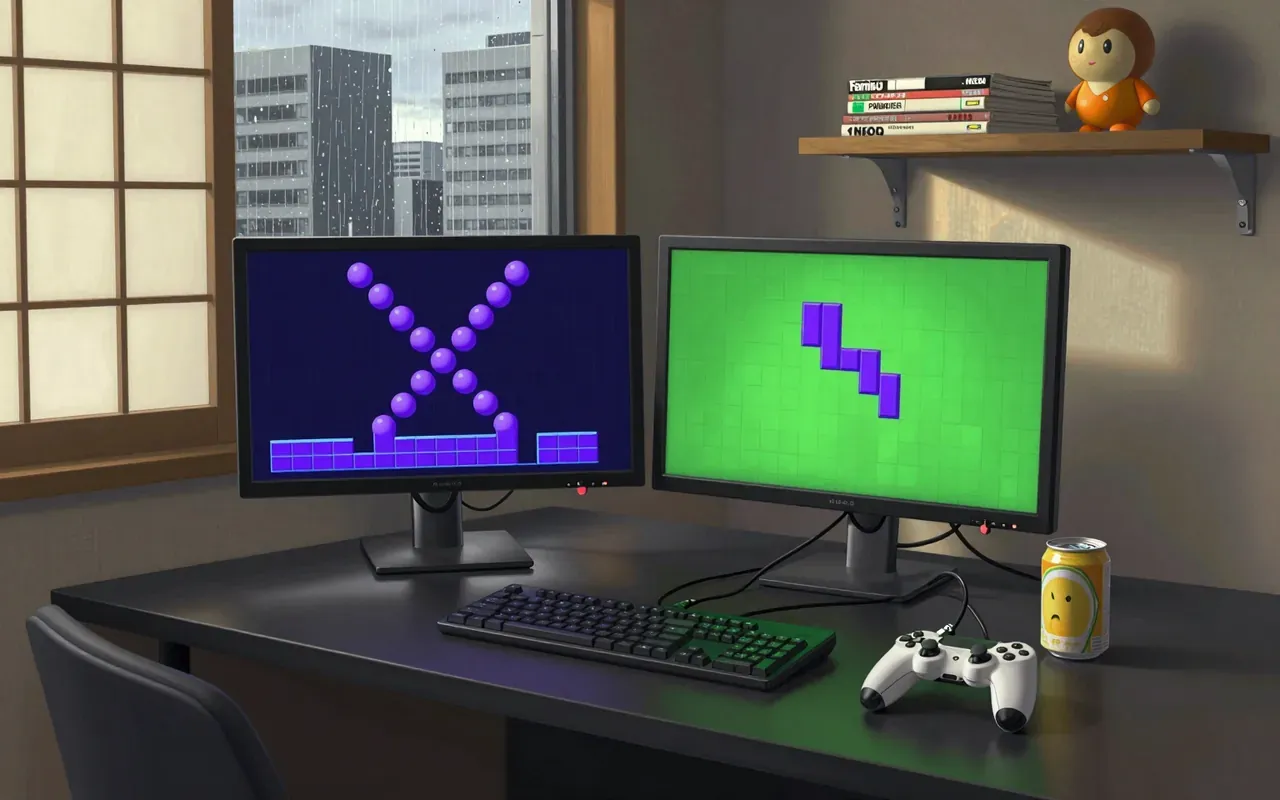
Puyo Puyo Tetris is a deliberate, unapologetic juxtaposition—not an integration—of two established puzzle systems. Its strength lies in clarity, consistency, and competitive rigour. Its limitation is structural separation: no rule, constraint, or feedback bridges Puyo and Tetris beyond shared menus and scoring.

10:45

Call of Duty: Warzone (2020 video game)

Infinity Ward · 2020

Call of Duty: Warzone (2020) is a free-to-play battle royale built on the IW 8.0 engine, supporting up to 150 players per match. It uses an in-game Cash system to gate access to weapons, perks, and respawns via Buy Stations and Loadout Drops. Players begin each match with a basic pistol and two armor plates, then scavenge weapons, equipment, and killstreaks across large photogrammetry-rich maps including Verdansk, Rebirth Island, Caldera, and Fortune's Keep. Battle Royale features shrinking zones and the Gulag respawn mechanic; Plunder and Resurgence offer alternative loops. The game integrated progression with Modern Warfare, Black Ops Cold War, and Vanguard before server shutdown on September 21, 2023.

10:46

Apollo Justice: Ace Attorney

Capcom · 2007

Apollo Justice: Ace Attorney is a DS courtroom game built on three fixed actions — Press, Present, Perceive — and one hard constraint: you cannot move forward until you trigger the correct response. It works because every phase feeds the next. It falters because it offers no deviation from that feed.

10:46

Final Fantasy XIV: Stormblood

Square Enix · 2017

Stormblood is a systemic expansion — not a story one. It builds around constraints: fixed-level raids, XP loss on death, mecha-bound PvP, and jobs that start mid-level. It rewards precision, repetition, and group discipline. It withholds flexibility, narrative integration, and trial access to its hardest content.

10:46

AEW Fight Forever

Yuke's · 2023

AEW Fight Forever is a deliberate step back: a wrestling game that abandons simulation for swing, realism for rhythm, and scale for structure. It works because its constraints are clear and consistent—not despite them.

10:47

EverQuest

Verant Interactive · 1999

EverQuest is a foundational 3D MMORPG that demands group reliance, punishes solo risk, and treats servers as persistent social spaces — not content delivery platforms.